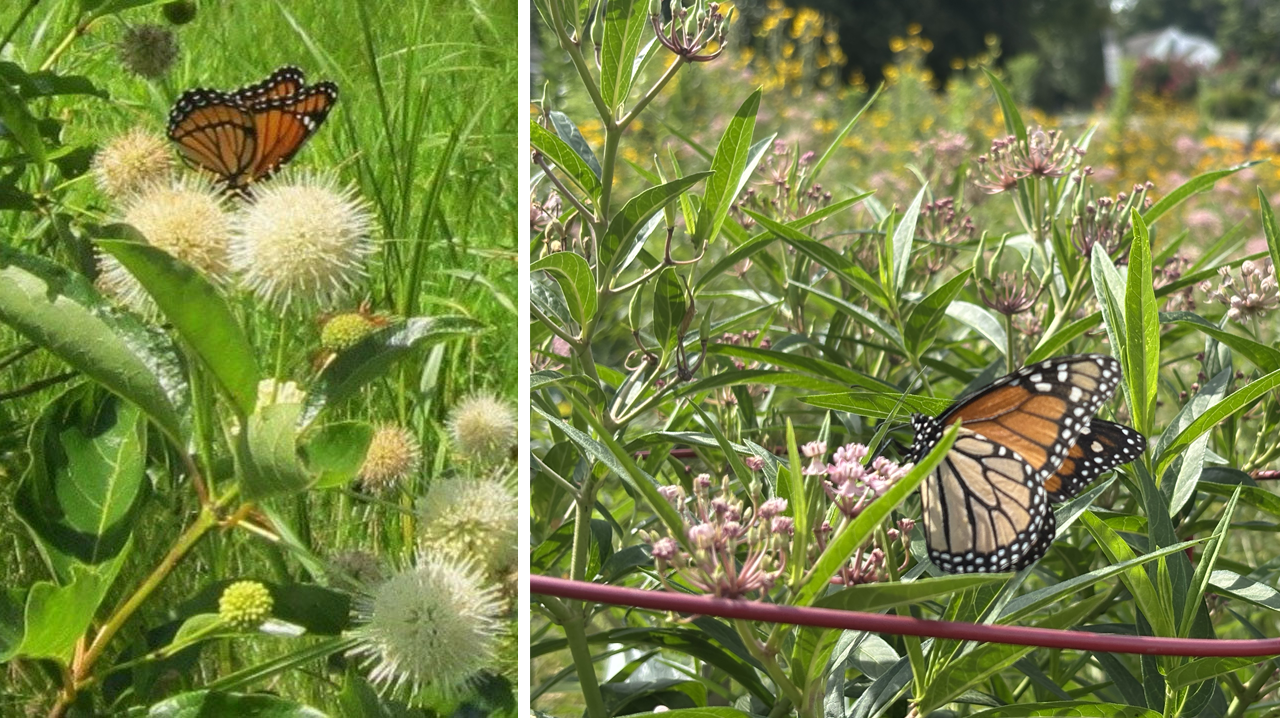
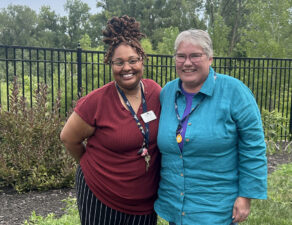
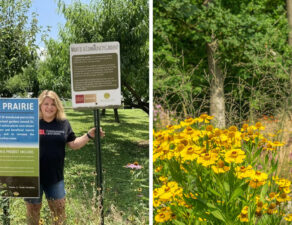
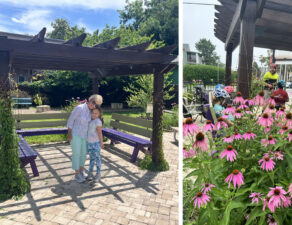
Above photo: Left: Shane Staten, Right: Maddie Ball
Article by guest author Shane Staten, Senior Professional Wetland Scientist
Pollinators have been getting a lot of attention recently due to news of population declines that have left beloved species like the monarch butterfly proposed to be listed under the Endangered Species Act. Pollinators provide us with billions of dollars in economic benefit each year and they also brighten our lives with their dazzling colors and interesting behaviors. Although the decline in pollinator populations is the result of large-scale, sometimes multi-national problems, it’s important to remember that together our individual actions can still make a meaningful difference.
For good reason, much has been written about the pollinator benefits of upland prairie plants, particularly milkweeds and other common native plants that do well in most parts of our properties. But what about the wetland plants that do well in the wet parts of our yards or in and around small ponds or water gardens? This post contains some top choices of native plants that are real pollinator powerhouses and love those wet spots.
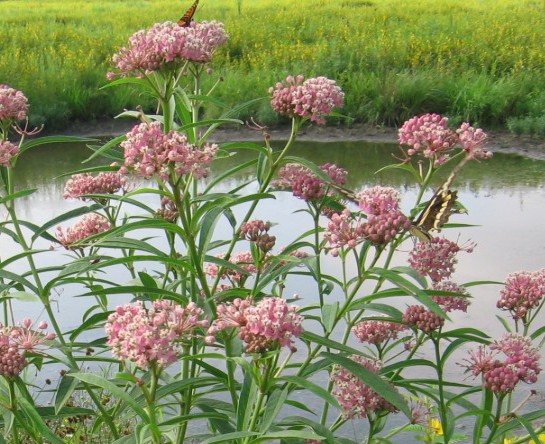
It’s no surprise that Swamp Milkweed (Asclepias incarnata) takes after its other milkweed relatives and is a top performer (photo by Shane Staten). This beautiful, pink-flowered species supports at least 18 types of bees, 14 different butterflies and skippers, and many other pollinators. If you want a chance to have monarchs, regal fritillaries, or five different kinds of swallowtail butterflies visit your yard, swamp milkweed would be a great choice. This plant likes moist, frequently wet ground and can tolerate occasional standing water.
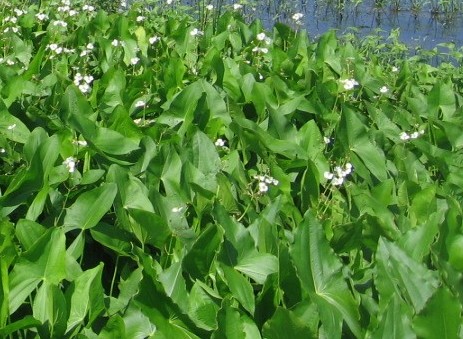
Broadleaved Arrowhead (Sagittaria latifolia) is an excellent water garden choice because it grows very well in the water along pond edges and has unique, interesting foliage. But it is less known for its significant pollinator benefits. Gardeners fortunate enough to have this beauty in their yards can take pride knowing that this plant is visited by at least 40 insects, including varieties of bees, butterflies, skippers, moths, beetles, wasps, and flies.
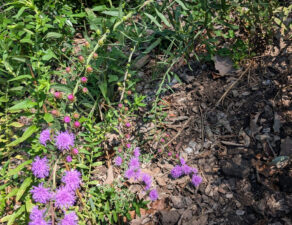
 With stunning flowers, Obedient Plant (Physostegia virginiana) grows in moist soils and packs a big pollinator punch. (Photo by Shane Staten) This plant gets its name from the fact that you can move its flowers around and the flowers will “obediently” keep their new position for hours to days. Obedient plant is a member of the mint family and provides an ideal food source to hummingbirds due to its tubular shape. Many important insects, including several types of bumblebees, 14 other bee species, monarch butterflies, and lesser-known pollinators, like soldier beetles and even ants, utilize obedient plant for food.
Beyond these star performers, there are many other great native plants to consider for those wet spots in your yard and gardens. Honorable mentions go to Cardinal Flower (Lobelia cardinalis) which is greatly loved by hummingbirds, Blue Lobelia (Lobelia siphilitica), and Giant Goldenrod (Solidago gigantea), a true late-season pollinator all-star. Please visit the Illinois Wildflowers Flower-Visiting Insect Database to learn more about which insects may visit any of your native plant species. And to explore the importance of pollinators, please visit the Pollinator Partnership webpage.
——————–
Shane Staten is a certified Senior Professional Wetland Scientist who has designed and managed more than 3,000 acres of restored forests, prairies, wetlands, and streams with Swallowtail. His experience restoring native habitats convinced him that an increased connection to nature can improve everyone’s emotional health and happiness. He manages Remembrance Forest, which brings people comfort and connection during hard times through memorial tree plantings and a way to honor life’s special events through celebration tree plantings.
Johnson County’s Contain the Rain program encourages sustainable yard practices that assist in stormwater management and improve water quality. Residents can ‘Contain the Rain’ with native plants, rain gardens, native trees, and rain barrels. If you live in any of the cities listed below, you can apply for the Contain the Rain program to receive a reimbursement of up to 50% of the costs to install rain-containing infrastructure. Lenexa residents are eligible for up a 75% reimbursement for certain projects. Visit their webpage to learn more and find out how you can improve water quality in your city!
Cities that can apply for Contain the Rain services:
De Soto
Fairway
Gardner
Lake Quivira
Leawood
Lenexa
Merriam
Mission
Mission Hills
Mission Woods
Olathe
Overland Park
Prairie Village
Roeland Park
Shawnee
Unicorporated Johnson County
Westwood
Westwood Hills
Write a comment: