By Stacia B. Stelk, Deep Roots’ Executive Director
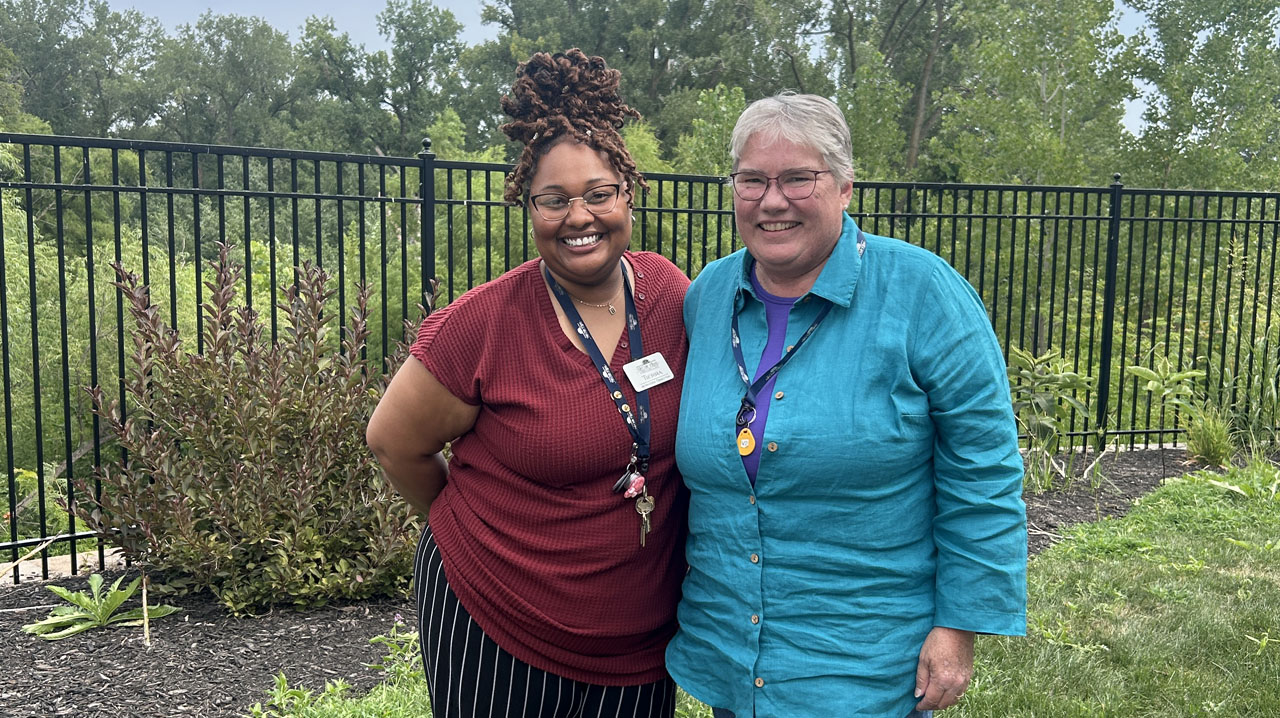
Susan Bray (on right) and Tierra Estes (on left), McCrite Plaza Memory Care
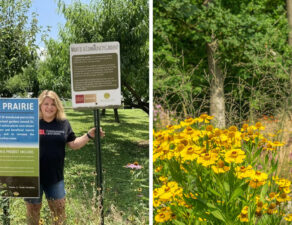
When Susan Bray visits the Memory Care Garden at McCrite Plaza at Briarcliff, she’s cultivating more than native plants. She’s growing memories, purpose, and hope. Together with Activities Director, Tierra Estes, Susan is transforming the Memory Care Center’s traditional garden into a thriving native plant garden. She’s creating a place where residents can reconnect with nature, engage their senses, and perhaps reconnect with pieces of themselves. For Susan, the project is deeply personal.
Susan’s husband, Glenn L. Bray, lived at McCrite before passing away last year from complications of Alzheimer’s disease. Glenn loved being outdoors and spent countless hours helping Susan in the native garden surrounding their home. As Glenn’s disease progressed, the garden became more than a hobby. It became a refuge.
“When you’re losing someone,” Susan reflects, “you need something tangible.”
Three Perfectly Aligned Holes
Susan’s love of native plants wasn’t immediate. Growing up, she remembers her father’s enormous vegetable garden and the childhood chore she liked least—pulling weeds, specifically Partridge Pea (Chamaecrista fasciculata). (Now, she chuckles, she buys it!)
Her career took her to Lakeside Nature Center, where much of her work focused on wildlife. Watching habitat restoration efforts around the center sparked her curiosity about native plants. She attended one of the area’s very first native plant sales, where one plant in particular captured her imagination, the Southern Blue Flag Iris (Iris virginica).
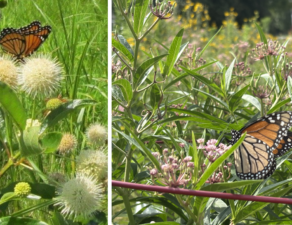
After retiring from Lakeside at the end of 2015, Susan needed a new project. She took everything she had learned and transformed the yard she shared with Glenn into a flourishing native landscape. She told Glenn, “We’re going to have a Pollinator’s Paradise.”
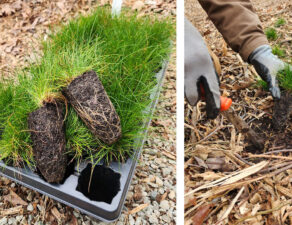
As Alzheimer’s slowly changed Glenn, the garden changed with them. Although he could no longer help in the ways he once had, Susan found small but meaningful tasks for him: digging planting holes, gathering seed heads, and working alongside her outdoors.
She laughs as she remembers one memorable afternoon. She asked Glenn to dig three holes. Instead of placing holes within the garden design, Glenn dug three perfect holes, neatly lined up in a row. So much for the garden design!
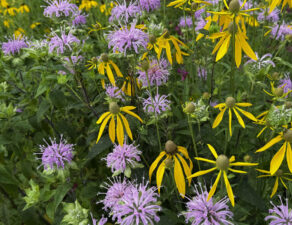
Rather than correcting him, Susan simply planted her Virginia Bluebells (Mertensia virginica) in those three holes. Every spring, when the bluebells bloom in a perfectly straight line, they remind her of Glenn. This has become one of the most cherished parts of the garden.
Discovering the Healing Power of Gardening
While Glenn was living at McCrite, Susan became friends with Activities Director, Tierra Estes. Tierra listened to Susan talk about her garden and learned how meaningful gardening had been for Glenn. This made Tierra wonder whether native plants could offer something special for people living with memory loss. Together, they began reimagining the Memory Care Center’s existing garden.
Tierra grew up admiring her grandmother’s vegetable garden, especially the tomatoes destined for fried green tomatoes. But Tierra had never really gardened herself. This is when the native plant garden became unexpectedly personal.
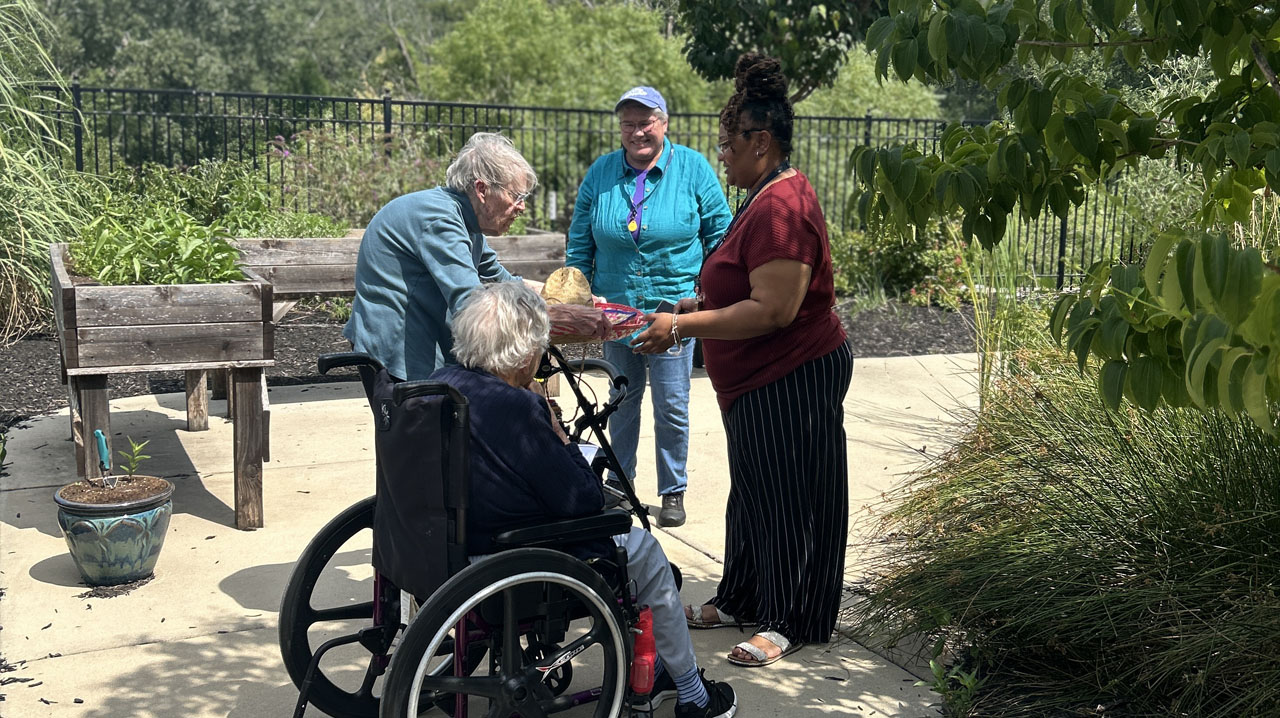
At the time the Memory Care Garden was being planted, Tierra’s grandmother was staying in McCrite’s rehabilitation center. On one planting day, her grandmother joined several memory care residents outside while Tierra worked. Before long, the roles had reversed. The residents coached her where to place plants, how deep to dig, and encouraged her through the summer heat. For one afternoon, the people Tierra cared for every day were caring for her.
Why Native Plants Matter
Native gardens offer something uniquely valuable in memory care. The familiar flowers, grasses, shrubs, and trees often remind residents of landscapes they knew growing up. A familiar scent, the arrival of spring wildflowers, or the rustle of prairie grasses can spark memories and conversations that might otherwise remain hidden.
The gardens also provide a peaceful setting that can reduce stress and anxiety while encouraging gentle movement. Safe walking paths invite residents outdoors, while butterflies, bees, birds, and changing seasonal colors provide constant sensory engagement
Gardening itself creates meaningful opportunities for participation. Residents can water plants, collect seeds, deadhead flowers, or simply observe the changing landscape.
As Tierra explains, “Most of us have worked all of our entire lives. And to be in a position when your meals are cooked for you, your laundry is done for you, you’re not walking anymore… (gardening) is something I can be a part of. This is something I can do. It’s really meaningful when a lot of your choices have been taken away from you.” Gardening restores something that illness often takes away: the opportunity to contribute.
A New Purpose
After losing Glenn, Susan found herself searching for purpose. “When you lose your spouse, you’re kind of in this space where you’re trying to find a purpose again,” she says. “Everything is different. Part of my perspective in this project, is that this is a calling.”
Now she hopes the lessons she learned while caring for Glenn can help other families walking the same road. She wants to remove the stigma surrounding Alzheimer’s disease and dementia.
“There is no shame in it,” she says. “The person is still inside.” She believes our responsibility isn’t to force people back into who they once were, but to discover new ways to meet them where they are.
The Lesson in Three Holes
Looking back, Susan says she didn’t correct Glenn when he dug those three perfectly aligned holes. “One of the things I’ve learned by doing this is, you gotta go with it. There’s no controlling any of Alzheimer’s. You just look for the person that’s in there and be with them. And enjoy those moments.”
Tierra sees that moment as the perfect metaphor—not only for dementia care, but for native gardening itself.
Gardeners often begin with meticulous plans. Then the plants have ideas of their own.
Some stay exactly where they’re planted. Others wander. Some disappear, while unexpected volunteers emerge in places you never imagined.
The beauty comes not from controlling every outcome, but from learning to welcome what grows. In many ways, caring for someone living with dementia asks the same of us. Both gardening and caregiving teach patience. They teach flexibility. They teach us to find beauty in unexpected places. Sometimes the most meaningful things grow from three perfectly aligned holes that were never part of the original plan.
If you or someone you love is a caregiver of a memory care patient, Susan found the following resources helpful:
Mid-America Regional Council Aging and Adult Services
KC Shepherd’s Center
The Landon Center on Aging, the University of Kansas Health System
Clergy and physicians provided additional support for Susan and Glenn.
Susan, Tierra, and Stacia would like to dedicate this story to all caregivers and memory care patients.