Guest Author Shannon Currey, Education & Outreach for Izel Native Plants
Thinking about transforming a patch of lawn, creating a pocket prairie, or filling gaps in your landscape? If you rely on traditional container plants, larger projects can get expensive and labor-intensive quickly. That’s where plugs come in. These smaller plants—grown in trays rather than pots—are a more budget-friendly alternative that makes dense, ecological planting accessible. They’re also easier to add to existing plantings than larger sizes. Here is a quick guide to get you going.
What Are Plugs?
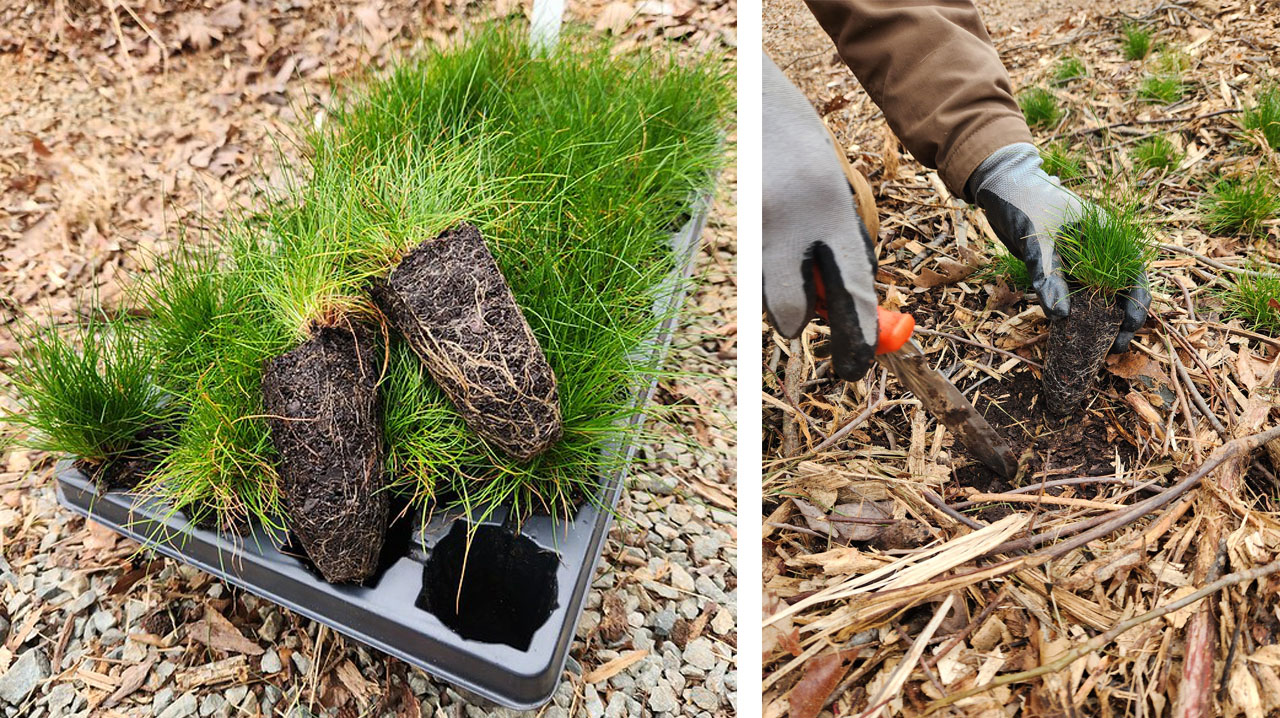
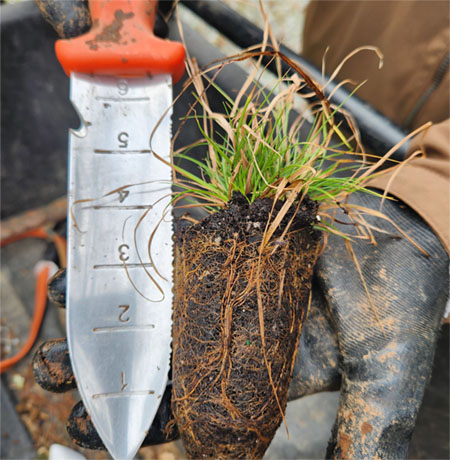 Plugs are young plants, usually less than a year old, with vigorous root systems. They’re grown in plug trays, which are continuous sheets with individual cells filled with potting soil. The tray size is standard across the industry (about 11” x 22”), and the plug size is usually referred to by the number of cells in a tray: 72s, 50s, 32s, etc. The larger the individual cells, the fewer in a tray. Thus, 32s (32 plugs per tray) are larger than 50s (50 plugs per tray). Trays are also referred to as flats, and you’ll often see that term used to describe the tray and plugs together.
Traditionally, plugs have been considered a wholesale product strictly for the nursery and landscape trade. Some landscapers use them, but most plugs go to wholesale nurseries who grow them out into larger containers for retail garden centers and landscape projects. Izel Native Plants changed the model by making plugs from wholesale growers available directly to everyone via their website. As other sources have followed suit, plugs have become increasingly popular with home gardeners.
The Advantages of Plugs
What makes plugs so appealing for native plant projects?
- Cost-Effective for Mass Planting: When it comes to live plants, plugs offer the lowest cost per plant, making them the smart choice for large projects or dense, matrix-style plantings.
- Wider Availability: Because young-plant suppliers grow for a broad range of wholesale and retail customers, you can often find a wider diversity of native species available as plugs than as finished, containerized plants.
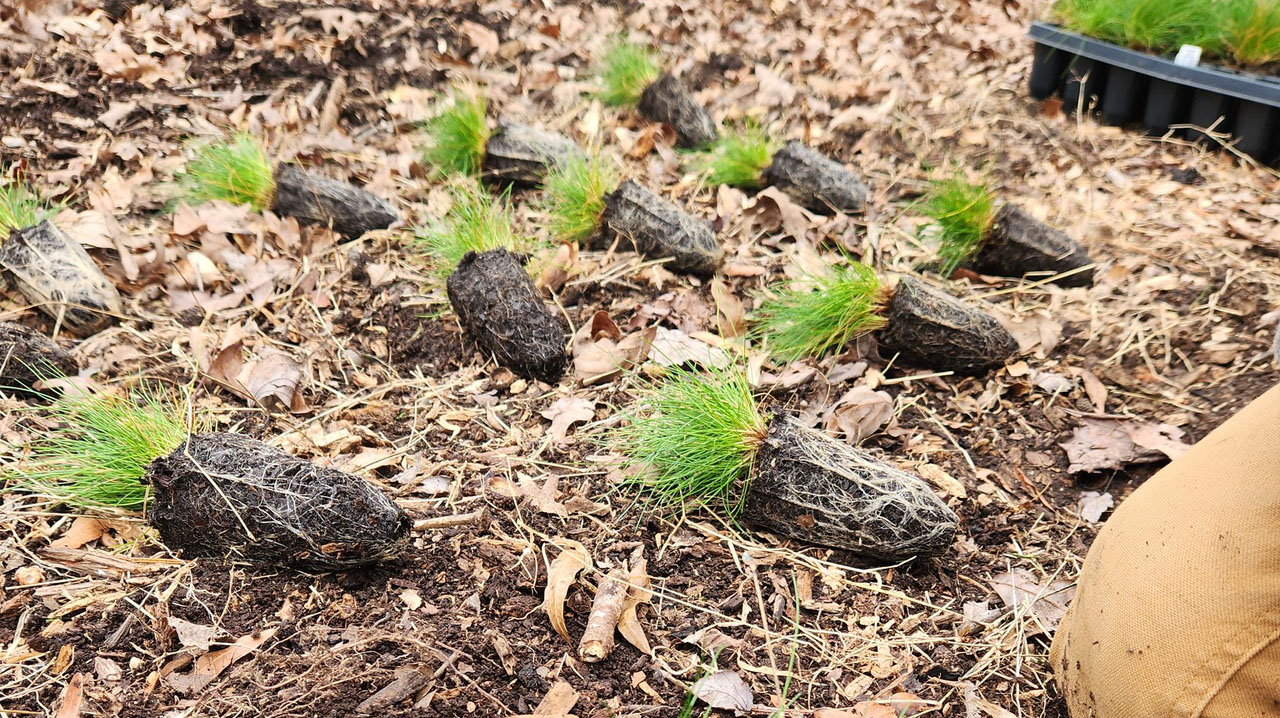
- Easier, Low-Impact Installation: Plugs are easy to plant and require a much smaller hole. There’s significantly less soil disturbance, which reduces weed seed germination and protects soil and tree health. There’s also no need to bare-root or disentangle circling roots.
- Perfect for Established Plantings: Their young root systems easily intermingle with existing plants, making them ideal for tucking into established landscapes or planting safely under the canopy of mature trees.
- Rapid Establishment: Because their vegetative growth is limited by the plug cell, these young plants store excess energy in their roots. Their high surface-area-to-volume ratio means they have abundant energy relative to their size. Once freed from the tray, they explode with growth. Most perennial plugs will catch up to a quart in a single season, and fast-growing grasses may even catch a gallon-sized container.
Planting for Success
While they offer many advantages, plugs aren’t a laissez-faire enterprise. They require consistency with watering and care, both in the tray and immediately after planting. Their soil volume is small, so they have a low margin for error under stressful cultural conditions.
Planting plugs successfully takes a bit of practical know-how, but it’s easy to pick up—and the ecological and financial payoffs are well worth it.
For essential tips and best practices that will have you planting like a pro, read our expanded article: A Practical Guide to Planting with Plugs