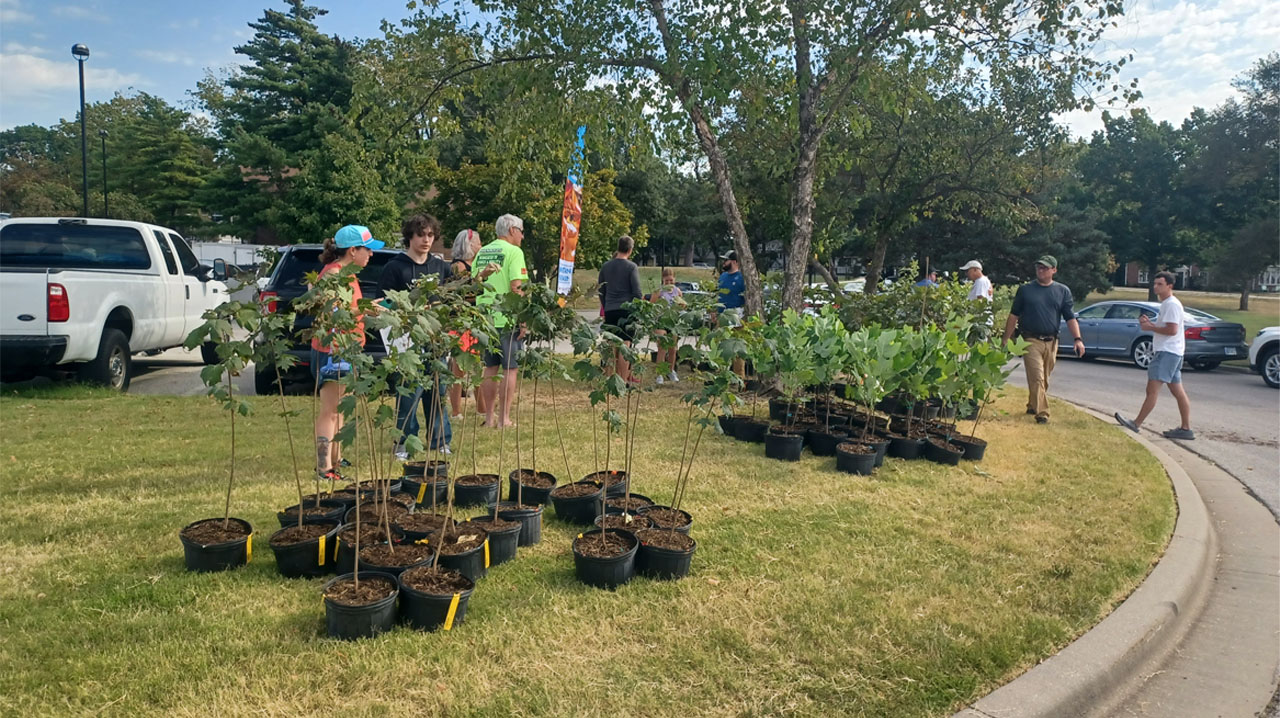
Article by Chris Cardwell, Deep Roots KC’s Urban Conservation Program Manager
Photo: Kay Thomason
As the Autumnal Equinox passes this month, we can mark the turning of the season and welcome a grateful break from the dog days of summer. We’re also primed for the fall planting season, when native landscapes get a second wind of edits and additions for the year. In conjunction with our fall plant sale, Deep Roots KC is pleased to, once again, be partnering with the Contain the Rain program to offer Johnson County residents 50% off retail-priced native trees and shrubs. In this article, we highlight a handful of understory trees and shrubs for home landscapes, a suite of popular species that won’t outgrow their spaces, and that provide both exceptional ornamental and ecosystem value for wildlife and people.
A fan favorite amongst suburban gardeners is the Flowering Dogwood (Cornus florida), adored for its widely arching habit and eye-catching white blooms. This tree is a great centerpiece for a partly shaded microclimate, protected from the harsh afternoon heat of the KC summers, and the bitter north winds of our winters. While it is subject to a variety of pests and diseases, healthy and mature specimens can reach up to 30’ tall and wide. The pale blooms of spring give way to ruddy drupes of berries in late summer and fall that are a delight for native songbirds. This Dogwood keeps showing off with a flash of reddish-purple foliage in the fall and an appealing branch structure that maintains winter interest and anchors your native garden against the architecture of your home.
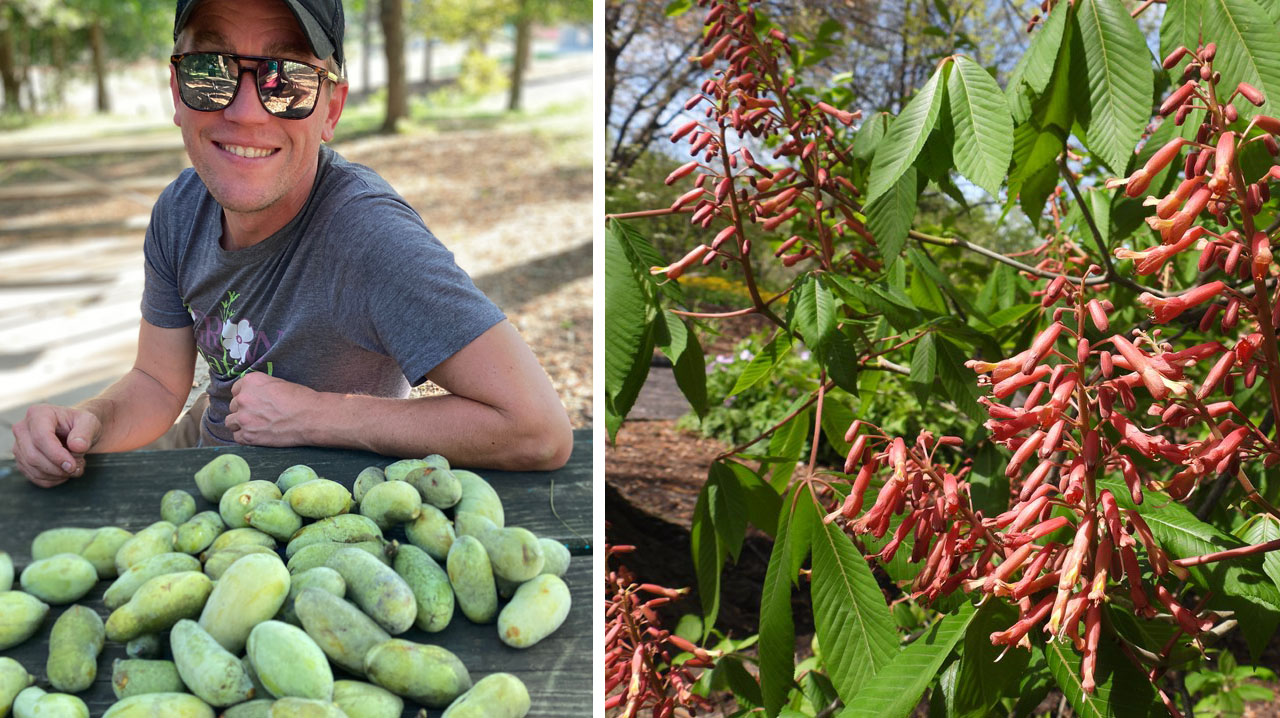
Photos: Left: Paw Paw; Right: Red Buckeye
Red Buckeye (Aesculus pavia) toes the line between a large shrub and a small deciduous ornamental tree, topping out at 20-25’ tall and wide at full maturity. Its palmately compound leaves feature a striking spread of five glossy leaflets that add unique texture in the midstory of your landscape, but the rich red panicles of flowers are what captures the attention of wildlife and humans alike. Six-to-eight-inch tall scarlet bloom clusters shoot straight up from the branch tips at the onset of spring, welcoming the first migrating hummingbirds to our region with their valuable early nectar. This heavy lift in the beginning of the year is balanced with an early leaf drop, as soon as late August or early September, leaving behind their dangling, leathery fruits that contain large glossy black seeds – the Buckeyes. Like the Flowering Dogwood, this tree will thrive in protected microclimates, shielded from the blazing afternoon sun, and prefers moist, well-drained loamy soils.
Foraging and permaculture enthusiasts will jump at the chance to plant a Pawpaw (Asimina triloba), which produces the largest edible fruit of any North American native plant, though you’ll wait a decade for a mature female to bear the custardy, rich bounty in your home landscape. Inconspicuous maroon flowers bloom as the leaves begin to sprout, soliciting pollination by flies with its ripe and stinky aroma. Pawpaws are a clonal tree, forming colonies in the wild that are interconnected in their root systems, and their large, tropical looking leaves are the larval host of our Zebra Swallowtail butterflies. After the fruits all drop, Pawpaw groves quickly turn a striking yellow, illuminating the understory and signaling the onset of the autumnal color change in our oak-hickory bottomland forests.
Alongside Pawpaw, the perfect companion in a native food forest would have to be the Downy Serviceberry (Amelanchier arborea). Widely celebrated as a subtle spring bloomer with wispy, compact branching structure, this species offers a delicious small red fruit known colloquially as Juneberry. There are a number of cultural associations with this tree, indicating its significance in human life – another common name is Shadbush, as its bloom coincides with the spawning of shad fish. Further lore tells that the bloom is a harbinger of the thawing of the soil, allowing the previous winter’s deceased to finally be interred with a belated burial ‘service.’ A maximum height of 20-25’ makes the Serviceberry an ideal specimen beneath utility lines and in courtyards and smaller scale landscapes as an anchoring visual highlight.
Additionally, a wide selection of excellent native shrubs will be offered, one of which is the right-sized Blackhaw Viburnum (Viburnum prunifolium), topping out at about 12-15’ in height. Like its other shrub-like cousins, this Viburnum is hardy and resilient, adapting to a wide range of conditions and exposures. Its flexibility in the landscape makes it useful as a single specimen, while its form and function allow for neat and beautiful groupings, allées, or privacy screening. A pleasantly fragrant spring bloom delights our human senses, giving way to plentiful blue-black drupes of fruit that sustain your landscape’s birds and small mammals. Combine this with the Arrowwood Viburnum (Viburnum dentatum) or Black Chokeberry (Aronia melanocarpa) for a diverse native hedgerow that will delight your local songbird poopulation.
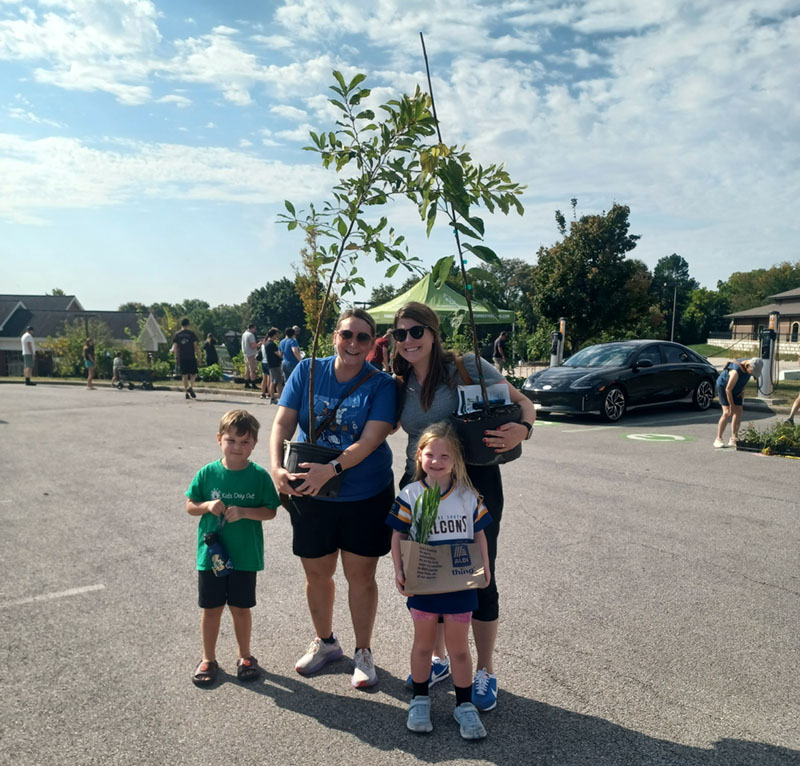
Any Johnson County residents who attend the October 3rd plant sale are eligible to receive 50% off vouchers for retail trees and shrubs from our tree nursery partner, Forrest Keeling. Check in at the Contain The Rain table as you arrive to receive your voucher, valued at up to $150 off retail prices on the day of the sale. Join us starting at 10 a.m. on October 3rd at the Tomahawk Ridge Community Center, 10902 Lowell Avenue, in Overland Park, Kansas.
Write a comment: