Article by Kay Thomason, Deep Roots’ Outdoor Education and Outreach Program Coordinator
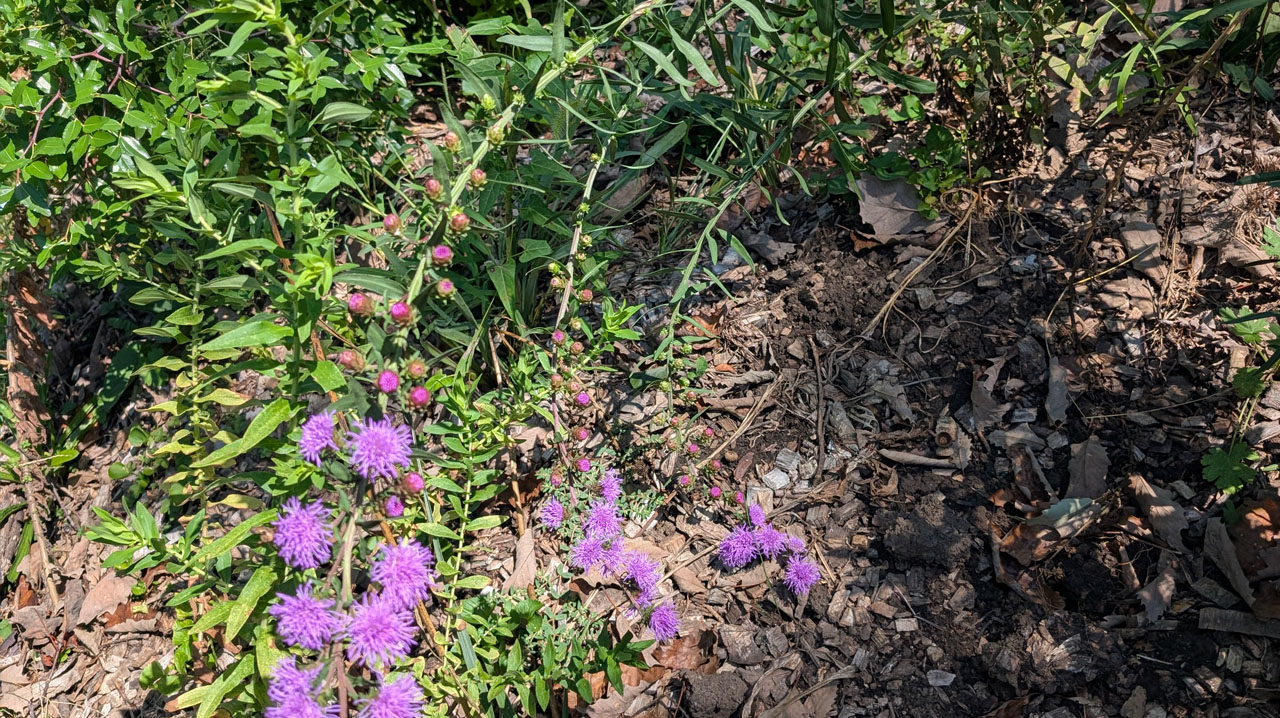
Above photo: Kay Thomason. (This Blazing Star (Liatris spp.) is young, and in much more fertile soil than it would get in its natural environment.)
I added some new plants to my native garden last year, and it seems like they’re flopping all over the place this year. Why are they doing this and what can I do to keep them more upright?
Question from Denna Nachlinger, Deep Roots KCs’ Administrator and Conference Manager
There are many reasons why a native plant will flop over, and flopping isn’t always a sign that something is wrong. Just like us in adolescence, native plants go through a gangly phase when they’re growing up and getting established. In a year or two, they should settle into a more natural, structured state. Some plants stand very upright earlier in the season but become more relaxed after their bloom period. I see this especially with Spiderwort (Tradescantia spp.) varieties. Flopping could be a result of a lack of sunlight. Many of our native plants are adaptable to a wide range of sun exposure, but prairie species don’t typically want any shade at all. This will make them stretch towards the light, and produce a long, weak stem.
Different environmental conditions can lead to flopping. This could be the plants response to soil with more nutrients and fertilizer than they are used to in their natural environments. Native plants are adapted to leaner soils, and too much of a good thing can make them grow so fast that they don’t have the structural strength to stay upright. Make sure to not fertilize native plants and allow them to settle into the soil after a period of adjustment. In nature, plants often grow right alongside other plants that help support them, both above and below ground. A single plant put in the ground alone will not have neighbors to lean on and keep upright and therefore may be prone to flopping.
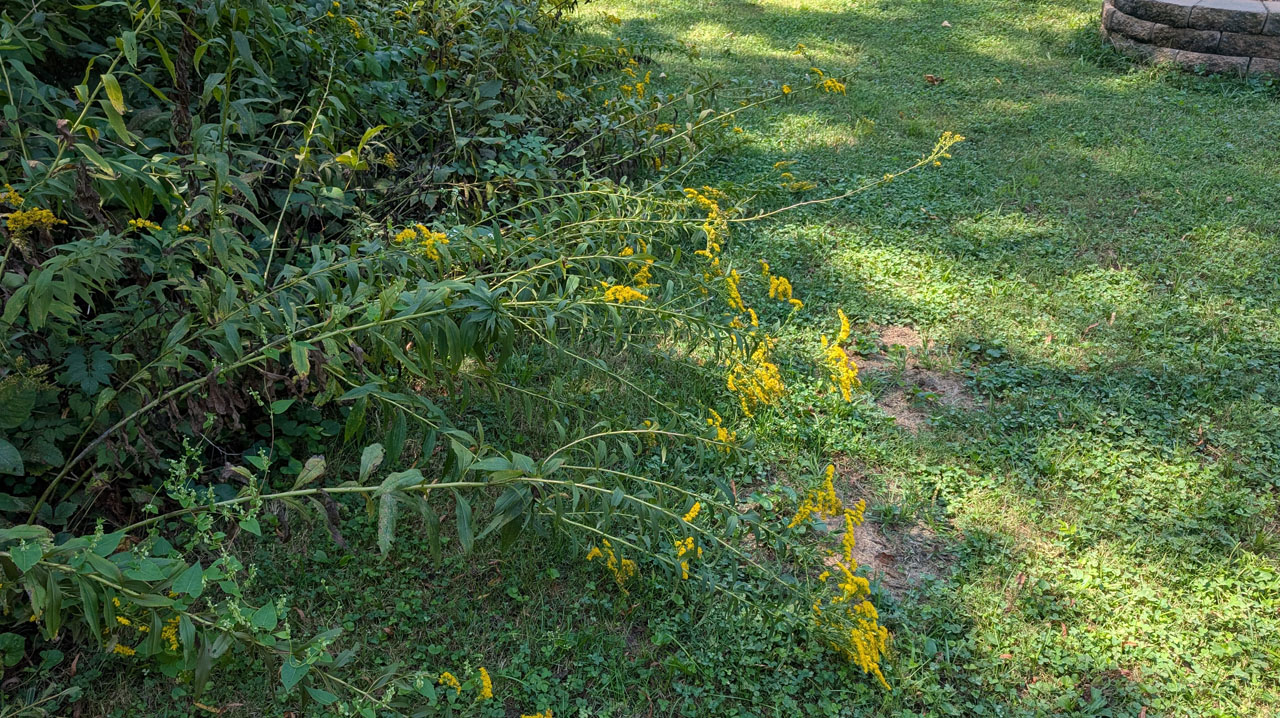
Photo: Kay Thomason (The Goldenrod (Solidago spp.) flopping here does not have any tall neighbors to help hold it up.)
You may also have the right conditions, do the appropriate maintenance, and still have plants flop over. I have a stand of Sunflowers in my backyard that were doing great. I cut them back in May to promote stronger stems and more blooms. They were planted in one big group and had each other to lean on. Right before blooms started popping, a storm brought a combination of heavy wind and rain to make the bloom heads heavy. Everyone is on the ground now; sometimes that’s just how it goes.
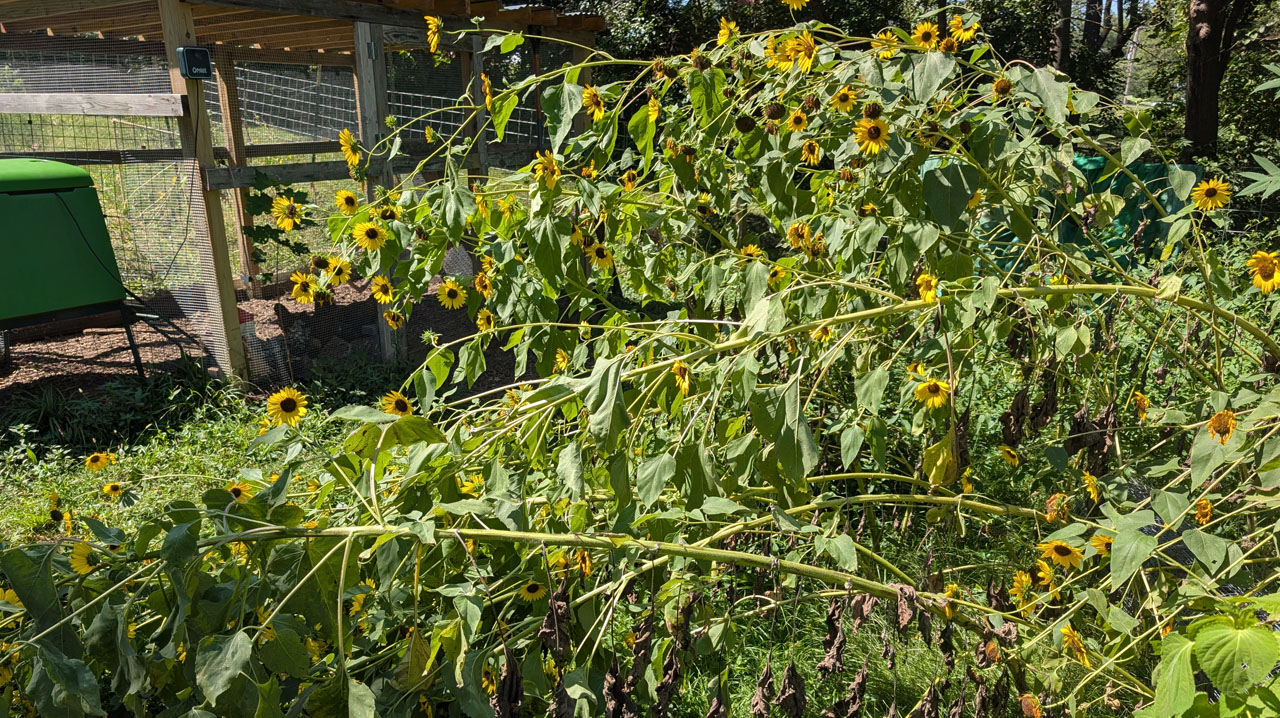
Photo: Kay Thomason (Heavy seed heads, combined with strong storm winds, created some floppy Sunflowers.)
One of the biggest advantages of native plants is that a little flopping can make a garden look more natural and provide habitat. Seedheads and leaning stems provide food and shelter for wildlife, so there’s often no need to make everything stand perfectly upright. If there are plants that you want to make sure don’t make a nosedive to the ground, here are some things you can do:
- Check the plant’s light requirements, and if need be, transplant them to a better space in the fall or spring.
- Avoid fertilizing. Native plants generally don’t need it.
- Use supports to keep plants more upright, and not flopping into walkways.
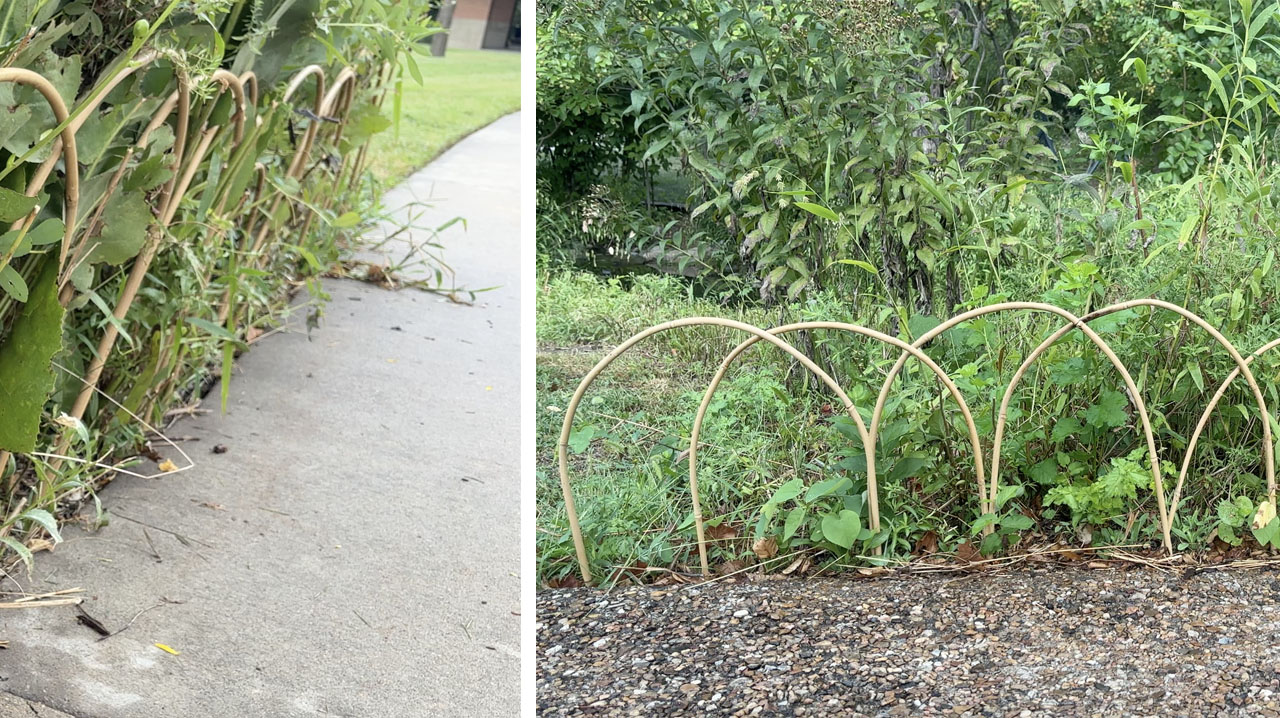
Photo: Maddie Ball
- Plant in groups. We recommend putting three to five of the same plant in a cluster to help them support each other. Then put clusters of different varieties next to each other that share the same height and growth habits. Think about including different types of root systems in your garden as well. The fibrous root systems of grasses pair really well with thicker tuberous systems to create stability for everyone.
- Try the “Chelsea Chop” next year. This is a pruning technique for perennials. It gets its name because the timing for this pruning coincides with the famous Chelsea Flower Show in London. Mid-May, cut the plant by one-third to one-half in height. For fall-blooming plants, this can be repeated in June. This should result in a shorter, bushier plant.
Here are some of the genera to look for when determining which plants to Chelsea Chop:
Agastache
Asclepias
Boltonia
Chelone
Coreopsis
Echinacea
Glandularia
Heliopsis
Hibiscus
Monarda
Phlox
Pycnanthemum
Ratibida
Rudbeckia
Solidago
Symphiotrichum
Vernonia
Veronicastrum


Write a comment: