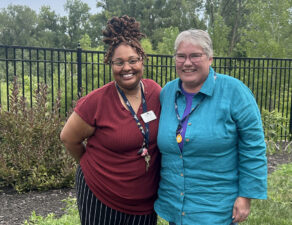
Article and photos by:
Whitney Barnardo, Pendleton Heights Pocket Park
Amelia McDaniel, Hyde Park Habitat Restoration Initiative
Laura Spencer-Morris, Troostwood Pocket Park
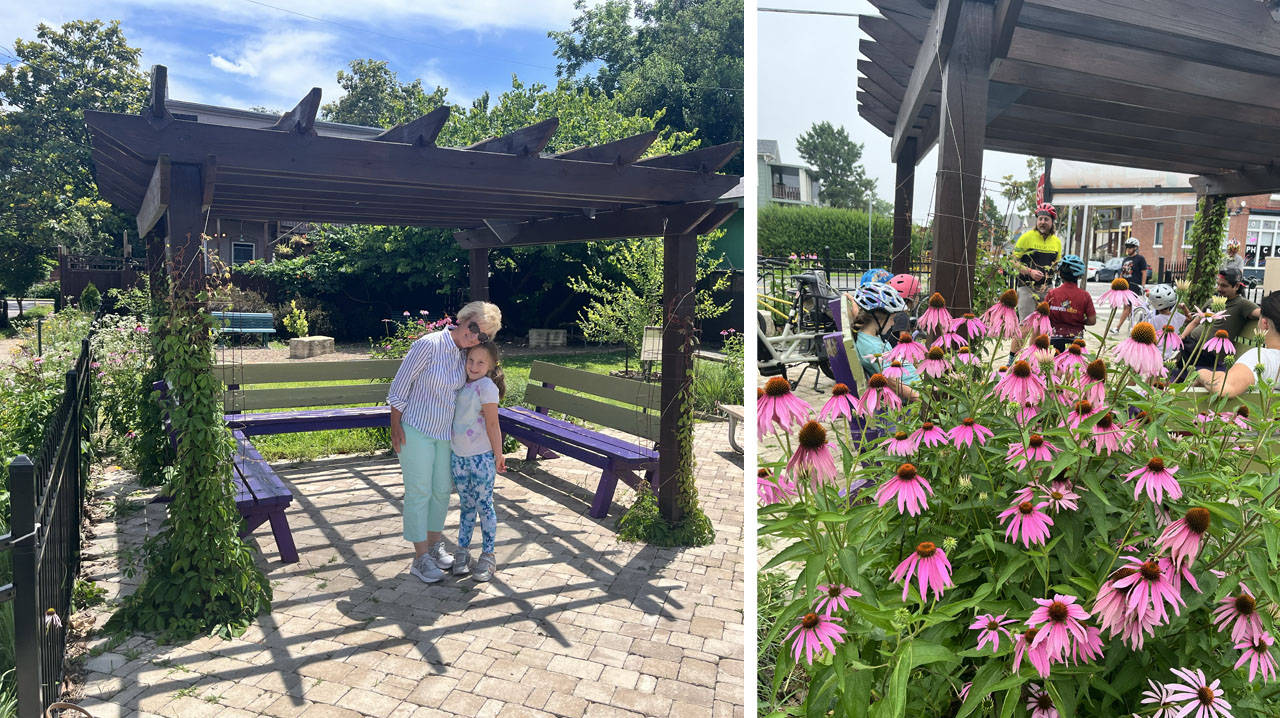
Designing and improving park spaces in Hyde Park, Pendleton Heights, and Troostwood Neighborhoods, we have learned a few key lessons that have led us to great success establishing urban habitats for people, domestic animals, and wildlife.
Each of us came to these projects as amateur home gardeners, but quickly we discovered how much more activity our public spaces host. At first some of us may have lamented and even resented that increased use. Don’t people know how hard we worked to make this place beautiful and inviting? Why do they pick our flowers/step on our plants/pull on our trees?
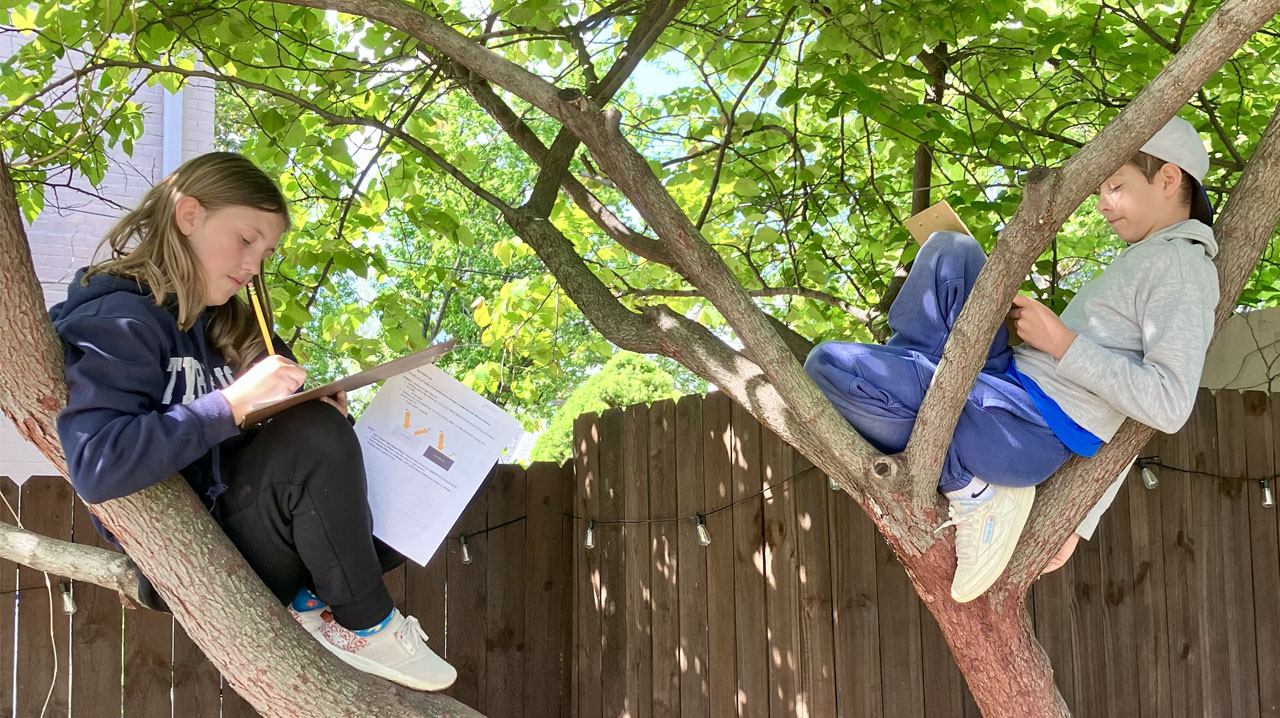 Students sitting in a mature Redbud tree in the Pendleton Heights Pocket Park
But as we saw examples like these, we were able to remember that the use IS the point! We want these spaces to draw people in. We want them to WANT to spend time here and to experience all of the benefits we know nature can provide.
Will our spaces always maintain an untouched, photo-ready perfection with lots of people and animals coming and going? Absolutely not. And now we wouldn’t have it any other way. We choose to invite and embrace all visitors by planting native plants well-suited to our environment and resilient to their footfalls, tugs, and innocent blunderings.
We’ve found that choosing native plants that also can handle other urban conditions, such as salt, breakage, and heat, makes a big difference. These plants are vigorous and yet manageable for volunteers to maintain, benefiting both people and wildlife.
If you’re planning a public space with landscaping, check out our recommendations for native plants we use ourselves. These plants perform well in our climate, tolerate some foot traffic, meet kids where they are, and are generally the bees’ knees.
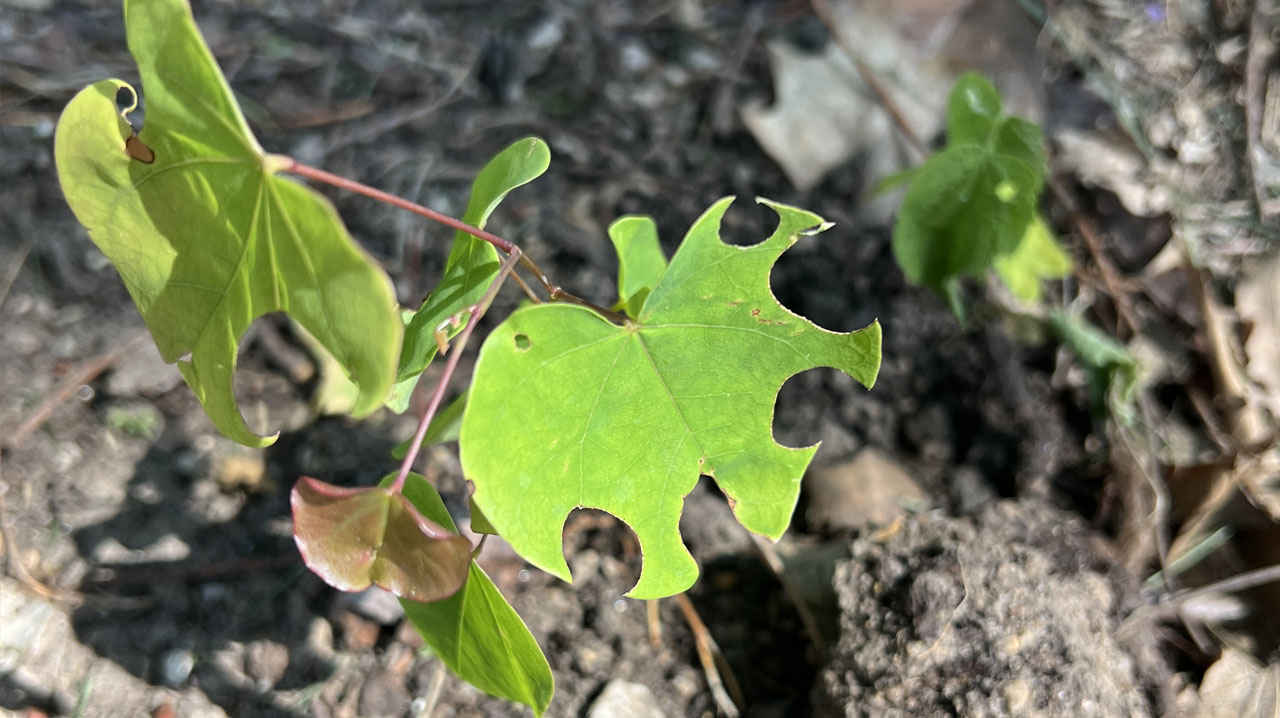 Leaf-cutter evidence on Redbud leaves
Tree: Eastern Redbud (Cercis canadensis). This tree is ubiquitous in the KC area and grows well with several stems, which makes it great for climbing. We WANT more kids to interact with our trees! Summer Leaf bees, also known as Leafcutter bees, love to use pieces of its leaves to build their nests.
Shrub: Ozark Witch Hazel (Hamamelis vernalis). Underused in more formal landscaping, this species’ January-February blooms are so early, it challenges our city-slicker understanding of nature and provides a valuable educational example of how resourceful and resilient native plants can be.
Vine: Virginia Creeper (Parthenocissus quinquefolia). These vines are powerful allies in the urban landscape, especially when creating shade without mature trees. Pop up a pergola or other sturdy structure, and this five-leaved ivy will grace you with ample shade in the first season! Its leaves turn a vibrant red in fall, bringing color to your canopy.
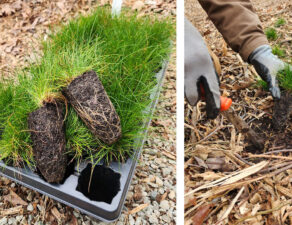
Grass: Little Bluestem (Schyzachyrium scoparium). From its feathery seed tops to the copper color it shows in fall, the visual contribution alone of this grass recommends it. But it also serves as a host plant for several species of skippers and adds a hushed rustle to the ambient atmosphere, a welcome buffer in urban spaces.
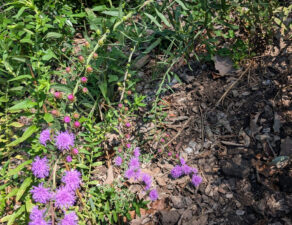
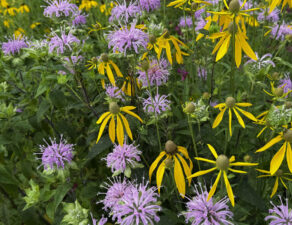
Forb: Purple Coneflower (Echinacea purpurea). Commonplace, to be sure, but also iconic. The classic shape of their blooms is easily rendered by our youngest and most inexperienced artists and doodlers. And at three to four feet tall, their bright, pinkish-purple flowers reach children at eye level, beckoning them into the garden.
As you continue in your gardening adventures, we hope you find as much joy, satisfaction, wildlife, and community as we have. See you in the park!