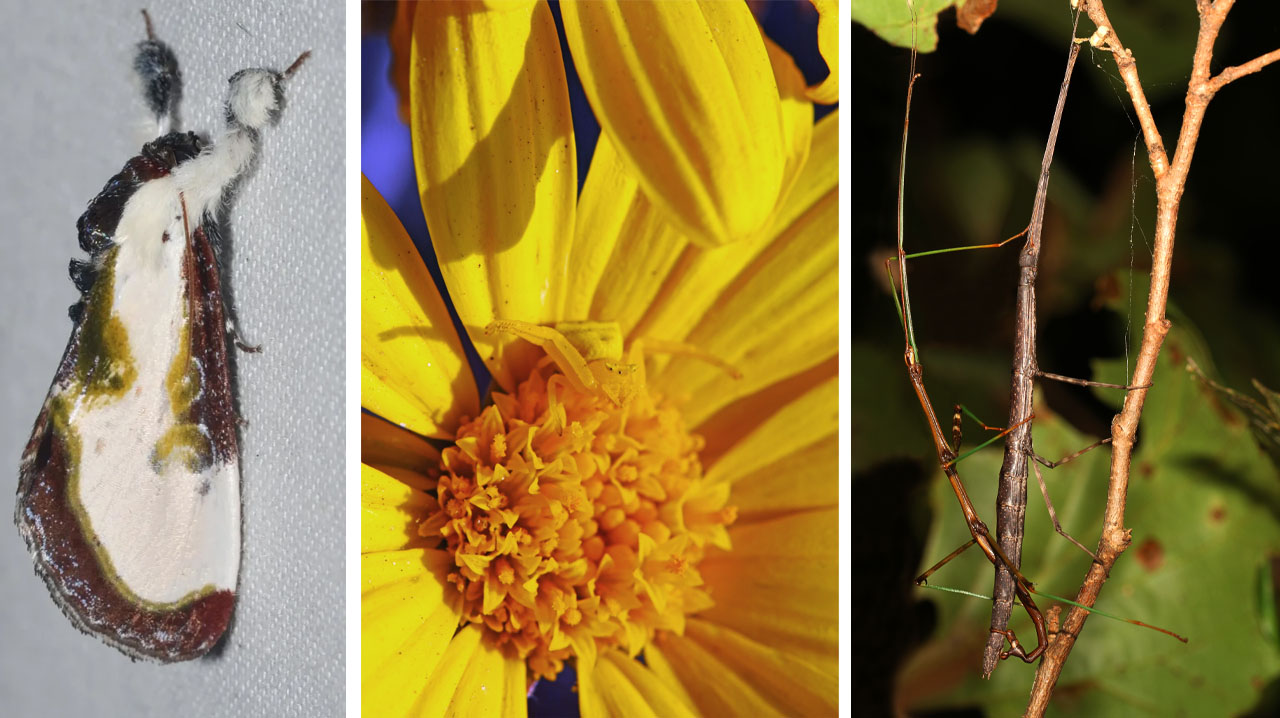
Photos: Above left: Beautiful Wood Nymph Moth by Andy Reago and Chrissy McClarren; Center: Yellow Flower Crab Spider by Lynn Greyling; Right: Northern Walkingstick by Judy Gallagher.
By Cydney Ross, Deep Roots’ Outdoor Education Manager
Survival mechanisms like camouflage and mimicry have evolved in the animal kingdom for millions of years. In the spirit of Halloween, we’re highlighting Midwestern insects that are masters of the masquerade. You may see them in your landscapes – but only if you look carefully. From insects disguised as plant material allowing them to avoid detection to those that bear a striking resemblance to snakes deterring predation, there are many fascinating examples of animal disguises.
An effective method to avoid being seen by hungry predators is to hide in plain sight. Mimicry is the physical, behavioral, or acoustic imitation of an organism or object where it gains survival or social advantages. By comparison, camouflage is when an animal’s patterns, colors, or materials allow it to blend into its background. Evolutionary biology teaches us that neither characteristic occurs due to conscious effort but instead stems from random genetic mutations and natural selection. These slight changes typically occur over generations. If an individual organism experiences a genetic mutation that alters their physical traits, this may reduce their chance of being predated. This advantage gives them a higher survival and reproduction rate, which over time makes these traits more common among its population.
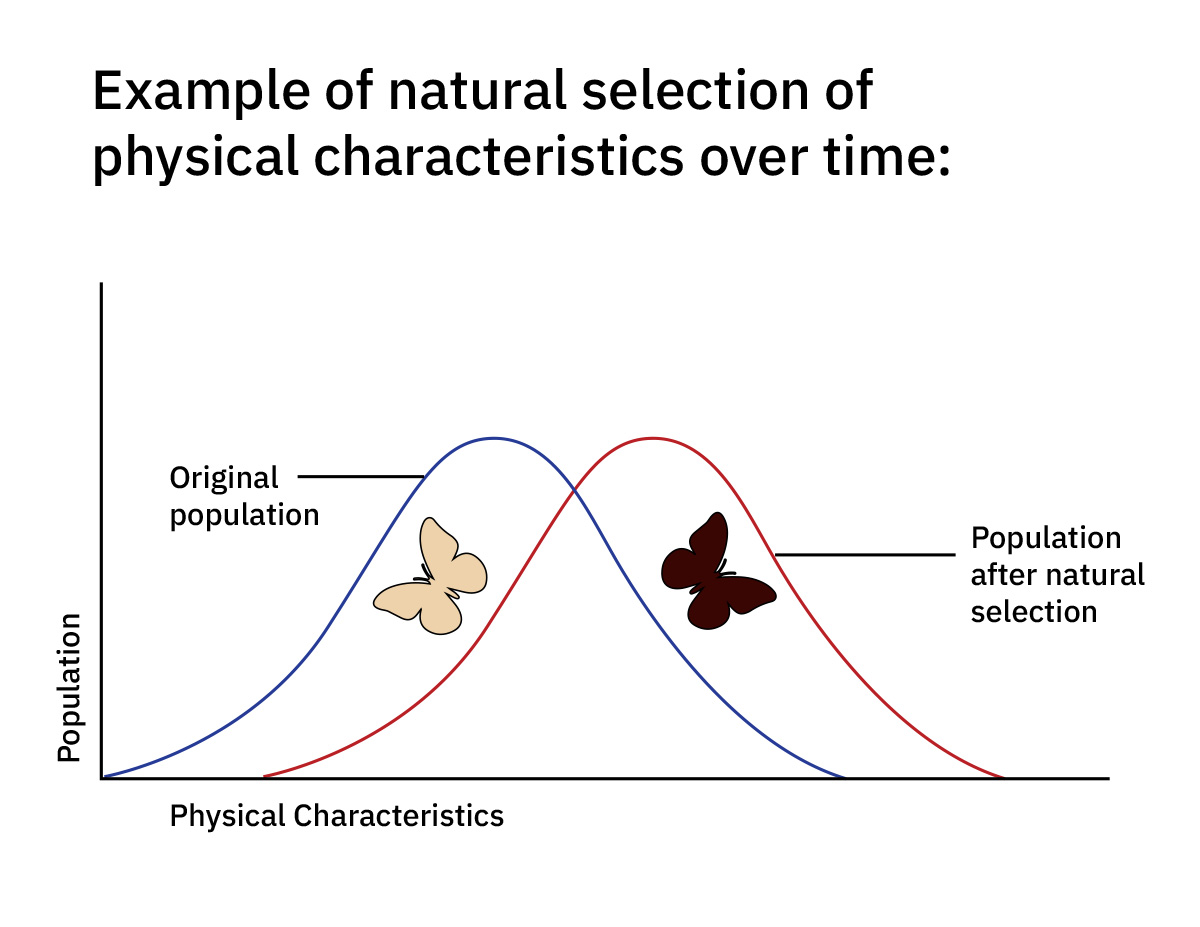
Caption: The above graph demonstrates a type of natural selection called directional selection. In the example here, the wing color of the butterfly population shifts from showing lighter colors to darker colors. This is a response to the individuals in the population with darker colored wings having higher survival and reproduction rates.
A great example of physical mimicry is the northern walkingstick (Diapheromera femorata). It looks just as its common name describes, which suits them well since they spend their lives among trees and shrubs eating leaves. Their deliberate movements even appear as if a branch is swaying in the wind. Then there are insects who look unappetizing as a way of deterrence, like the beautiful wood nymph (Eudryas grata). These moths are beautiful but also look convincingly like bird poop when they close their wings at rest.
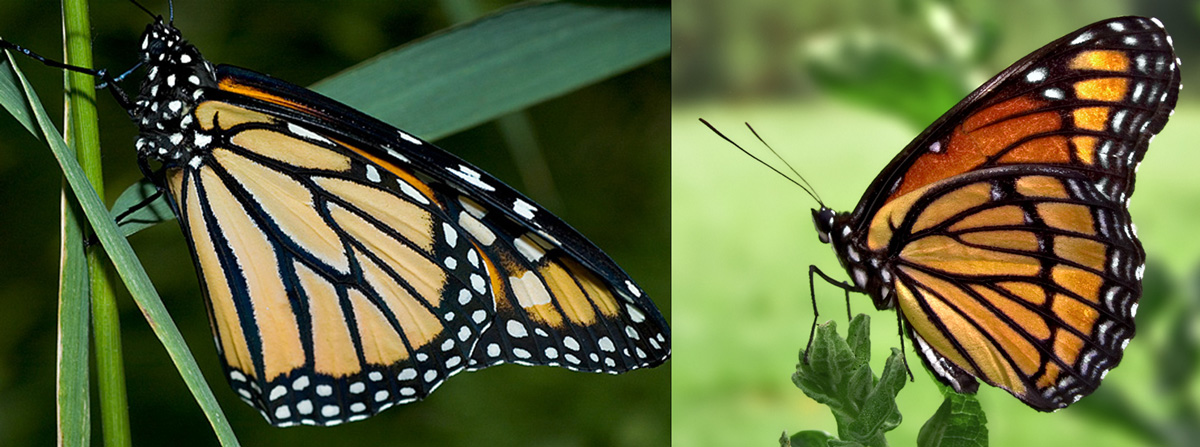
Photos by Piccolo Namek and April M. King. Left: Monarch, Right: Viceroy
Both the viceroy (Limenitis archippus) and monarch (Danaus plexippus) butterflies look strikingly similar with their bright orange wings covered in black lines and white spots. It was long thought that the viceroy was mimicking the toxic monarch, a concept known as Batesian mimicry (think of bee-mimicking flies). Scientists discovered viceroys are also unappetizing to birds and therefore are actually Müllerian mimics. Müllerian mimicry is when two or more harmful or distasteful species evolve having similar physical features. In this case, bright orange and black coloration reinforces warning signals and discourages predation.
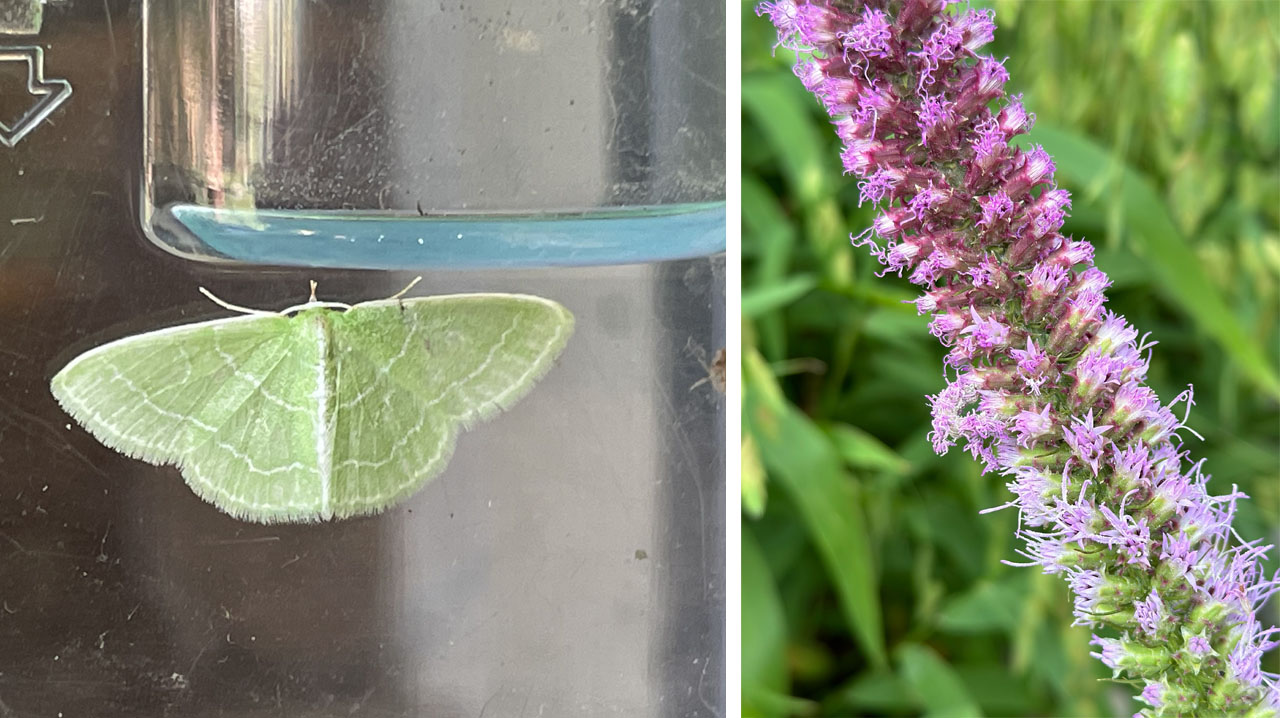
Photos by Cydney Ross
This next species is a great contender for the camouflage costume contest and is one of my personal favorites: the camouflaged looper caterpillar (Synchlora aerata). I first came across this charming caterpillar when I noticed frass around a bouquet of cut native flowers at the Anita B. Gorman Conservation Discovery Center. Upon closer inspection, I saw odd protrusions on the flowers of Prairie Blazing Star (Liatris pycnostachya). They were small inchworms covered in fuchsia flower petals – how cute! Not only do they stick bits of plant material to their body allowing them to camouflage, but they also eat petals, leaves, and stamens. These small creatures transform into the ethereal wavy-lined emerald moth (Synchlora aerata) and can be seen in native gardens in mid-summer.
If you can’t hide from or fight back a predator, another approach is to startle them. The polyphemus moth (Antheraea polyphemus) has deceptive coloration on their wings as a defense mechanism. The main coloration of this large silk moth is a drab brown that blends in well with woodland surroundings. When disturbed, the wings open revealing brightly colored eye spots resembling the head of a great horned owl (Bubo virginianus). These magnificent eye spots may confuse or distract predators, allowing for a quick escape.
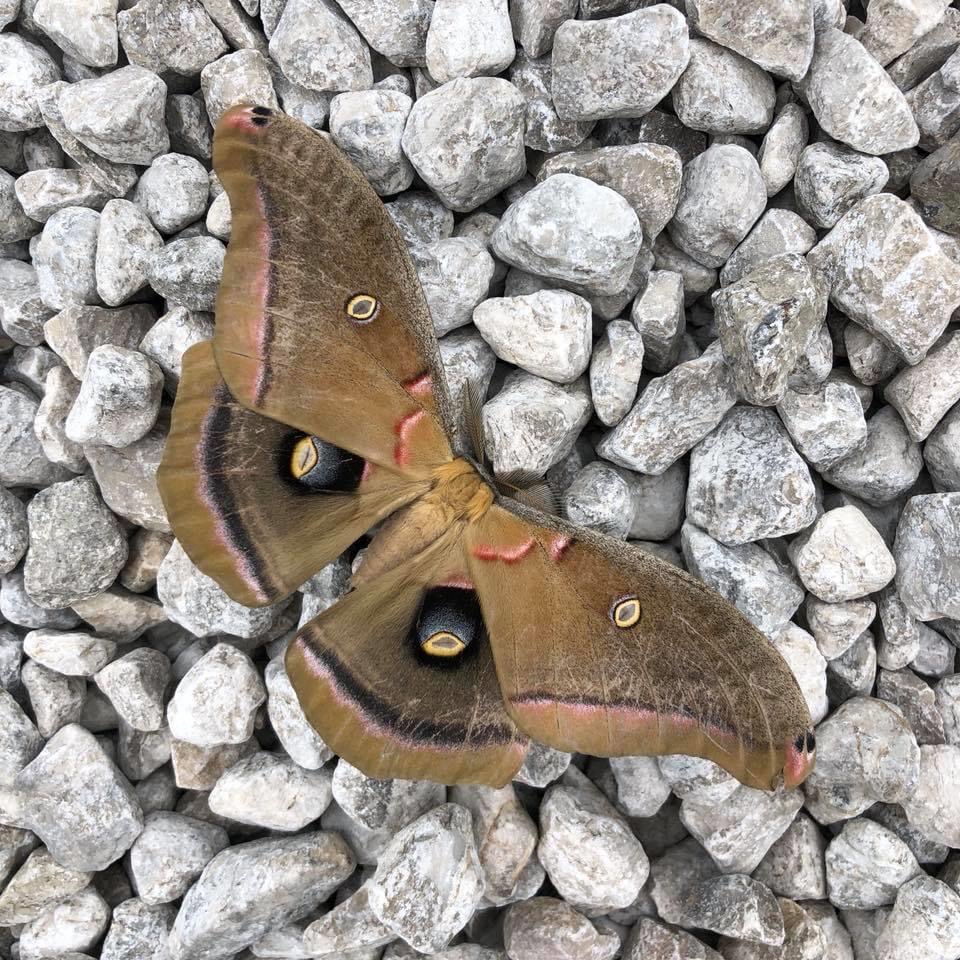
Photo by Cydney Ross
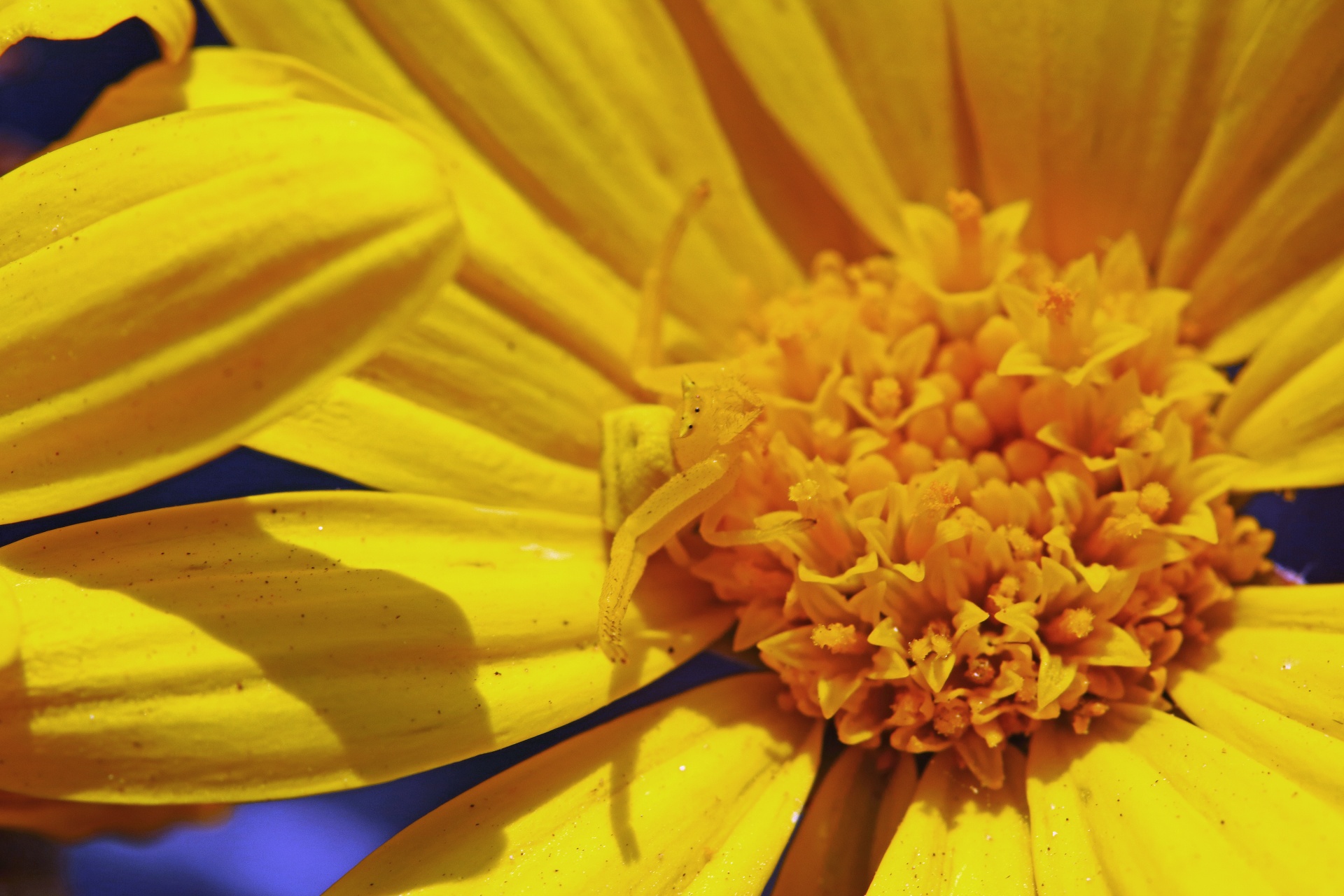
Some predatory insects’ adaptive camouflage techniques allow them to ambush prey. Flower crab spiders (Misumena vatia) are white or yellow depending on the flower they’re sitting on. Their strategy is to survey multiple sites and determine which are most frequented by prey. They then sit very still on a flower until an unsuspecting pollinator shows up and becomes their meal. These spiders can change colors through molting or if their food is heavily pigmented, but the transformation takes several weeks. Additionally, some flower crab spiders reflect ultraviolet light which alters how floral signals are perceived by pollinators. Since many pollinators follow ultraviolet-based nectar guides on flowers, this reflection can draw insects into striking distance.
Nature is in constant flux. There are harmless animals mimicking species to appear dangerous. There are others blending in with plant material to hide from predators or catch their next meal. Millions of years of evolution have brought fascinating adaptations that can be observed right in our own landscapes. These curiosities are only revealed when we have native habitats to support these amazing creatures. It’s for these reasons we understand what you plant matters.



Write a comment: