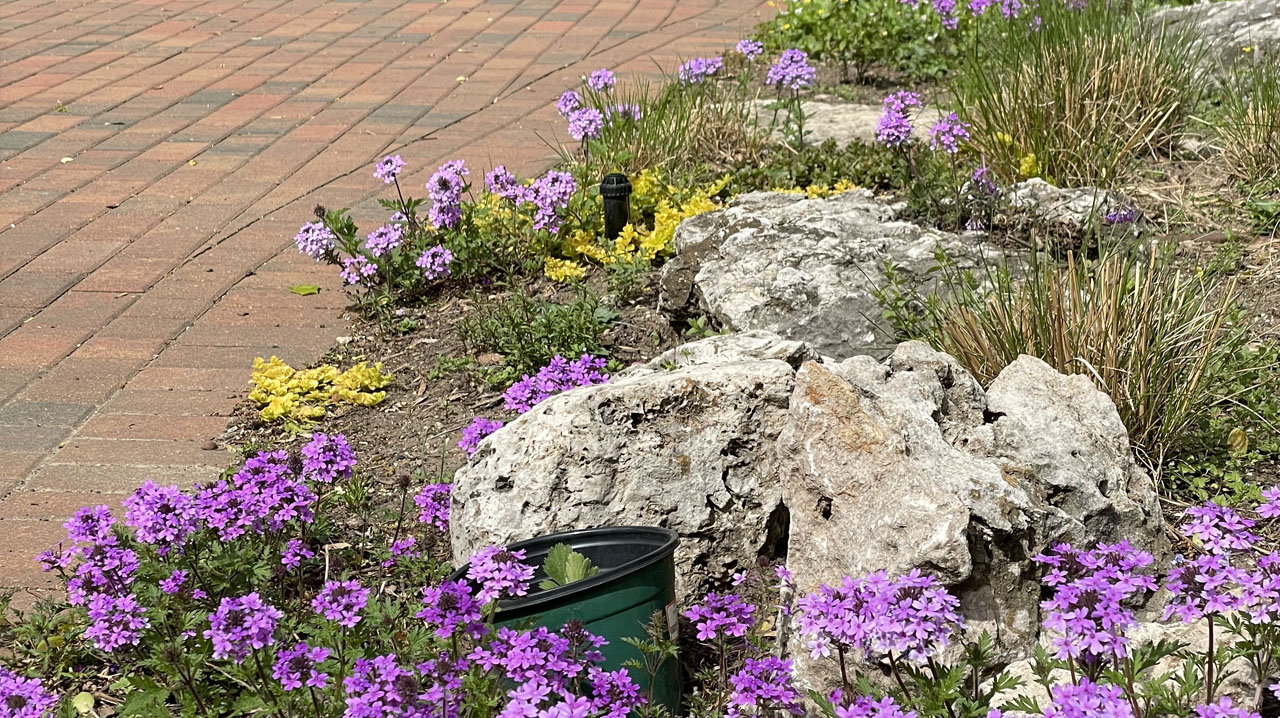
Photo: Cydney Ross
Q: My husband insists on putting rocks in our landscape as it’s easier to clean up. How bad are rocks for natives? Hugs and kisses to the Deep Roots Team. You ALL Rock!!!
What a great question. We say that there’s a native garden style for every site condition, and a landscape that’s rocky is no exception. Incorporating stone is not only an excellent way to provide contrast to the beautiful textures and colors of a native plant palette, but many eye-catching species thrive in the more arid and well-drained microclimates of glades and other rocky, sandy sites.
Depending on your space and design preferences, large boulders might be a great way to fill negative space in the garden bed, reducing the amount of mulch needed and holding down bare spots where weeds would be a persistent problem. Nature abhors a vacuum, and rocks don’t move much. Seasonal cleanup is also a breeze when you have hardscape elements that don’t collect leaves, require top dressing, or get blown or washed away by the elements. And defining your native beds with clear edges is one of the most effective cues to care that can signal the intentionality of your garden.
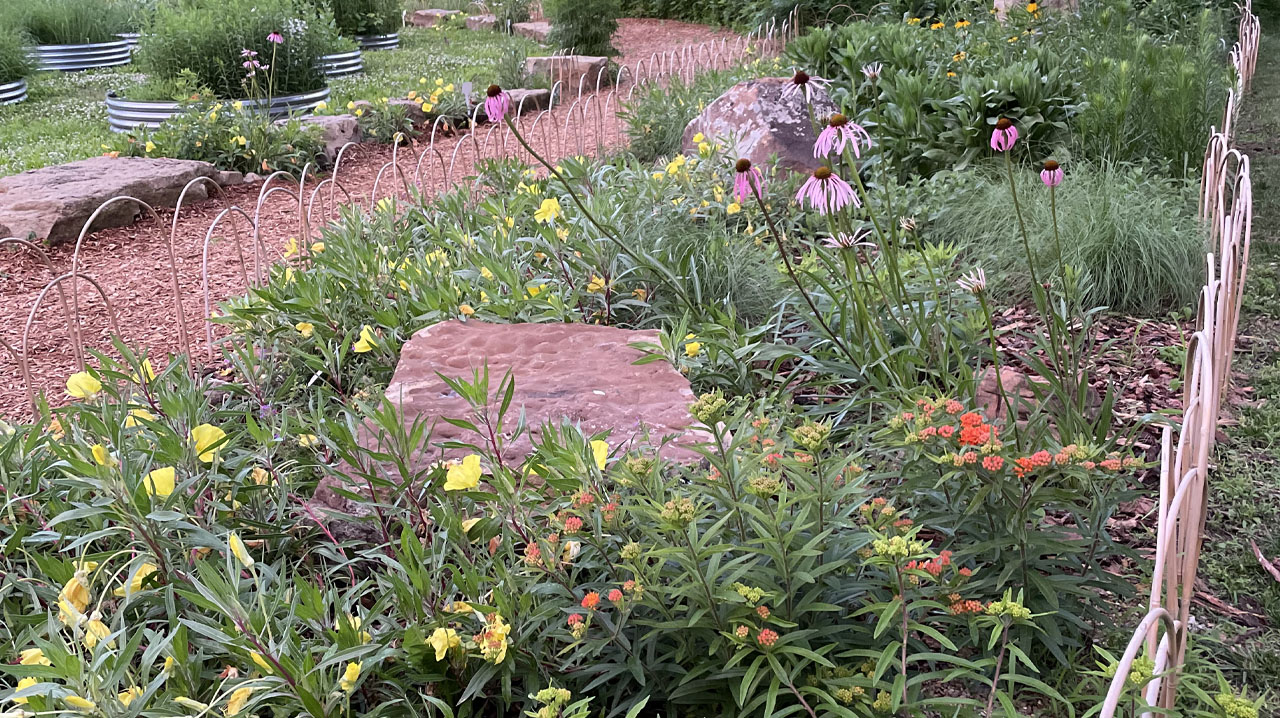
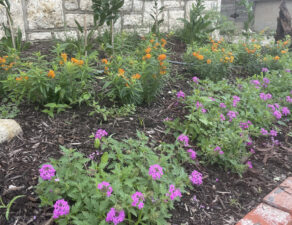
Photo: Primrose Prairie garden at the Anita B. Gorman Conservation Discovery Center, Cydney Ross
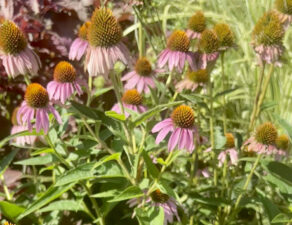
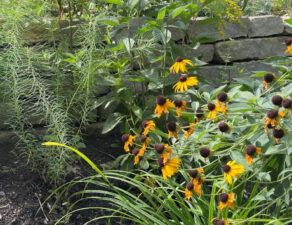
When it comes to using cobbles, pebbles, or pea stones in place of organic mulches, we can take a great example from the Primrose Prairie garden at the Anita B. Gorman Conservation Discovery Center. There, amidst a crunchy base of rocky fill, hard-nosed species like Evening Primrose (Oenethera macrocarpa), Butterfly Milkweed Asclepias tuberosa), and Rock Pink (Phemeranthus calicynus) take the heat of the city like champions. Long-blooming Purple Coneflowers and Black-Eyed Susans offer plentiful blooms and a buffet of nectar and pollen. Bolstered by a few well-behaved prairie grasses, later season pollinator magnets like Blazing Stars (Liatris spp.) extend the ecological value of your landscape whether you choose to “Leave the Leaves,” or you opt to “Rock” in the spaces between the native plants that you choose for your landscape.
Answer from: Chris Cardwell, Urban Conservation Program Manager
We get a lot of questions throughout the year about every which topic pertaining to native gardening. More often than not, these are questions your neighbors and peers are pondering as well! We will be answering submitted questions quarterly in The Pollinator. If you have any burning native plant related questions, send them to hello@deeprootskc.org or send a direct message to our Facebook or Instagram account.
Write a comment: