By Kay Thomason, Deep Roots’ Outdoor Education Program Coordinator
Photos: Cydney Ross, Deep Roots’ Outdoor Education Manager
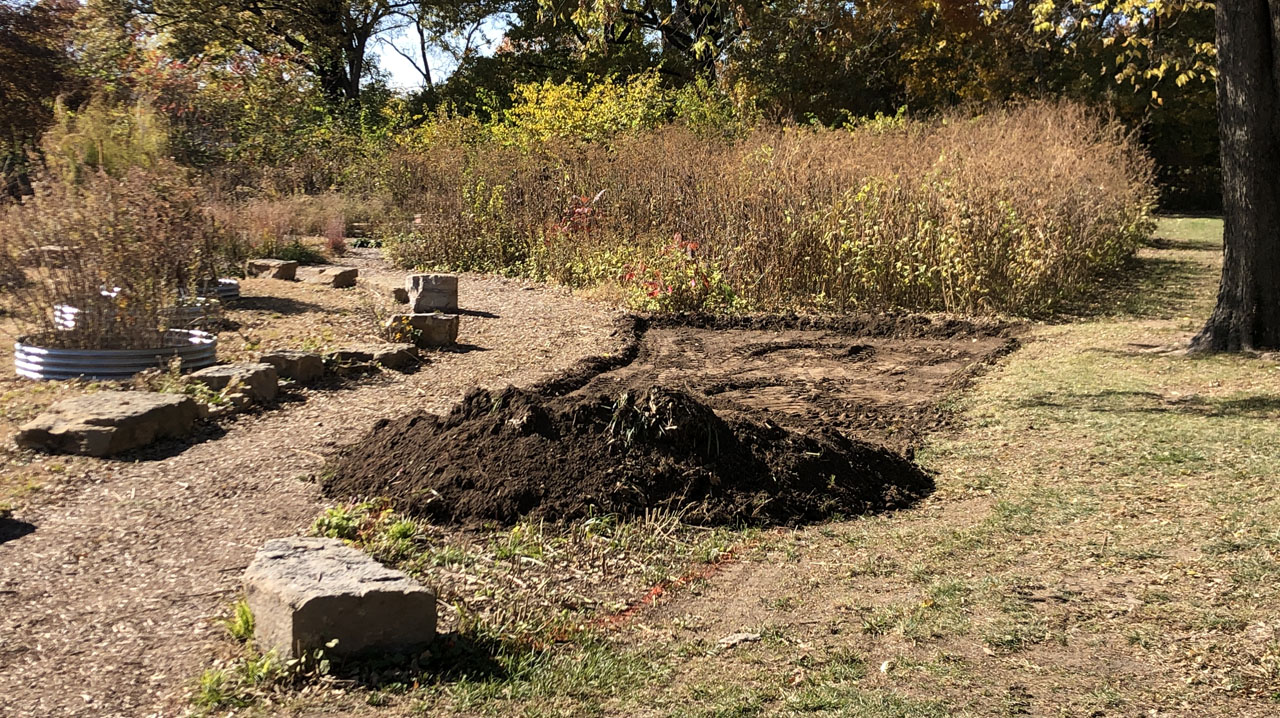
Creating a new garden bed often starts with one big question: How do you get rid of the existing sod? Sod is a piece of grass-covered surface soil held together by matted roots, also called turf. Fortunately, there are several approaches with varying comfort levels: both quick and hands-on techniques, and slower, low-effort methods. In this guide, we’ll explore three practical ways to remove sod and help you choose the best option for your space.
Physical Removal
One of the most immediate and effective ways to convert lawn into a garden bed. This method cuts and lifts the existing sod with a flat spade, a sharpshooter shovel, or even by hand in small areas. A pitchfork can help pry up the sections once they’re cut. Shake or knock off as much soil from the roots as possible.
While this method takes some effort, it gives you immediate planting space and removes competition from established turf. Once the area is cleared, plant directly into the bare soil, add mulch, and you’re done.
Pro tip! Instead of discarding the sod, flip the pieces upside down and use them to smother grass in other parts of your yard. This method will kill off the grass beneath it in two to six weeks depending on weather conditions. Even before it’s fully decomposed, you can plant again once the grass has yellowed and started to break down.
Lasagna mulch
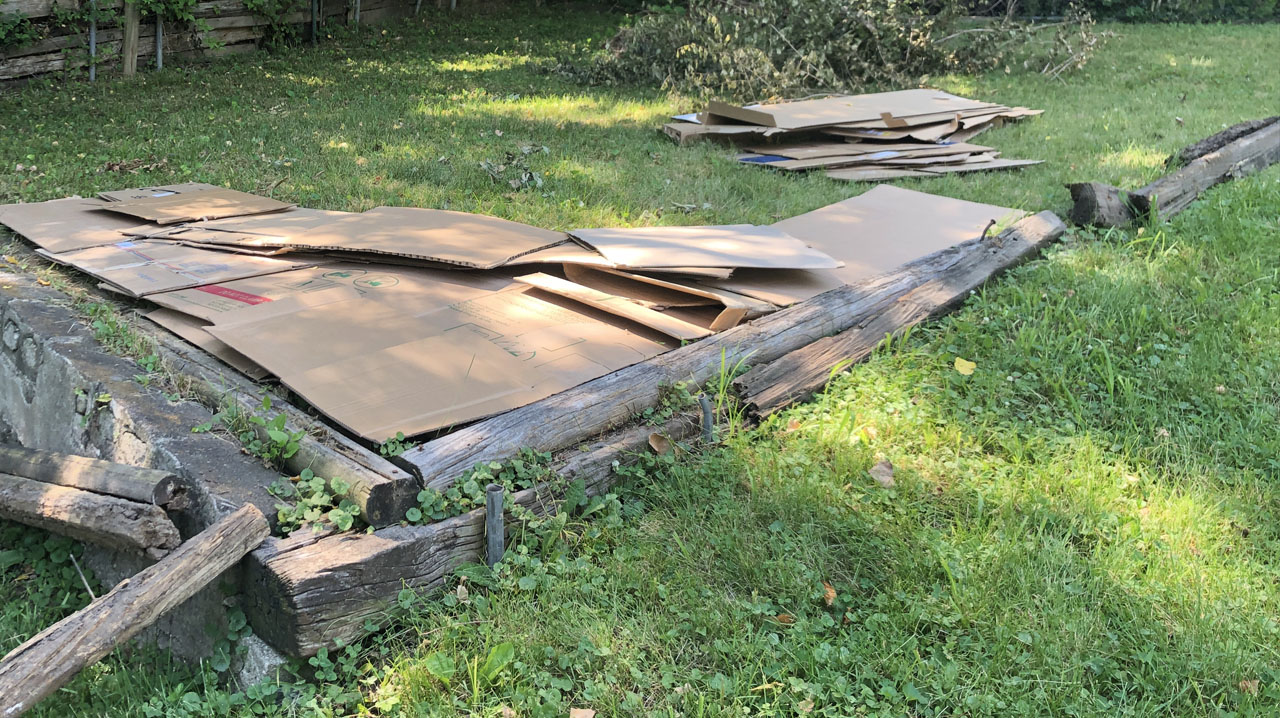
Lasagna mulching is an easy, no-dig method to remove lawn by layering organic materials right on top of existing ground. Begin with a base layer of carboard, overlapping each piece by 4-6 inches to guarantee weed suppression. Soak the cardboard well. This will jump start the decomposition and make it easier to cut through when planting.
On top of the cardboard, spread a generous layer of compost followed by a layer of mulch. You can also experiment with alternate “green” materials like grass clippings or kitchen scraps and “brown” materials such as leaves, straw, or shredded paper.
Fall is an ideal time to lasagna mulch. It’s also great just before a steady rain. But this method can be used year-round. Water is the key to success. water the layers thoroughly and repeat as needed to help everything settle and break down. When you’re ready to plant, simply push your trowel through the softened cardboard.
Over time, these layers break down into nutrient-rich soil. It’s a low-maintenance, sustainable way to create a productive garden bed while recycling organic waste.
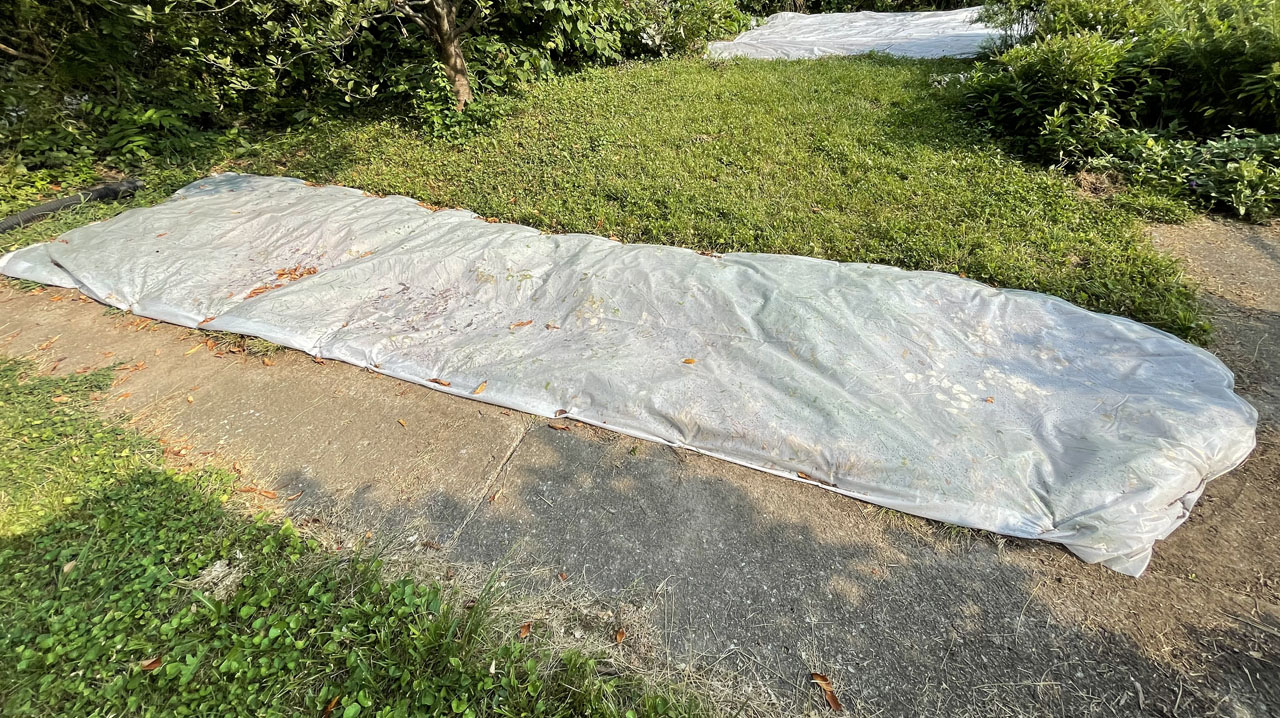
Another low energy, chemical free way to kill sod is solarization. This process is best done during the hottest part of the year because we’ll be using the sun’s heat to kill grass, weeds, seeds, and many soil-borne pests.
Start by mowing the grass short and watering the area well. Moist soil conducts more heat and will germinate weed seeds in the soil. Cover the space with a clear plastic tarp (4-6 mil thick) and secure the edges to trap the heat and moisture. Wait two weeks, then remove the tarp for two weeks to let any weeds or seeds germinate. Replace the tarp for a final two weeks. Make sure you don’t leave the tarp on for more than two weeks. Leaving the tarp on too long will kill microbes and fungi that are important for soil structure, both of which we need to benefit our future native plants! Once the process is complete, you’re left with a clean slate that’s ready for planting or adding soil amendments.
Chemical removal
The above methods of removal work for most of the sod types in our area. Unfortunately, there is one grass that will not die from lasagna mulch or solarization: Bermuda grass (Cynodon dactylon). This species is especially persistent, with deep roots and aggressive spreading habits that make it resistant to techniques like lasagna mulching and solarization. For reliable eradication, a glyphosate-based herbicide is often the most effective option.
Please consider these safety before you apply.
- Wear appropriate protective clothing, including gloves and a mask.
- Apply only on calm days to prevent drift onto desirable plants.
- Check the forecast and avoid application if there’s rain in the next 48 hours.
- Always read and follow the manufacturer’s instructions on the product label.
For best results, apply glyphosate to actively growing grass during warm weather when the plant is not stressed. Ensure the spray coats as much green foliage as possible. Because Bermuda grass can regrow from persistent rhizomes and stolons; a second or even third application may be necessary.
Glyphosate is nonselective, meaning it will damage and kill most plants with which it comes into contact. Apply carefully, and avoid overspray onto desirable vegetation.
Resources
Now we get to the fun part! What plants should go into this blank canvas you’ve created? Check out our Sweet Sixteen list and Kansas City’s Keystone species to find some inspiration. These native plants are versatile, robust growers that pack a huge beneficial impact. Once you have your shopping list made, visit us at one of our upcoming native plant sales. Native plant experts will be on site to answer questions, too!