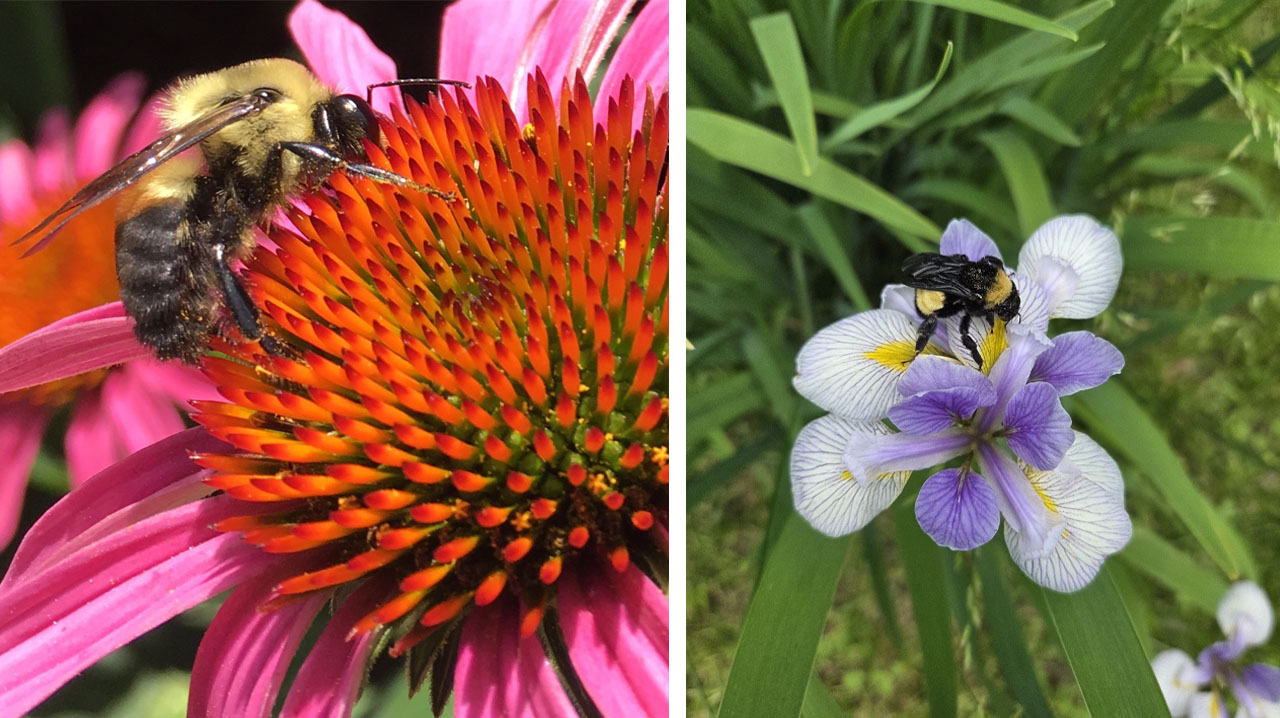
Photos: Bumblebee on Coneflower by Jim Pascoe (left), Bumblebee on Iris by Amanda Gehn (right)
If you’ve ever rubbed a balloon on the carpet and then held it by a friend’s head, you may have chuckled at the ridiculousness of their hair sticking to the balloon by lifting upward. This ‘stickiness’ is caused by static electricity – an electric attraction between a positively and negatively charged surface. This same attraction is happening constantly in our gardens, aiding in the productivity of pollination. For those of you who did not like chemistry class and have a gag reflex toward words like ‘proton’ and ‘electron,’ bear with me. Understanding this coevolved signaling method between pollinator and plant is worth the extra brain energy.
All matter is built up of elements, and all elements have a charge that’s positive, negative, or neutral. Our atmosphere has a positive charge relative to Earth’s surface, which has a negative charge. The plants that are rooted in the earth carry that same negative charge. However, this charge is not evenly distributed throughout the plant and instead tends to concentrate around outward facing corners such as on the leaves or on the stigmas (pollen-receiving female organ).
Now let’s talk about bees. Note: What I am about to describe applies to many other pollinators as well, but for the sake of simplicity, we will be focusing on bees. When bees fly, their wings experience friction against dust and air particles in our atmosphere; think about the balloon rubbing against a carpet. That friction causes the bees to lose electrons (negatively charged particles), and so the bees gain a positive charge.
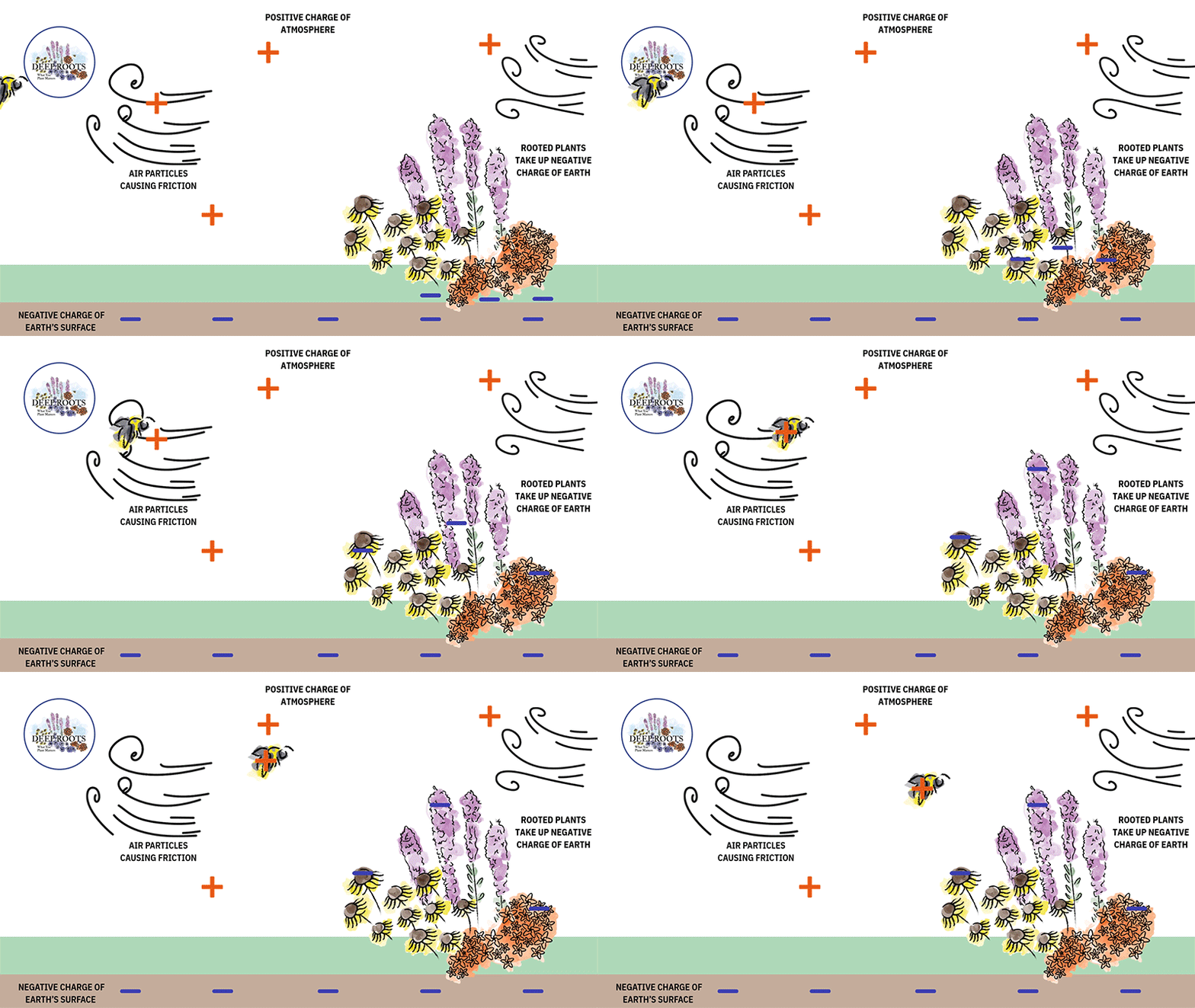
Caption: This animation demonstrates the difference between the charge of our atmosphere and Earth’s surface. Notice how this impacts the charges of different organisms.
Plants are negative, bees are positive, and if there is one lesson from chemistry that tends to stick, it’s that opposites attract, like magnets!
This attraction makes for a more efficient and reliable pollination process. For starters, when a bee flies by a flower, it is signaled by their electric attraction. It’s theorized that the attraction signals the bee by moving the bee’s hair or antennae. A 2013 study at the University of Bristol found that bees could not only sense the electric field of a flower but could use the varying patterns of the fields to differentiate them. In other words, where the charge accumulates on the flower creates a visual of that flower’s shape, allowing the bee to be more selective. If your mind is already blown away, pick up the pieces and put them back together because there’s more.
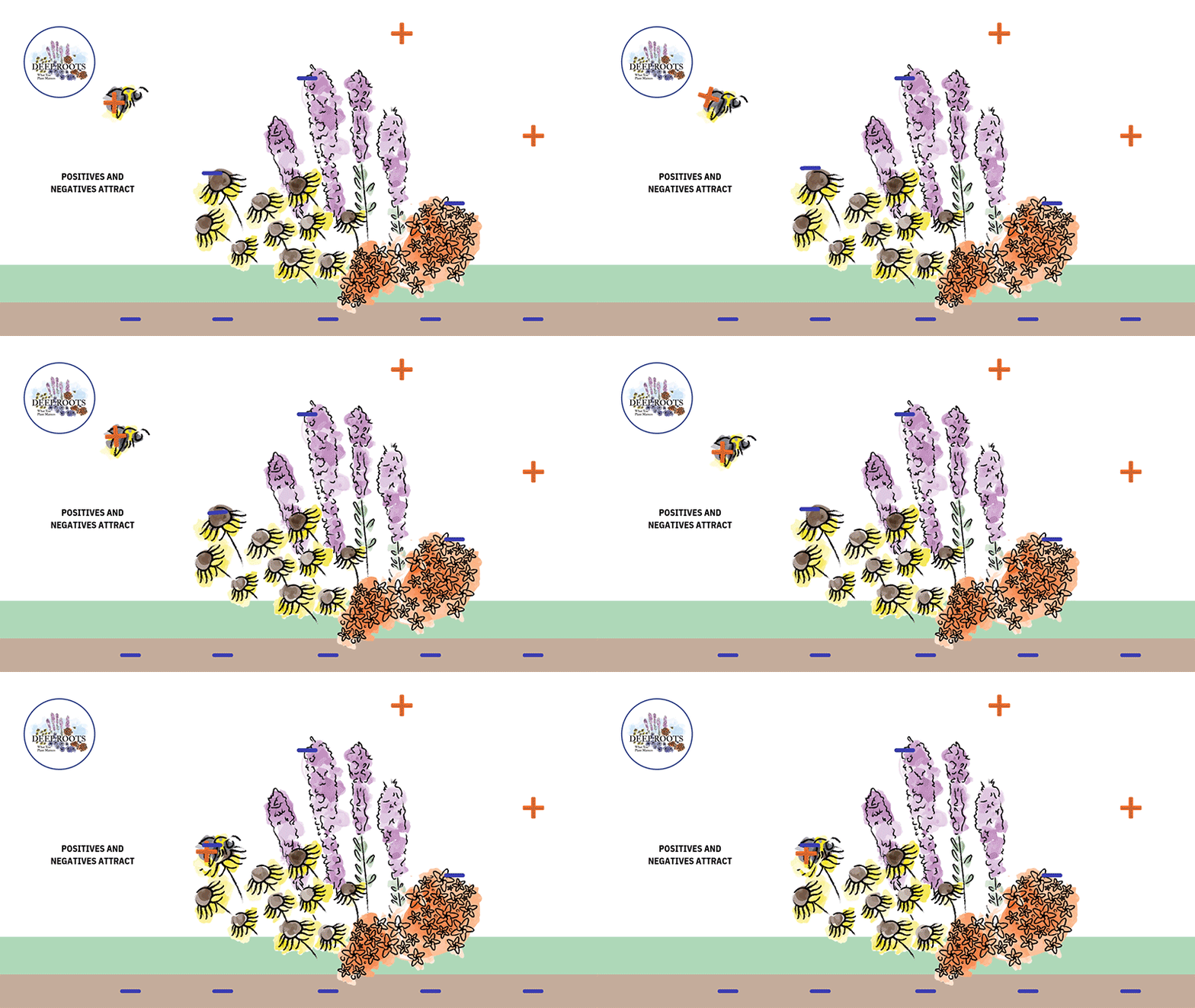
Caption: When bees fly past a plant carrying the opposite charge, the magnetic force is thought to cause vibrations in the pollinator’s hairs or antennae.
Thanks to these differing charges, the pollination process begins before the bee even lands on the flower. Like magnets drawing together, the negatively charged pollen will jump off the stamen and stick to the positively-charged bee. After a bee has landed on a flower, the flower’s charge is temporarily altered. This lasts for fewer than two minutes but during that time, the weaker charge is a signal to the next bee that passes by that this flower was recently visited and may be low on nectar or pollen. This saves energy for the bee who can move on to a flower it is more strongly attracted to.
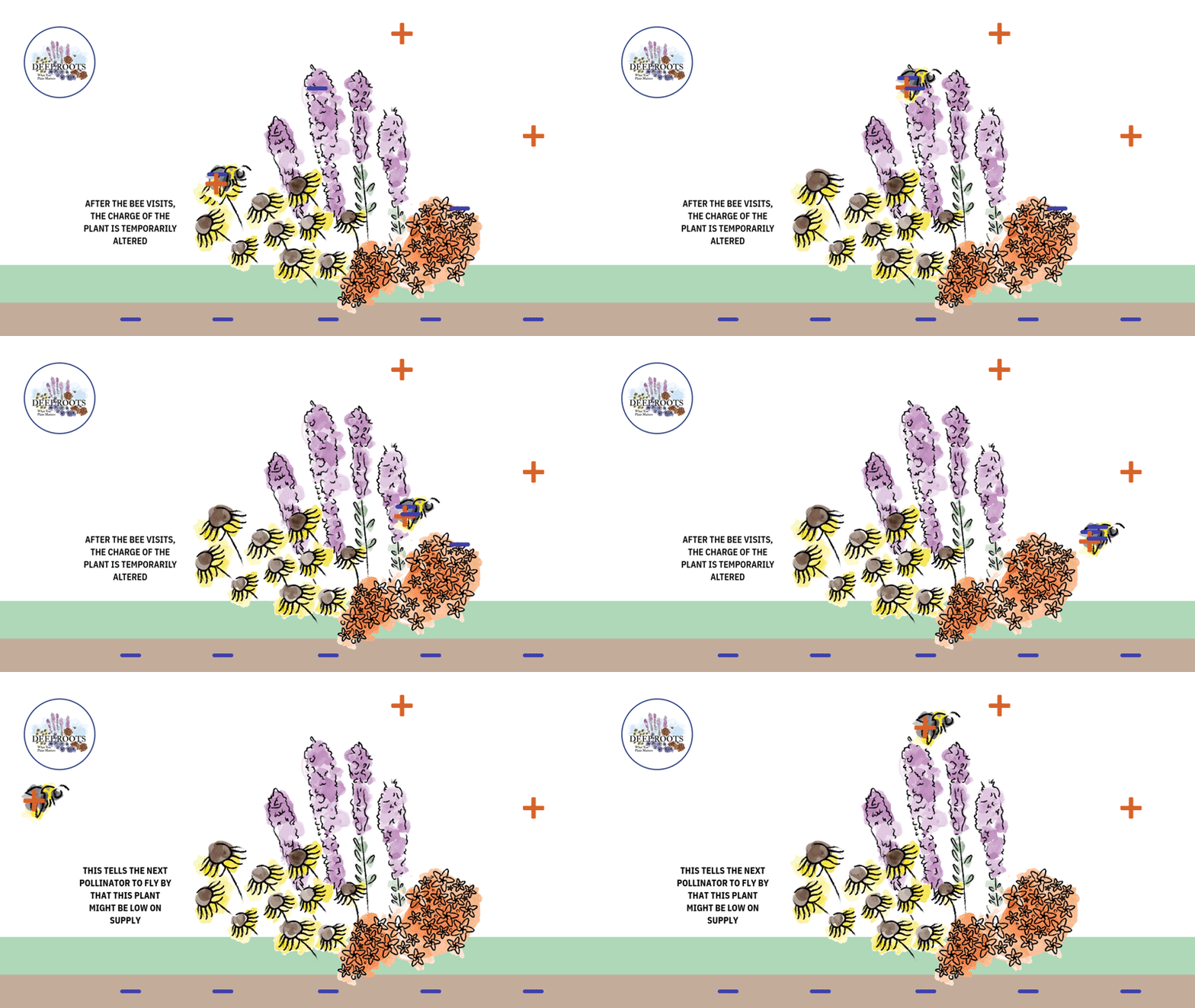
Caption: The neutralized charge of the flower notifies the next bee to fly by, since it was recently visited.
The cherry on the cake: some of the pollen now hitching a ride on the bee becomes positively charged. When the bee lands on the next flower, that pollen has a magnetic attraction to the fresh, new, negatively-charged stigma and so jumps off the bee, pollinating the flower. It’s hidden innerworkings like these that make me feel a part of something big and give me a deeper appreciation of our complex and magical ecosystems.
Clarke, Whitney, Sutton & Robert. Detection and Learning of Floral Electric Fields by Bumblebees. Science http:/dx.doi.org/10.1126/science.1230883
Yong, E. (2013, February 21). Bees Can Sense the Electric Fields of Flowers. National Geographic. https://www.nationalgeographic.com/science/article/bees-can-sense-the-electric-fields-of-flowers