Article by: Stacia Stelk, Deep Roots’ Executive Director
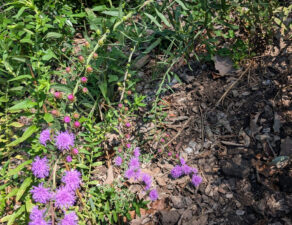
Purple Coneflower (Echinacea purpurea) Photo by Maddie Ball
Purple Coneflower and Big Bluestem
Plant physiology is more than just diagrams of leaves and roots. For those of us working with native systems, it’s more useful to think of it as a set of dynamic mechanisms: the many ways plants actively process water, light, nutrients, and biotic relationships. Our region’s native species’ physiology is not just functional but locally optimized. These traits keep plants upright and not flaccid when it’s dry.
Native plants rely on complex physiological systems to manage water retention. Yes, many prairie forbs and grasses have extensive root systems. Equally important is how they regulate water at the cellular level. Traits like stomatal control[1], waxy coating[2] and osmotic adjustment[3] allow some species to maintain turgor pressure during intermittent drought.
- Stomatal control reduces water loss through transpiration[4].
- Waxy cuticles limit evaporation from the leaves.
- Osmotic adjustment helps cells retain water and sustain turgor (internal water pressure) when soil moisture is low.
In practice, this means native plants don’t just rely on “Deep Roots” to access more water (but what kind of name would Stomatal Control be for a native plant organization?). Our native plants have evolved to balance carbon gain with water loss to manage droughts. Big Bluestem (Andropogon gerardii) and Purple Coneflower (Echinacea purpurea) are great examples of plants that optimize these traits.
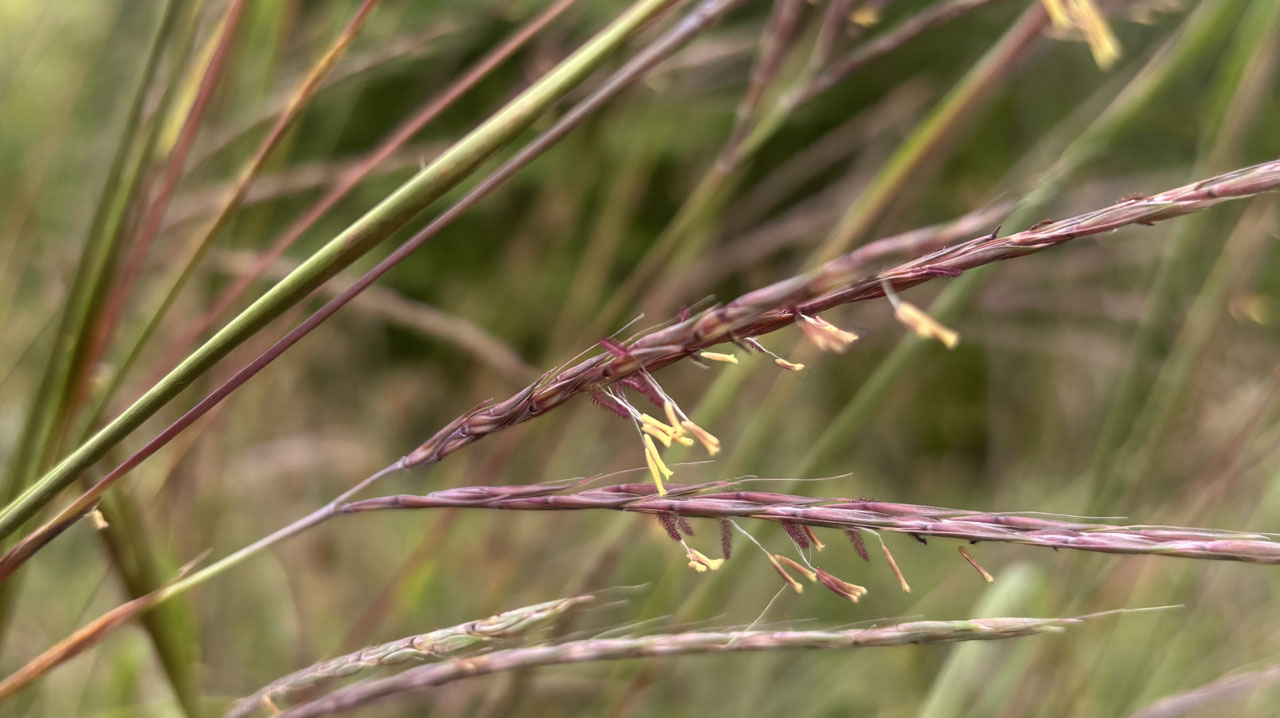
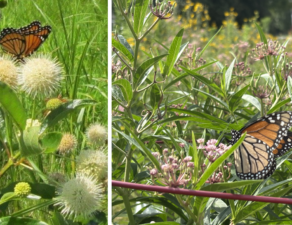
Big Bluestem (Andropogon gerardii) Photo by Maddie Ball
Photosynthetic pathways add another layer of nuance. Photosynthesis converts CO2 into sugars to be used as energy by the plant. However, plants simultaneously experience photorespiration which converts oxygen to emitted CO2. This decreases the efficiency of photosynthesis and is a waste of energy for the plant. To combat this, our native warm season grasses rely on a specific form of photosynthesis known as C4 photosynthesis. C4 photosynthesis concentrates carbon dioxide in specialized cells, reducing photorespiration[5] and increasing efficiency under full sun and high temperature conditions. This is why species like Switch Grass (Panicum virgatum) remain productive through midsummer, when many cool-season, C3 plants slow down.
Nutrient cycling is another area where native plant physiology intersects with ecosystem function. Many native species are adapted to relatively low-nutrient soils and form associations with mycorrhizal fungi to enhance nutrient absorption. These symbiotic relationships effectively expand a plant’s root system, improving access to phosphorus and other limiting nutrients. Soil disturbance through tilling or plowing can break these networks. This helps explain why native plantings often establish more successfully in less compacted soils and thrive when they’re given time to rebuild below-ground communities.
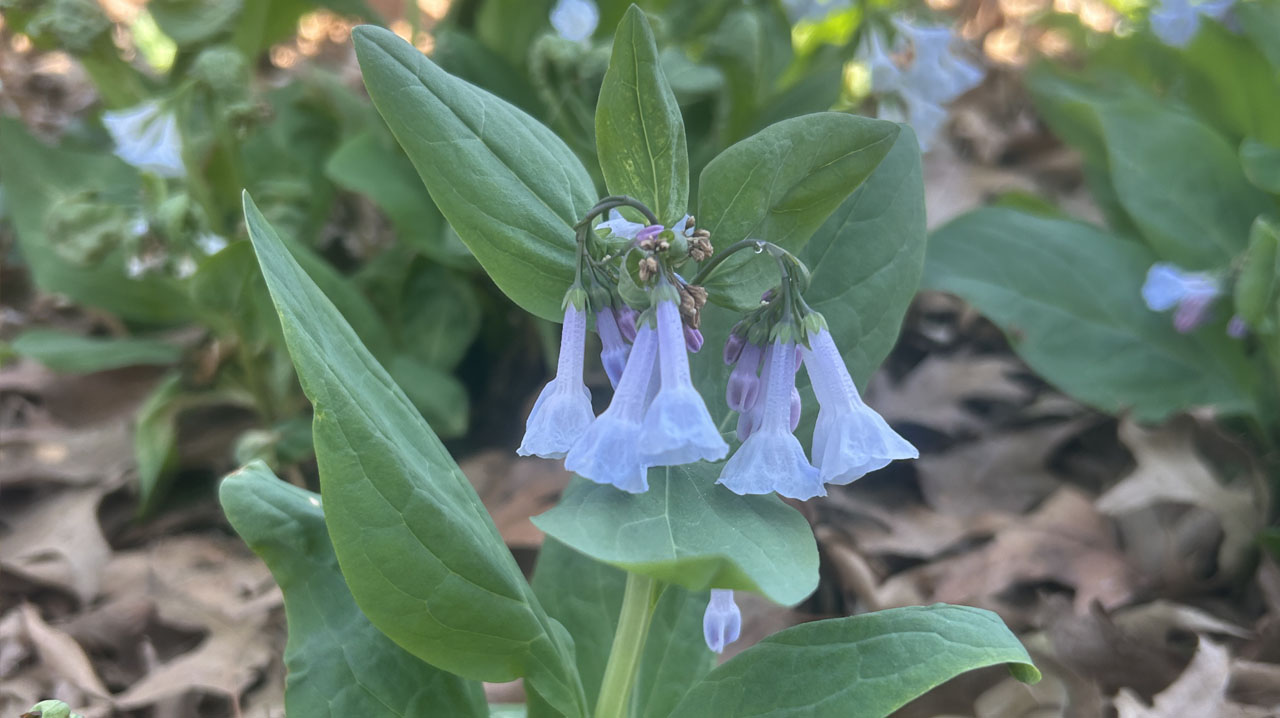
Virginia Bluebells
Virginia Bluebell (Mertensia virginica) Photo by Stacia Stelk
Finally, phenology[6] is more than bloom timing. It reflects how plants have evolved to integrate temperature, hours of daylight, and soil conditions to time growth and reproduction. As we’ve seen, native species exhibit tight phenological coupling with local insect populations. Good examples of this are spring ephemerals, like Virginia Bluebells (Mertensia virginica), which emerge briefly in early spring, taking advantage of sunlight before the forest canopy fills in. These short-blooming wildflowers provide an important early nectar source for emerging native bee populations, including queen bumblebees and solitary bees that rely on spring blooms to rebuild energy reserves and begin nesting. In an era of climate variability, this synchronization is an important consideration for maintaining resilient pollinator networks.
Native plants have evolved myriad systems to collect and maintain water, convert sunlight to energy, and to absorb nutrients. Co-evolving with our native fauna, plant phenology offers food, shelter, and reproductive support. Understanding plant physiology will help inform your native plant landscapes and give you a deeper appreciation of the many systems at work in your garden.
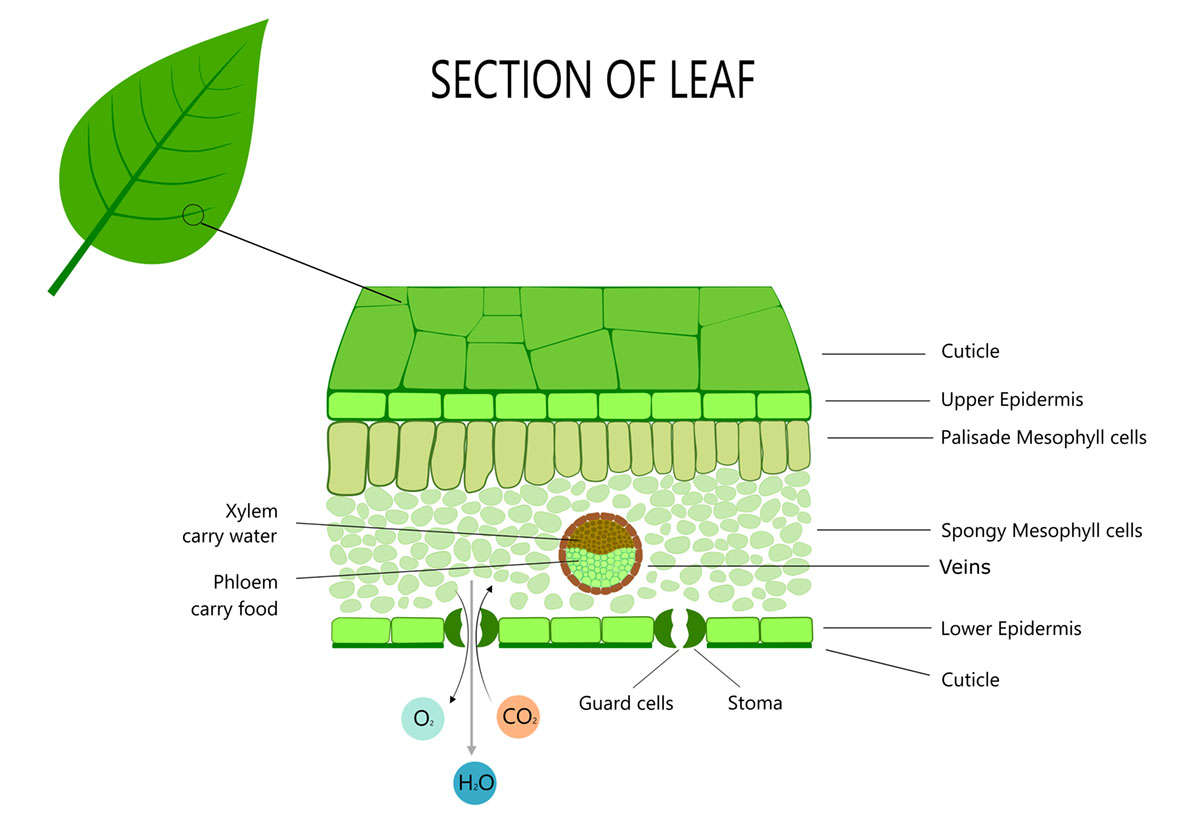
Photo: Shutterstock
[1] Stomatal control is the process by which plants regulate the opening and closing of stomata, the microscopic pores through which plants manage transpiration (water loss) and the uptake of CO2 necessary for photosynthesis.
[2] A waxy coating (cuticle) is significant for plants because it is a vital adaptation for survival, enabling them to retain water, resist diseases, and withstand environmental stress.
[3]Osmotic adjustment is a physiological process where cells actively accumulate or produce solutes (like sugars, amino acids, and ions) to lower their internal osmotic potential. This adaptation allows cells to retain or draw in water, maintain structural integrity, and preserve turgor pressure even when external water availability drops.
[4] Transpiration is the process where plants absorb water through their roots, transport it through their stems, and release it as water vapor into the air through stomata (see above) on their leaves
[5] Photorespiration is a plant metabolic process that undoes the work of photosynthesis. It occurs when the enzyme RuBisCO mistakenly grabs oxygen instead of carbon dioxide, which forces the plant to burn stored energy and release carbon dioxide to recover.
[6] Plant phenology is the study of the timing of recurring biological life-cycle events—such as budburst, leafing, flowering, and fruiting.