By Eric R. Eaton
National Moth Week is July 18-26 this year. This is an annual, global celebration of much-maligned insects. Forget the stereotypes and look closer. Many have spectacular colors, and fascinating life stories.
Humans create the few species that are pests. We import, by accident or intent, moths from overseas. Without natural enemies, their populations flourish. We grow monocultures of their favorite host plants, then complain when they start feeding on them. At home, we keep dry foods in flimsy containers that are easily infested, instead of using glass, metal, or durable plastic vessels with tight-fitting lids. We do not store woolens in cedar chests, so clothes moths find them.
Enough bad news. If you own silk garments, thank the silk moth (Bombyx mori), an insect so thoroughly domesticated that it no longer exists as a wild animal.
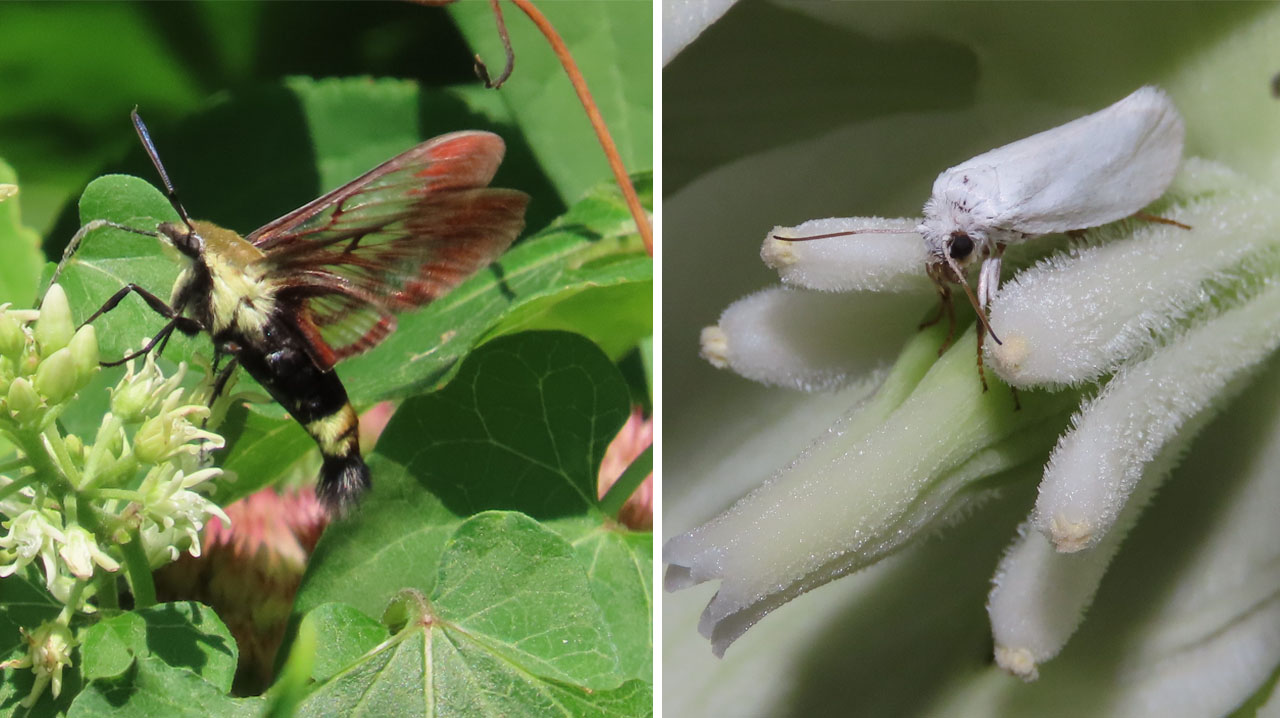 Caption: On the left, a female yucca moth (Tegeticula yuccasella) inside a yucca flower and on the right, a day-flying snowberry clearwing moth (Hemaris diffinis).
As I write this, in early June, yuccas are blooming. They are pollinated exclusively by moths in the family Prodoxidae. Female yucca moths must pollinate the flowers because their caterpillar offspring feed on the developing seeds. Not all the seeds, so the plant still reproduces. Other moths pollinate flowers by visiting them for nectar, both night and day. Day-active moths may mimic bees or wasps, so you might overlook them.
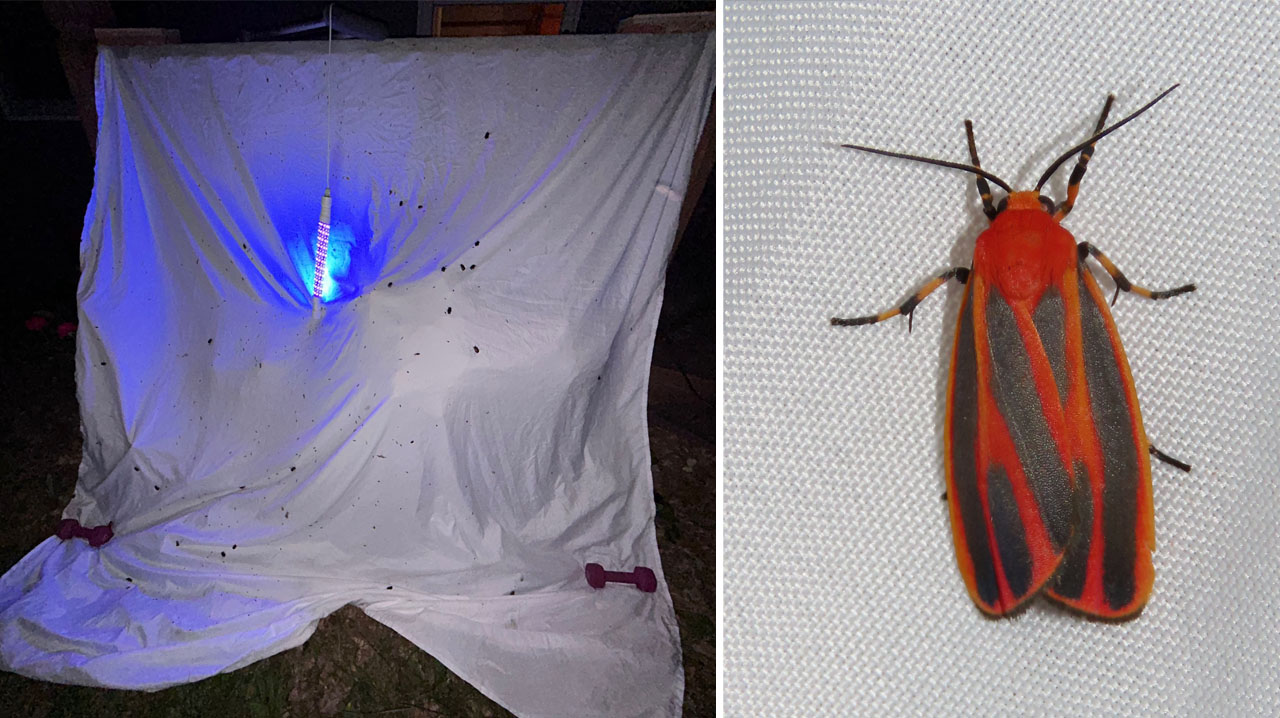 Caption: White sheet mothing setup example and the results including a scarlet lichen moth (Hypoprepia miniata) shown on the right.
Please participate in Moth Week by turning on your porch light and seeing what moths fly to it. Take photos with your phone or camera, then upload them to iNaturalist under the project for this year’s event. You may also check if a nearby park or nature center is having a Moth Week event. They will likely have a professional set-up involving a blacklight in front of a white sheet, with an additional mercury vapor, or other white light, acting as a beacon.
Some moths will be caterpillars during that week, so go out at night and look on the underside of leaves. Most moth larvae feed after dark but are so well camouflaged that you might not recognize them. Improve your chances by shining a UV flashlight on the foliage. The caterpillars will glow brightly. Be careful, some caterpillars are studded with venomous spines.
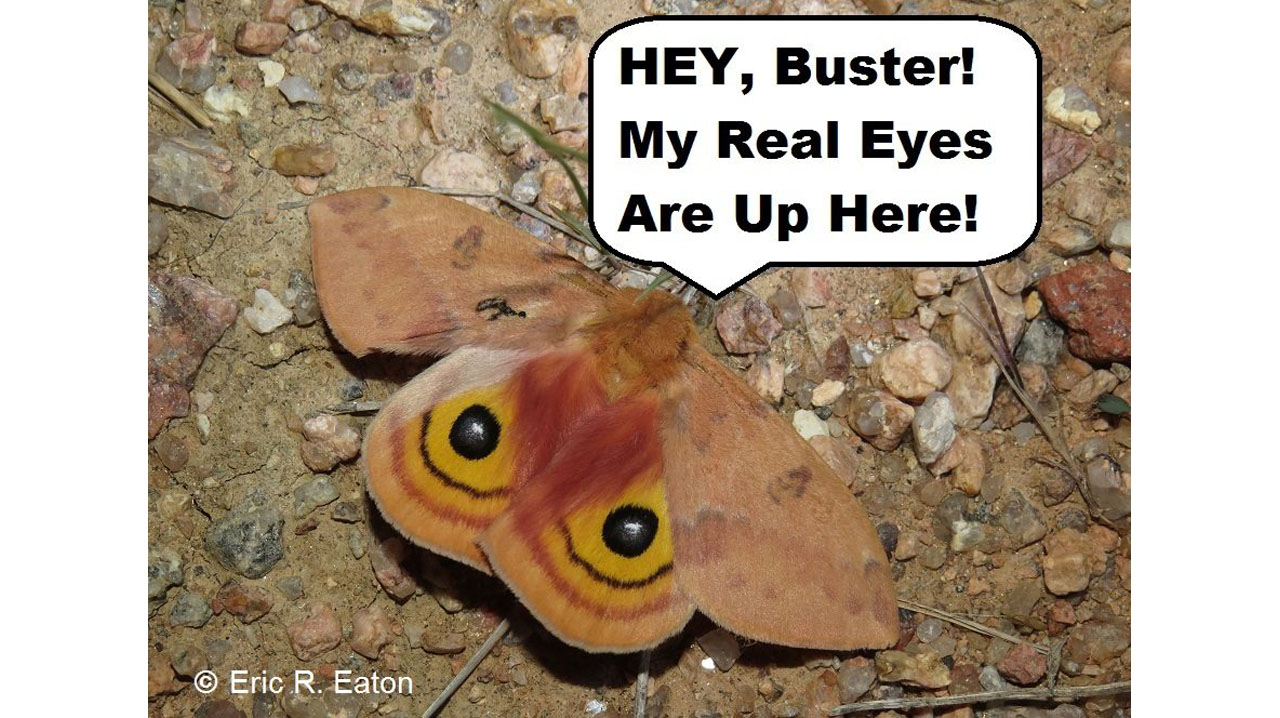
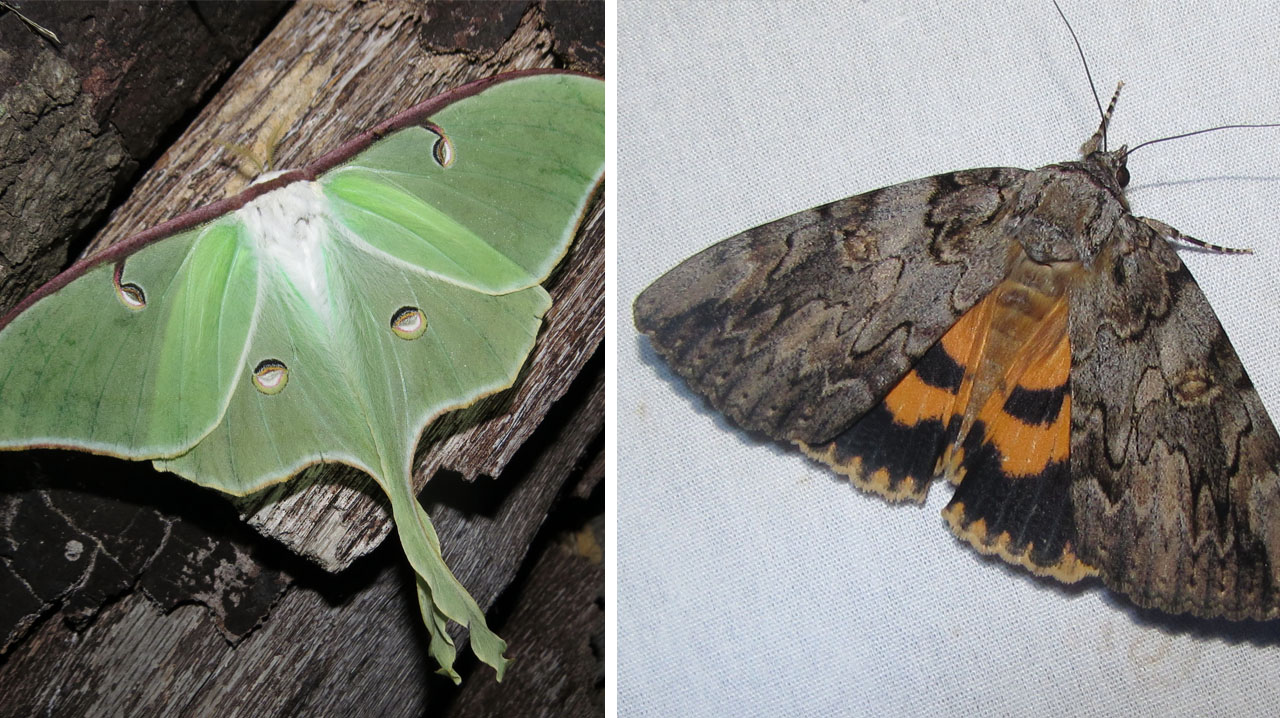 Caption: On the left, a luna moth (Actias luna) discovered at night and on the right, a penitent underwing moth (Catocala piatrix) lured with a combination of a white sheet setup and sugaring.
Another favorite activity for moth-watchers is “sugaring.” Mix molasses, stale beer, and an overripe banana or other fruit, then add more sugar. Let the slurry ferment for a couple of days or so, in a container with a permeable lid, lest it explode from gas pressure. Now you are ready to brush the fragrant formula onto tree trunks at about eye level, careful not to spill or have it runny (you want moths, not ants.) If you are in bear country, skip this entirely. Some people swear by smashed chunks of fermenting watermelon instead of the mix. Everyone has their favorite recipe.
Collectively, we know little about most moths. We have not associated the caterpillar with the adult insect. We don’t know what many caterpillars eat. We don’t know the geographic range of most species, and that is changing as the climate warms. Your odds of finding a moth species new to your county or state is far better than winning the lottery. I found a species new to science in a vacant lot in Colorado when I lived there.
Visit your library for books about moths. Surf websites like Moth Photographers Group, and join interest groups on social media. I guarantee you will become hooked, in a good way. Happy mothing
This article was written by entomologist and 2026 Plan it Native speaker, Eric R. Eaton. For more from this guest author, check out Eaton’s blog ‘Bug Eric’ as well as his published literature including Bug Watching: The Art, Joy, and Importance of Observing Insects and Insectpedia: A Brief Compendium of Insect Lore. Order these online or look for copies at your local library.