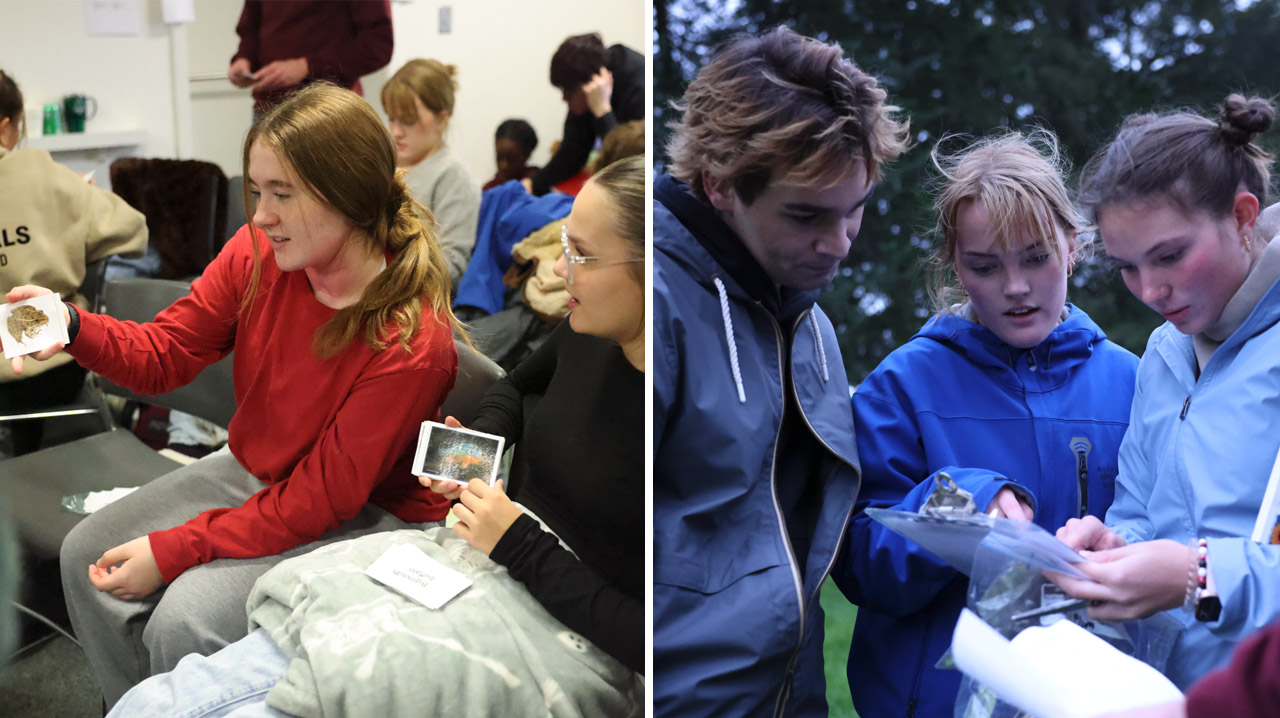
Pictured above: Students study together for the Eco-Meet test event and work together to complete the scavenger hunt.
Photos by Macy Williams
Story by Maddie Ball, Deep Roots’ Outdoor and Education Program Coordinator
Deep Roots partners with the Shawnee Mission School District to advise and help manage their natural areas and encourage more native plant landscapes. Urban habitats are a key part of the District’s sustainability efforts, and these habitats provide significant learning opportunities for its students. Deep Roots also appreciates how environmental education teachers focus on native Kansas flora and fauna, and share their enthusiasm for native habitats with their students. We can see how this prioritization has paid off in the impressive level of student involvement and performance at events like Eco-Meet. Eco-Meet is an annually held, Kansas ecosystem-focused competition where students partake in tests, scavenger hunts, and educational performances all of which require an in-depth knowledge of that year’s topics. Last fall, two teams of students and one individual from Shawnee Mission North High School placed in their regional Eco-Meet competition, all qualifying to compete at the State level.
The teams consist of three to four motivated students who work together in each component of the competition. There are two tests in the exam component: the habitat test focuses on a specific habitat type while the focus test covers an animal group. This past competition’s topics were Wetlands and Invertebrates respectively. Evan Brandt, Environmental Science teacher and Eco-Meet coach, shared that for his students, preparations begin early in the classroom. He incorporates the study materials of that year into his curriculum so students who are inspired to participate are already acquainted with the materials. Individual test scores are combined to determine the team’s overall score. This encourages students to study together and prepare as a team, ensuring collective high performance.
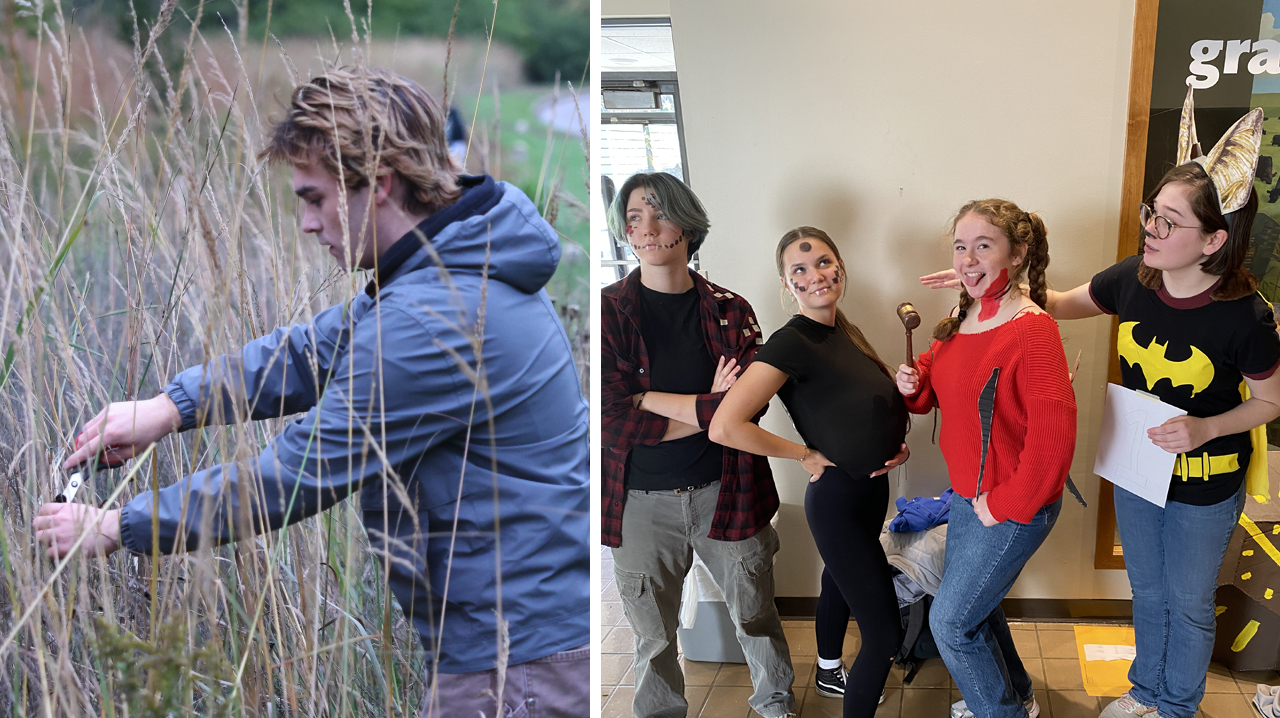
Pictured above: A competing student collects a plant sample for the scavenger hunt. Students dress up for their interpretive skit titled “Who’s your Daddy?” where a talk show host helps a gravid snake determine who the father is. Photos by Macy Williams and Evan Brandt
In the scavenger hunt event, teams are given 30 minutes to find and collect a list of items consisting of forbs, grasses, animals, and other materials from the field. This is meant to test the students’ identification skills and teamwork. Lastly, and what I imagine is the favorite of the students and judges alike, the interpretive skit event is an opportunity for students to create and perform a five-minute skit that effectively communicates as much information about the team selected species as possible. Judges score the skit based on accuracy, general interpretive techniques, and format. Students use concepts like dating apps or talk shows to creatively (and comedically) communicate scientific concepts. The scavenger hunt and interpretive skit events, Brandt shared, teach the students how to be punctual, work as a team, and present learned subjects in creative ways – all valuable skills in a career in conservation.
No matter where these teams place in the competition, participating in Eco-Meet alone is a great way for students to engage in our natural world and grow in their familiarity and appreciation of our native ecosystems. Eco-Meet is inspiring the next generation of conservationists and by setting them up for success with opportunities like this one, our schools are setting our environment up for success as well.
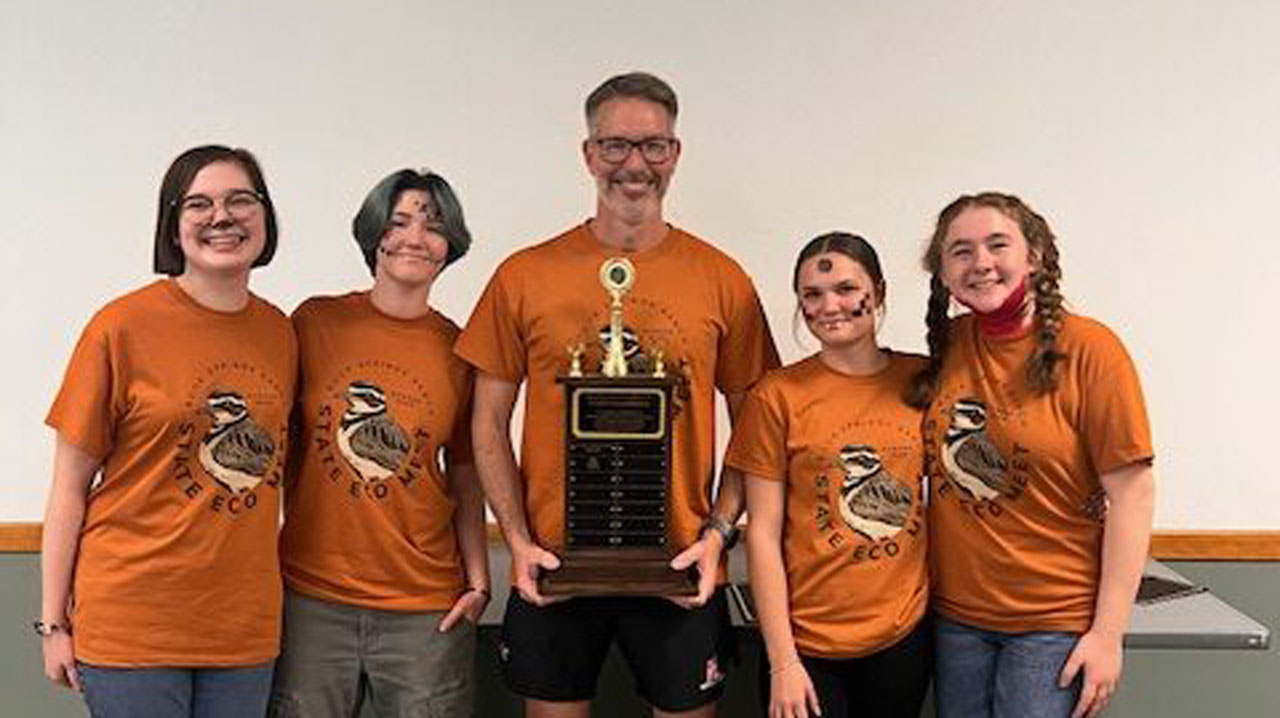
Pictured above: One of the Shawnee Mission North competing teams after winning first place. Photo from Evan Brandt.
This past November, 17 schools competed at the state level including the teams from Shawnee Mission North. The two teams placed first and fifth, with the first place team receiving a school record score of 100 on their interpretive skit. Congratulations to all of the high performing students that competed, we can’t wait to see what you accomplish next!