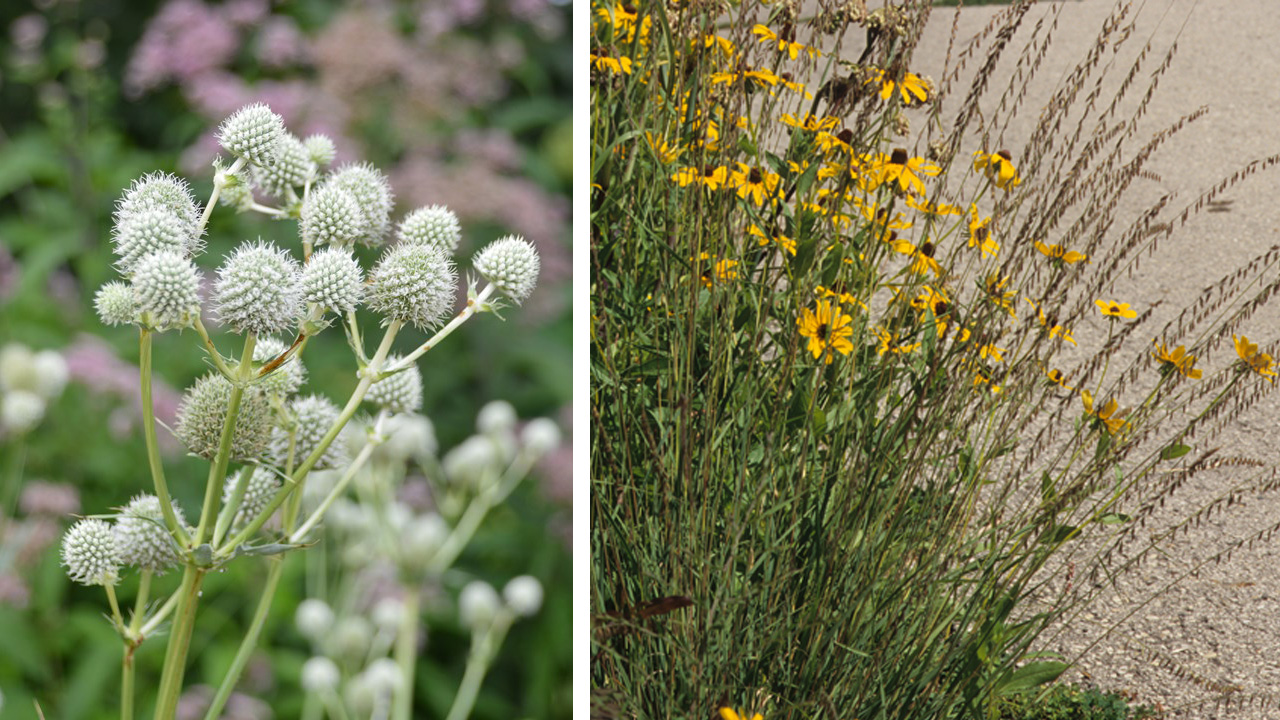
Above left: Rattlesnake Master, Missouri Botanical Garden; Above right: Sideoats Grama, Lady Bird Johnson Wildflower Center
The heat is here and, while it doesn’t make tending to our gardens any easier, the active blooms and the buzzing pollinators they attract remind us that the sweat is well worthwhile. Here are a couple of unique prairie blooms to keep your eyes out for.
RATTLESNAKE MASTER
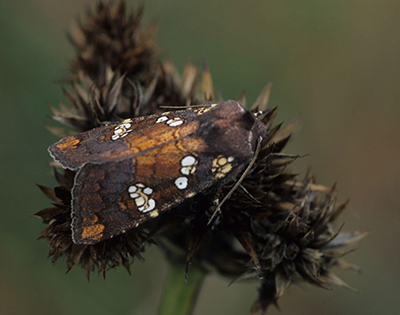
Starting off with Rattlesnake Master (Eryngium yuccifolium), this tall perennial with globular flower heads blooms from June through August. Viewed from afar, its unique structure adds architectural interest to any garden. It isn’t until we move closer that we recognize the impressive density of flowers coating each bulb. The feast of pollen provided by these flowers is beloved by bees and supports a wide variety of pollinators. Rattlesnake Master is a host plant for various species including the rattlesnake master stem borer moth (Papaipema eryngii) (photo credit: USDA Forest Services) and the recognizable black swallowtail butterfly (Papilio polyxenes).
Don’t be intimidated by this plant’s common name; The name Rattlesnake Master originates from its root’s historic use by Native Americans as an antidote for rattlesnake venom. The species name yuccifolium refers to the plant’s long pointed leaves which resemble those of a yucca plant. However, unlike yucca, Rattlesnake Master is a part of the carrot family.
SIDEOATS GRAMA
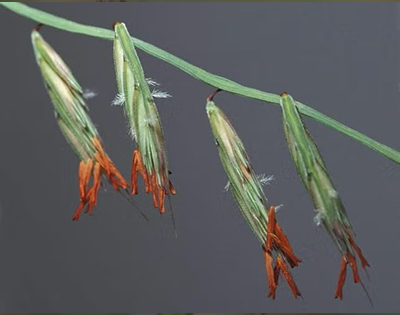
That’s right– grasses bloom too! It’s a real treat to see and appreciate the tiny florets on our native grasses, and Sideoats Grama (Bouteloua curtipendula) (Photo credit: Missouri Department of Conservation) is a great example of one with visible blooms. This ornamental grass spreads easily and forms bunched bursts of blades, typically around 2’ tall, which visually blend well with the native flowers it may be planted alongside (e.g., Black-eyed Susans, Purple Coneflower).
Sideoats Grama produces oat-like seeds that hang from one side of each stem. During its blooming season, the stamens (pollen-producing, male reproductive part) emerge from the seeds and are bright orangish-red in color. You may also spot the stigmas (pollen- accepting, female reproductive part), which surface on the sides of the seeds and have a white, feather-like appearance. Pollination for this grass, as with most, occurs through anemophily, which means their pollen is carried by the wind. If you gently tap on a blooming stem, you may see a cloud of pollen leave the stamens and drift away, hopefully reaching the stigmas of another plant!
The seeds are a delicious snack for many different bird species, and in the wild, this grass provides nest coverage for various ground-nesting birds. Sideoats Grama is popular amongst skipper butterflies, serving as a host plant for many species, including the green skipper and dotted skipper. You can find a suggested way to incorporate Sideoats Grama in a native garden on Deep Roots’ Sweet 16 plant list, where it features in the “Long Season” design.
MORE ABOUT RATTLESNAKE MASTER:
Light Requirements: Full sun
Soil Moisture: Moist, well-drained
Height: 4’-5’
Bloom Time: Jun-Aug
Bloom Color: White
MORE ABOUT SIDEOATS GRAMA:
Light Requirements: Full sun to light shade
Soil Moisture: Dry to average
Height: 1’-2’
Bloom Time: Jul-Sep
Bloom Color: Red/orange