By Maddie Ball, Deep Roots’ Outreach and Education Program Coordinator and Cydney Ross, Deep Roots’ Outdoor Program Manager
It appears winter has come to an end. Did you leave your leaves? Refrain from cutting down your tall perennial stems and seed heads? Make a few brush piles in your yard? Congratulations and kudos, you successfully curated an overwinter habitat for insects and birds alike! But now it’s getting warmer and trees are starting to bud (a little early isn’t it?). Maybe you’re wondering what to do next and asking important questions like when is the right time to clean up my winter habitat? If this sounds like you, you have come to the right place. Read and watch to learn some of Deep Roots’ pre-spring maintenance tips.
When to Cut Back and Why
The general rule is to wait for temperatures to be 50 degrees or higher for a week at a time before beginning to cut back. This is getting increasingly difficult to gauge as our weather has become unpredictable and obnoxiously varying. Do your best, consider your goals, and if you are worried about cutting too early and getting rid of the habitat you provided all winter, be sure to leave as much cut plant material in your yard as you can.
Cutting Back Native Grasses
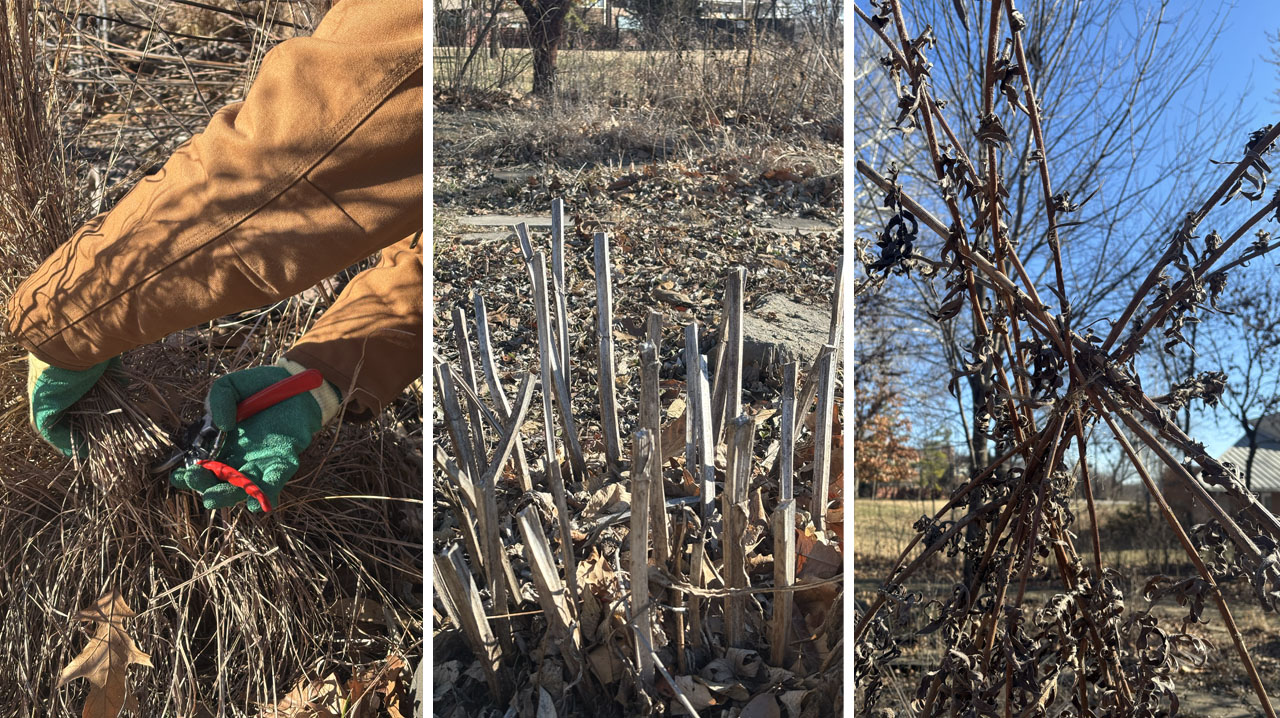
There are a variety of methods for cutting native grass. If you are ready to cut your grass to the ground, use your hand to grab the blades into a ponytail and with your shears cut across the bunch, leaving the desired height in the ground. We suggest leaving at least 3 to 4 inches.
If you have a short bunch that is flopping over an intentional border, you can use the same ponytail method to trim the grass back from the defined line. This quickly provides a cleaner look and lets people know that your garden is tended to. Hedge trimmers or weed whackers can also be used for quickly cleaning edges; however, some plants are too fine and can get tangled up in the tool.
If you want to maintain the height your grasses have achieved but clean up the look, you can use a hedge trimmer at an angle to shave off leaning blades that may be intruding into walkways or covering edges.
Cutting Back Herbaceous Perennials
When cutting back your flowering native plants, you can leave stems measuring anywhere from 8 to 24 inches from the ground. Feel free to cut all stems to one height or leave varying lengths of stem to support the various needs of our native bees.
This is a selective process that depends on your personal gardening goals. When deciding which stems to leave up or cut down, some things to consider include what seeds you want to leave for wildlife to eat, what stems you expect native bees to be hibernating in, and what plants you want to keep from continuing to spread by seed.
If your gardening goal is to support wildlife but you are ready to cut your stems down, leave the cut stems and plant material on your property. This gives remaining overwintering bees in the stems plenty of time to emerge.
Other Notes and Discoveries
Some plants, like Blue False Indigo (Baptisia australis) and other Kansas City tumbleweeds, break their stems off themselves making for an easy clean up job for the gardener! Be sure to leave that plant material in your yard if you can. One fun way to store loose, cut stems is by creating artful brush piles as seen pictured above. If you can’t leave them in your yard, composting is the next best thing.
Write a comment: