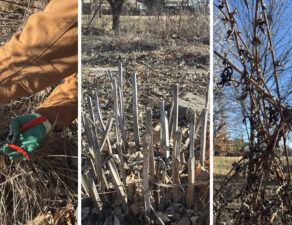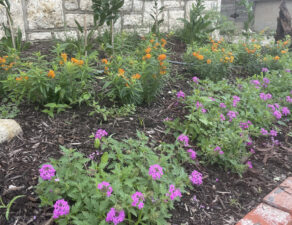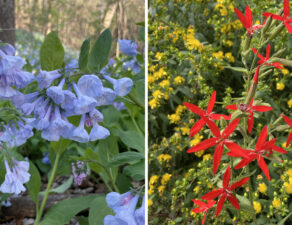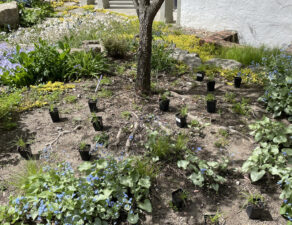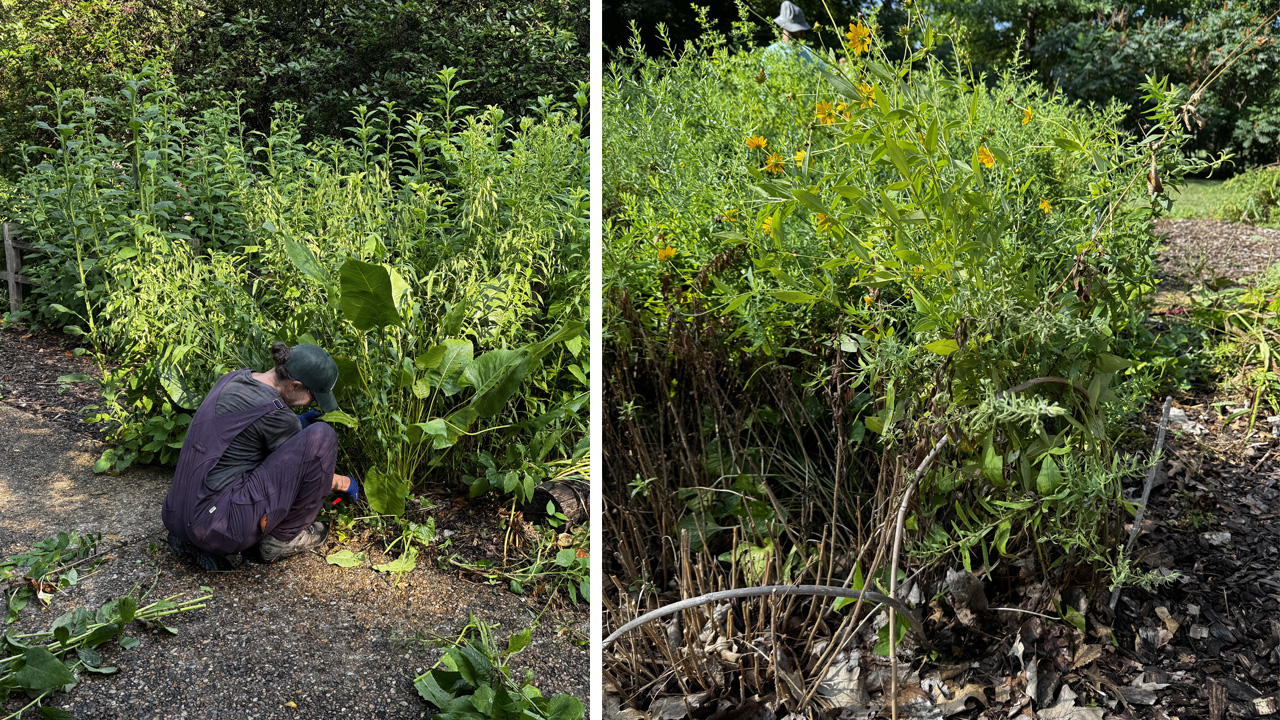
Pictured above: Summer garden maintenance. Bamboo hoops used to hold plants up.
Photos and article by Cydney Ross, Outdoor Education Manager
Gardening is an activity, which means we need to be actively engaged if we want to maintain our gardening goals. But summer is a tough time for gardeners in the Midwest. Unless you’re staying on top of gardening tasks, gardens get unruly and often feature warm-season plants you didn’t add to your garden. The combination of heat, rain, and biting insects creates the perfect storm for immense plant growth and physical discomfort while outdoors. This is an issue that impacts all types of gardens but gives native plants a bad rep for appearing “unkempt and untamed.” So, what’s a gardener to do? With a few helpful Cues for Care we can get our native gardens looking fit and show that there is intention and love in our gardens.
Native gardens support and draw in beautiful creatures like butterflies, birds, and bees. They also represent our midwestern heritage and create a healthier environment for people and wildlife. Native florae are superior for holding carbon in the soil, cleaning our air, preventing storm water runoff from polluting our rivers and watershed, and lowering temperatures during the dog days of summer. They also require fewer resources like water and chemicals to maintain them. However, there’s no such thing as a no-maintenance garden – full stop.
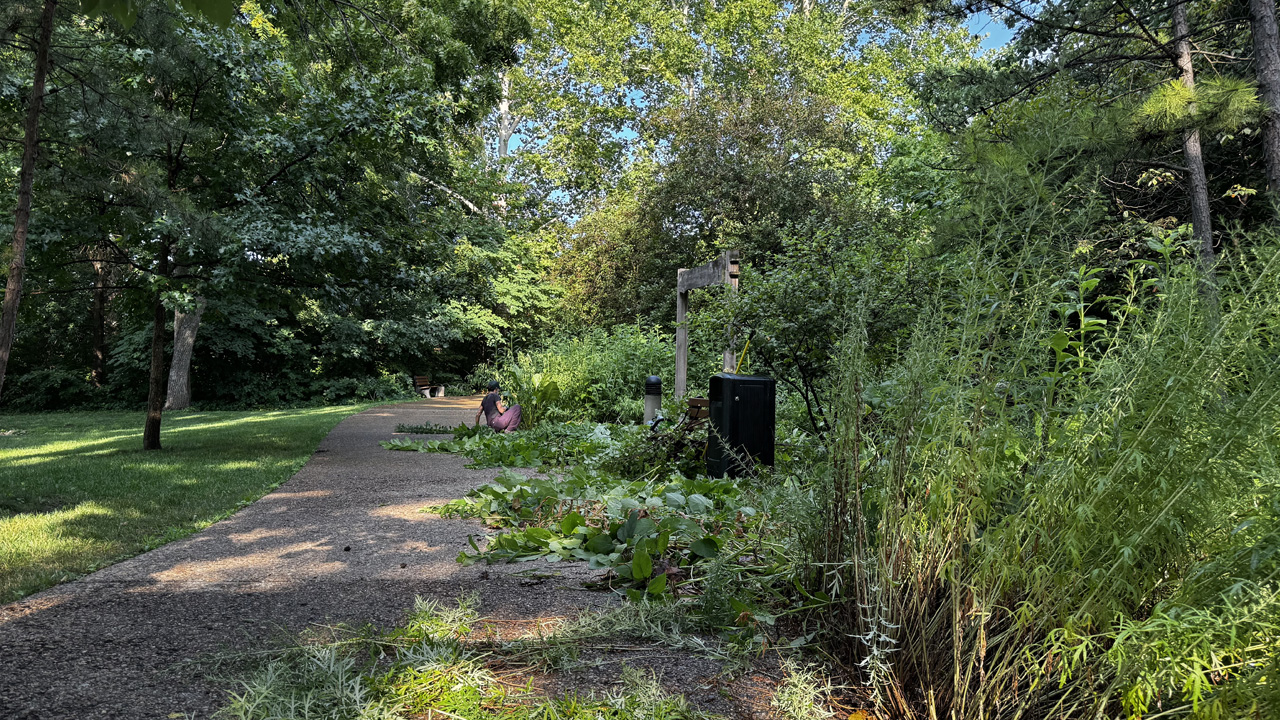
Pictured above: Discovery Center landscape staff removing volunteer Wingstem Crownbeard and Canada Goldenrod from gardens.
Gardens are cultivated spaces that are informed by our goals. You can choose to plant things and walk away, but it’s likely not going to meet your expectations. With an established garden I refer to my original goals, which determined which plants I added to a space. If a volunteer plant shows up, I decide whether to welcome them to the fold or remove them. For the new gardener, I recommend you stick with fewer species (3-5) planted en masse. Large swaths and clusters give wildlife an easier time finding food and create a cohesive appearance.
A few simple Cues for Care would include:
- Clean up edges where plants have crept on to pathways.
- Remove unwanted plants that appear in the garden.
- Take care of flopping plants with hoops or by tying them back.
- Add a light dressing of mulch to bare areas to deter weeds.
In summer I become a morning person. It’s the best way to beat the heat and enjoy spending time in the garden. For biting insects, I wear long sleeves, pants, and socks. The latter are pulled up over the bottom of my pants which is both fashionable and a way to deter biting insects. I go a step further and treat my clothing with permethrin, an insecticide used on clothing, for chiggers in the garden and ticks on the trail. This gets me garden-ready to tackle the tasks at hand.
Removing unwanted warm-season plants, like Crabgrass (Digitaria spp.) and Field Bindweed (Convolvulus arvensis), will decrease competition and give an overall neater appearance. If you’ve been to our Discover Native Garden sessions, you’ll know my favorite weeding tool is a 6-in-1 paint scraper. They’re cheap and effective for root docking plants with minimal soil disturbance.
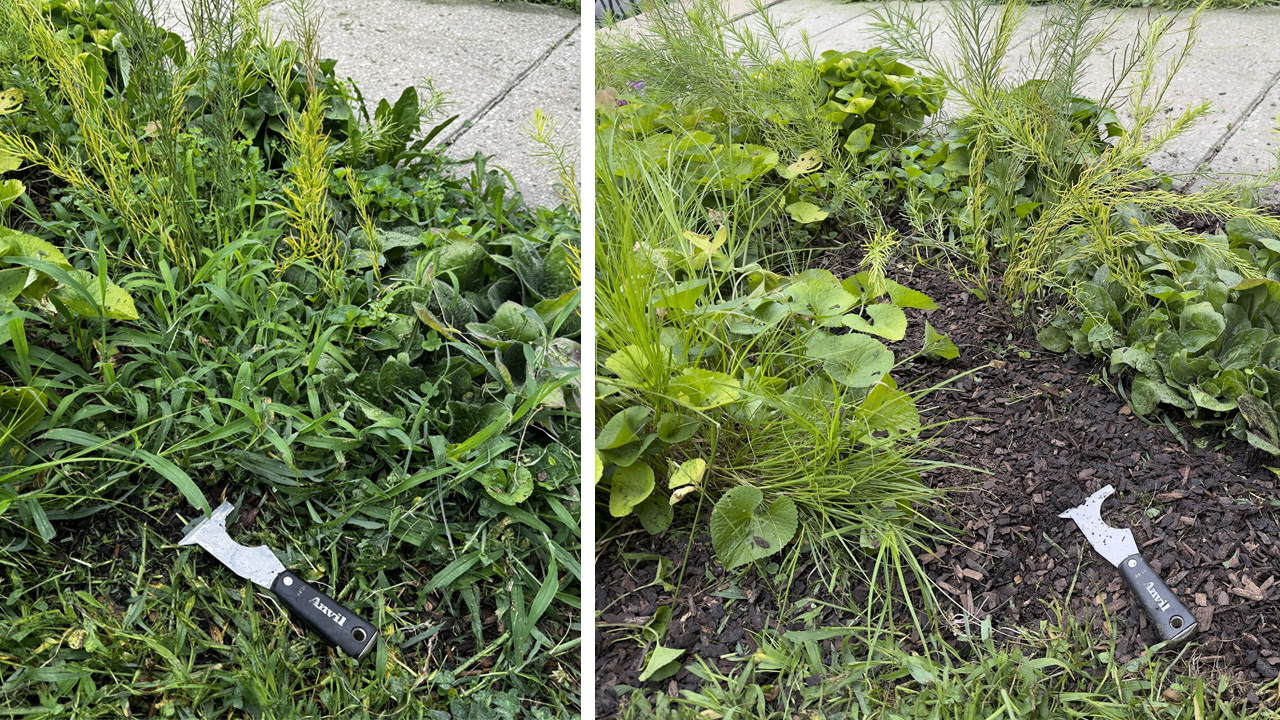
Pictured Above: Before and after images using paint scraper to remove unwanted plants and top dressing of mulch.
Our summer and fall native plants tend to grow taller than those we saw in spring. They need to be taller than the plants that precede them to access sunlight. This makes sense from an evolutionary stance, but the result can lead to flopping plants that look unruly. From a public safety perspective, it’s important to ensure walkways are accessible for pedestrian use and emergency services. New plantings are especially prone to this as they haven’t had time to get their roots and foliage established.
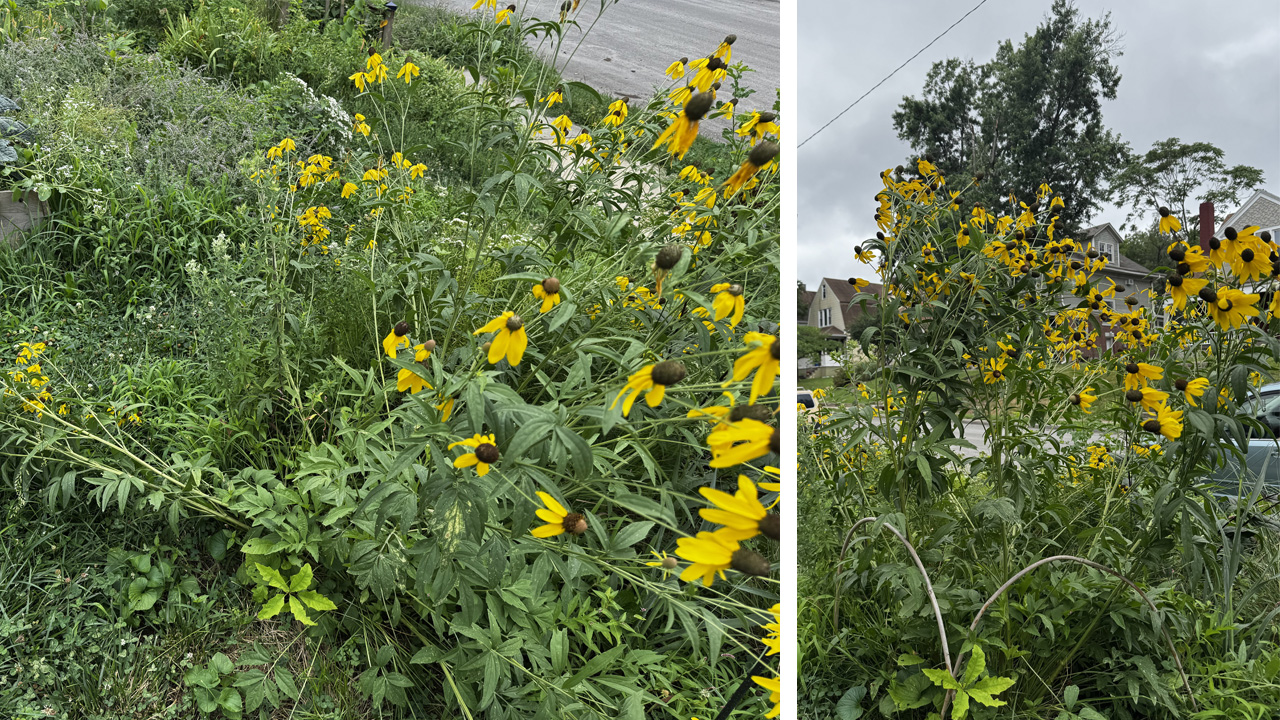
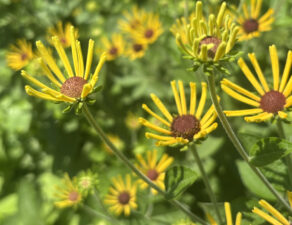
Pictured Above: Bamboo hoops holding up Gray-headed Coneflower.
There are many ways to approach flopping plants. You can selectively cut out or tie back stems with twine. Bamboo hoops are used at the Anita B. Gorman Conservation Discovery Center to prevent plants from falling into pathways and sidewalks. It’s also a tool to distinguish the garden from the lawn. Plus, they’re pretty cute. You can purchase your own through Gardener’s Edge or contact your local nursery/farm supply store.
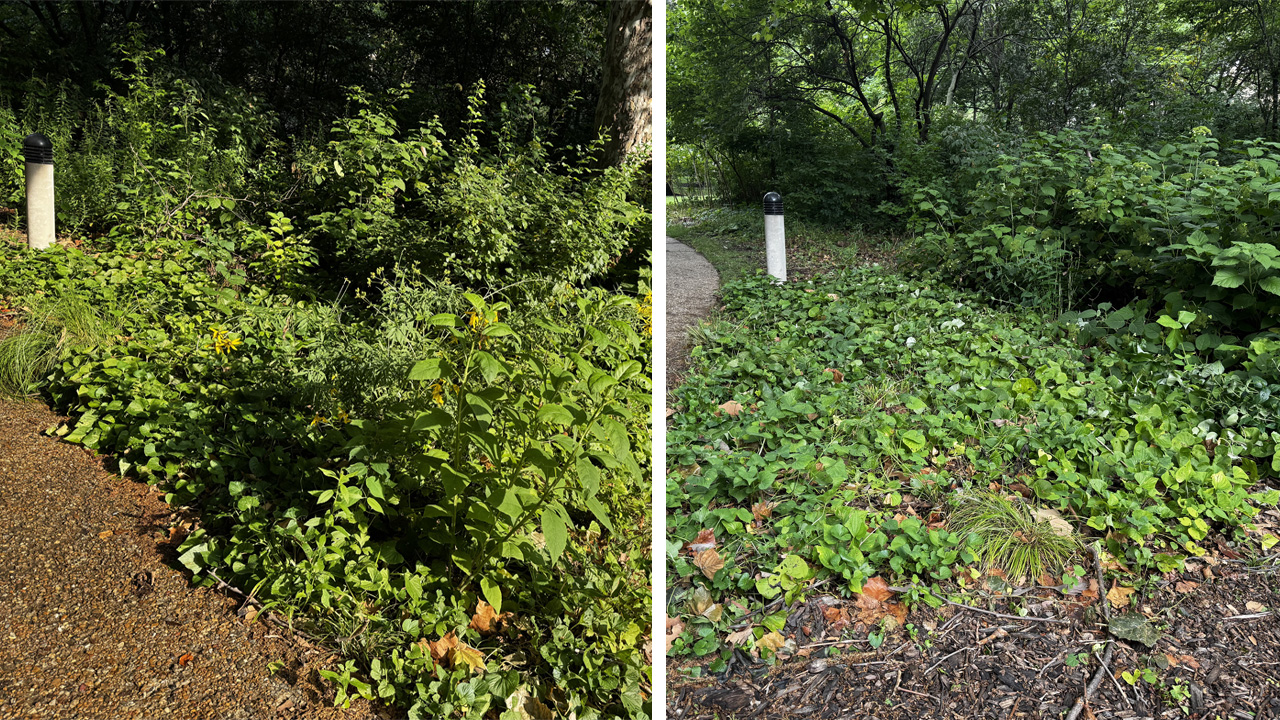
Pictured Above: Before and after images of a low-ground cover bed that was weeded.
I hope this article encourages you to get up and go out to your garden. Summer is a tough time to be in the garden, but it is worth it if you can be strategic in your approach. If I can even spend 30 minutes in the garden each morning, not only does my garden look better, but I also feel better. Don’t forget to wear sunscreen, bug spray, drink plenty of water, and say hi to the amazing assortment of bumblebees and wasps visiting your garden.