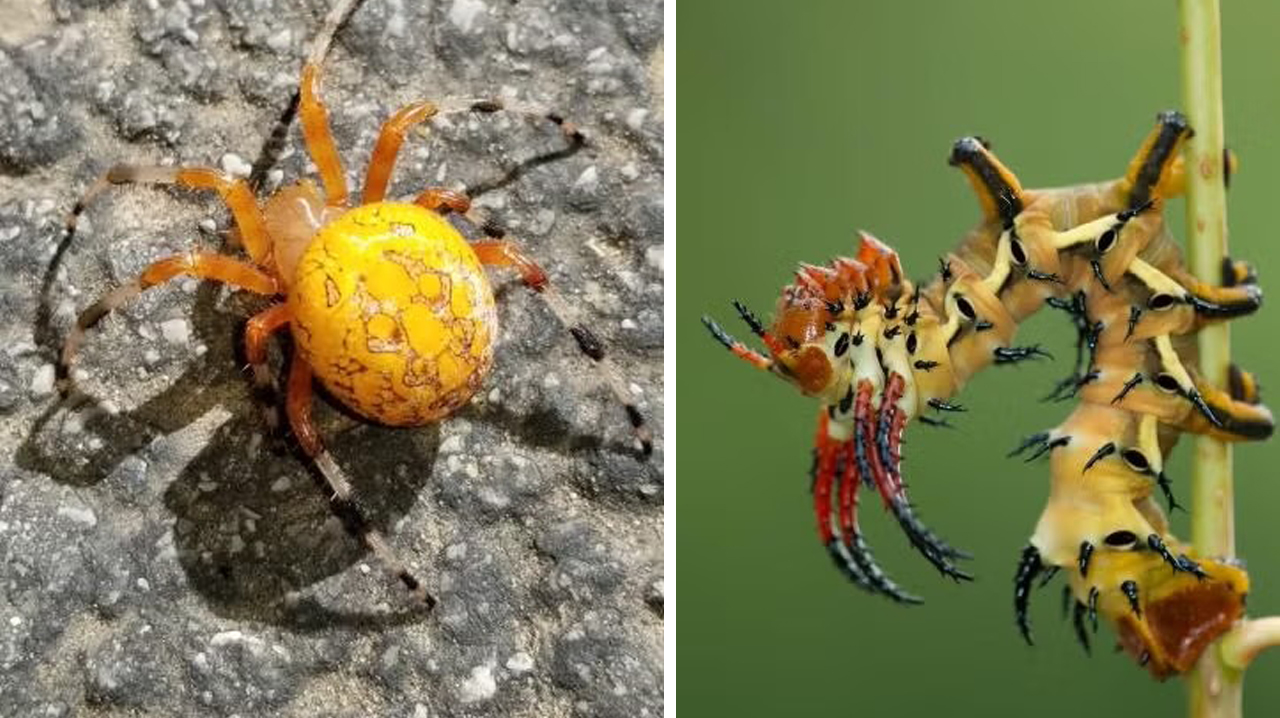
Article by Maddie Ball
Above Photos: Noppadol Paothong courtesy of the Missouri Department of Conservation
Creeping and crawling through leaf covered caves,
Threatening garden pests with danger most grave.
Many eyes peer through prairie plants,
Feasting on the nutrients each garden grants.
While some may shrill or run at their sight,
The gardener knows they’re more than a bite.
Shielded with knowledge of the role they play,
Growers gawk at their strangeness and leave them to stay.
Whether you are a champion of ‘spooky season’ or avoid a scary movie whenever possible, the horror peak of the year is upon us. If there is one thing I’ve learned about dealing with monsters, it’s that they are usually less scary once you turn on the lights. It’s time to face our fears and learn a bit about the quirks and beauty behind the crawling critters of our native gardens.
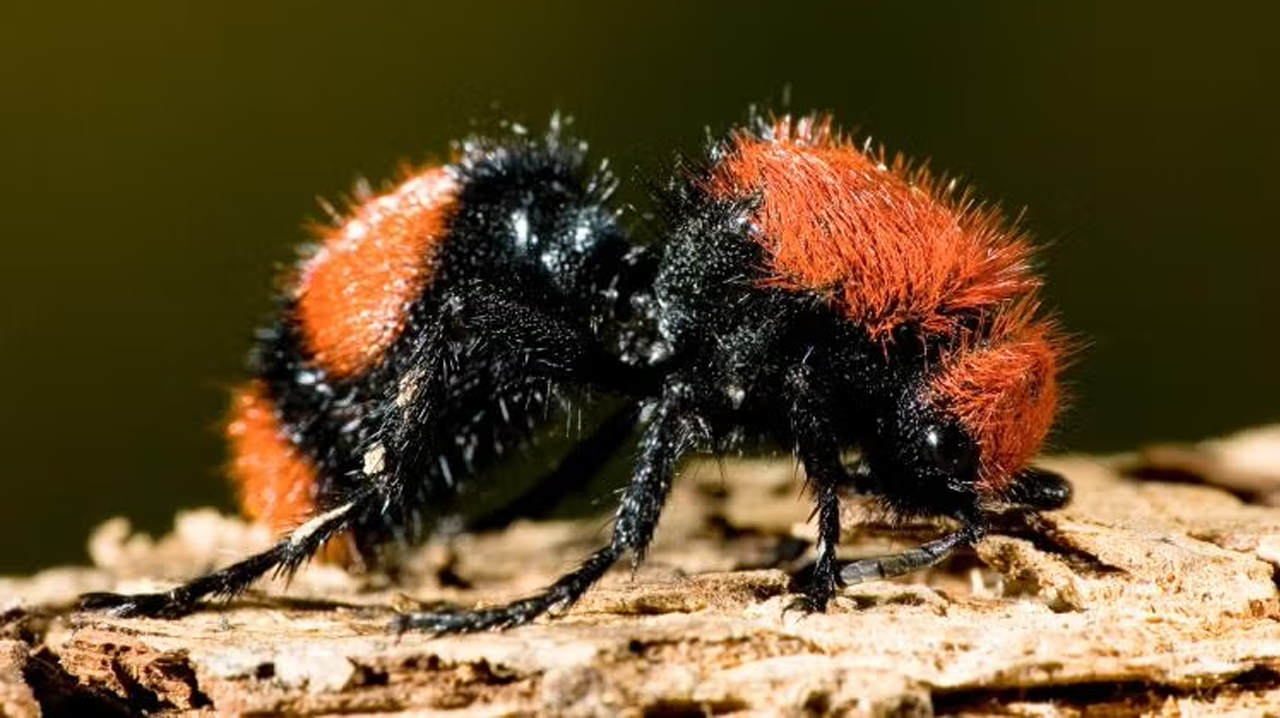
Photo: Missouri Department of Conservation
To me, this insect appears to be in costume, and in some ways, it is! The eastern velvet ant (Dasymutilla occidentalis) is no ant at all but in fact a kind of wasp. In this species, only males have wings, while females are ground-dwelling and typically found near nests of their hosts. Who are their hosts? Other wasps and bees whose nests the velvet ant parasitizes during its egg, larvae, and pupae life stages. These insects are only found in pesticide-free gardens and are a sign of strong species diversity and ecological balance. Males do not sting but the females will if handled or stepped on so admire her beauty from a safe distance.
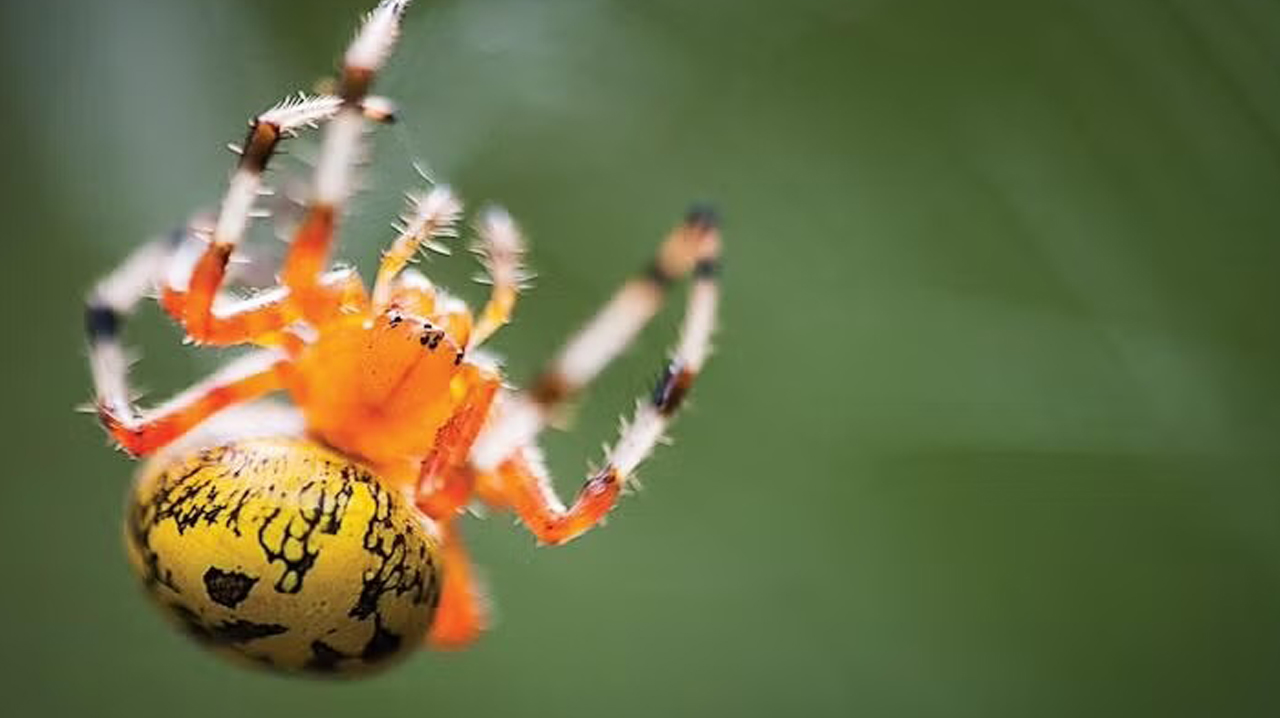
Photo: Laura Robison courtesy of the Missouri Department of Conservation
Arachnophobes be brave, it’s time to talk about spiders. As the face of creepy crawlers during the Halloween season, this article would not be complete without highlighting at least one of around 450 spider species found in Missouri. Spiders are critical in the web of life supported by your garden. They are hunters of pest species that would otherwise dominate your yard while also being a food source for their predators (birds, wasps, and other spiders). Take, for example, the marbled orbweaver (Araneus marmoreous). As far as spiders go, the marbled orbweaver, sometimes called the pumpkin spider, is quite nice to look at. Its identifiable abdomen ranges in color but typically is within the yellow to orange spectrum, camouflaged with its backdrop of fall foliage. As an orbweaver, this spider preys on flying species such as moths, flies, and mosquitoes, which are met with a paralyzing bite after hitting the web. If the word bite has you sweating, prepare to sigh in relief: These spiders, like many, are not likely to bite humans unless they are mishandled and even then, the bite is no more harmful than that of a bee sting (to the non-allergic).
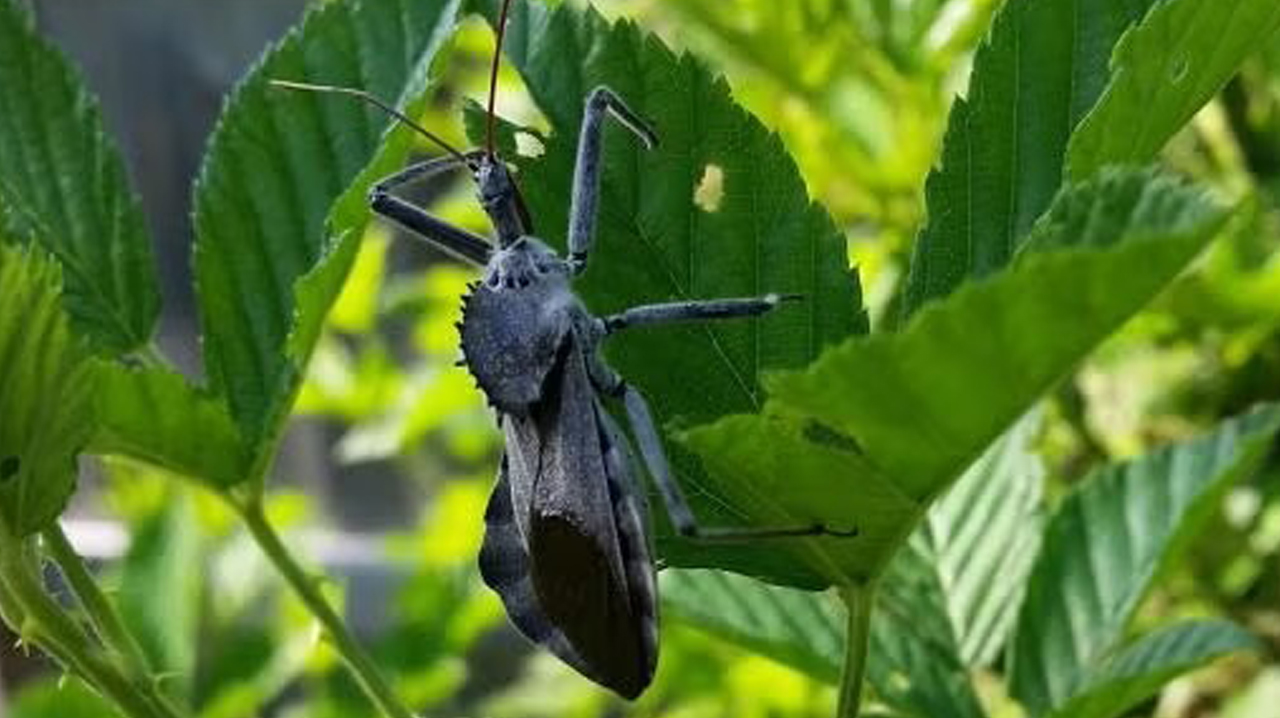
Photo: Tyler Dettmar courtesy of the Missouri Department of Conservation
The bite of this spooky character, on the other hand, is a dangerous one. Meet the wheel bug (Arilus cristatus). If you don’t want your native plants consumed by pesky, overpopulated beetles or aphids, you should be thrilled at the sight of this unusual looking insect. It’s an assassin bug, which nomenclates a diverse family of insects renowned for their impressive success as predators. Wheel bugs dominate the garden ecosystem with their sharp beak and ambush style hunting, yet their populations are naturally managed by birds and other vertebrates. As previously mentioned, you’re going to want to leave this bug alone and refrain from holding or touching.
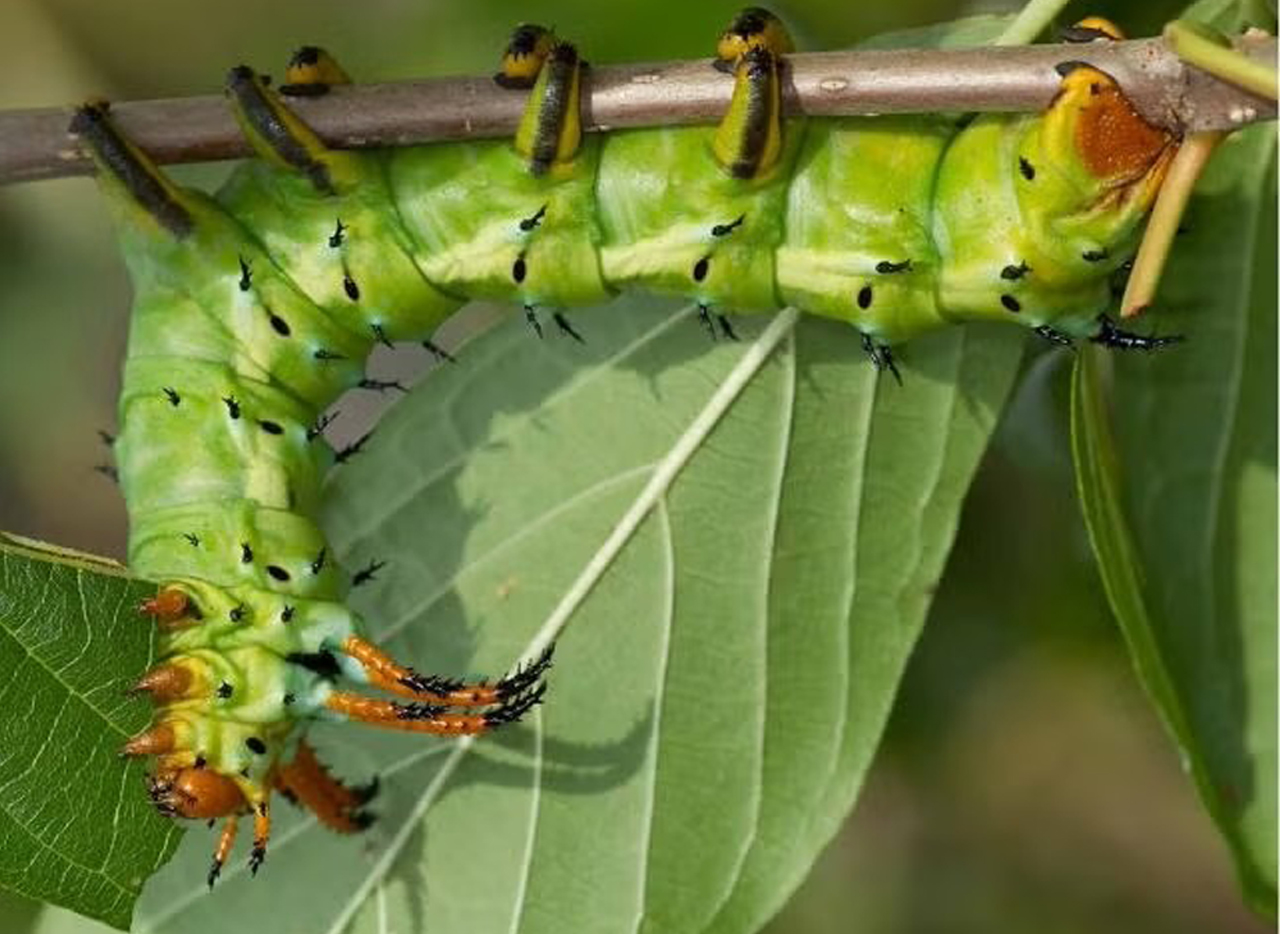
Photo: Noppadol Paothong courtesy of the Missouri Department of Conservation
Large, squishy, spiky, and green: I wouldn’t blame you if this next friend triggered a squeamish reaction. The hickory horned devil (Citheronia regalis) is the largest caterpillar found in Kansas City. Growing as long as six inches, this caterpillar has evolved its size and impressive horns to intimidate predators. But like a kid in a scary Halloween costume, this caterpillar is harmless despite its tough-guy exterior. The hickory horned devil feeds on the leaves of its host trees, which include Sumac (Rhus spp.), Walnut (Juglanns spp.), and Persimmon species (Diospyros spp.). After seeing the magnificent moth it becomes post-metamorphosis, you’ll agree that their host tree is worth planting if it means attracting these monstrous caterpillars.
The creepy crawlers hiding in our gardens are indicators of a healthy environment. It’s okay to be frightened by the many eyes, or squirm at the hairy legs as long as you remember to take a breath, do your research, and appreciate these little monsters for all their help in the garden!