Article by Kay Thomason
Photos by Cydney Ross
Discovering your garden aesthetic goes hand in hand with defining your garden goals. Are you drawn to naturalistic and wild, clean lines and structural, or a riot of color in every season? Clarifying these intentions will guide you toward the plants and design elements that best bring your vision to life. Cydney Ross recently led two ‘Curious by Nature’ webinar episodes discussing how to contour your garden design to pop-culture aesthetics such as Goth & Cottagecore, and Mid-Century Modern & Tropical. While aesthetics are typically applied to visuals, these fun episodes got my brain working on how the other senses contribute to a garden’s aesthetic.
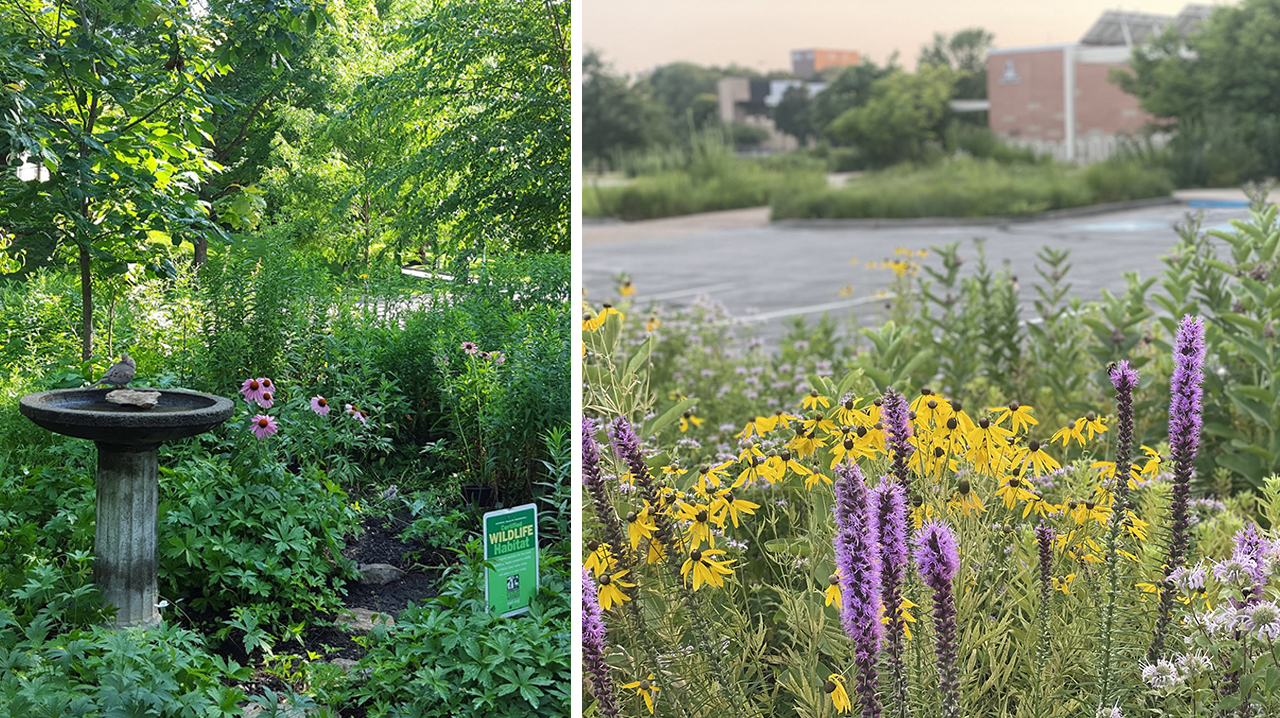
For example, consider the sounds you’d like to experience in your garden. Coneflower species (Echinacea spp.) that offer seed and shelter can attract birds, filling the space with song. A small fountain or birdbath adds a gentle trickle of water; both a soothing soundtrack and a welcome stop for visiting wildlife. When wind moves through grasses like Blue Grama (Bouteloua gracilis), the garden becomes a living sculpture of waves in motion and sound. Even in winter, the dry seed pods of Blue False Indigo (Baptisia australis) rattle in the breeze, adding a quiet rhythm to the resting garden.
Have you tasted anything from your garden? Many native plants have more to offer than just beauty. Serviceberries (Amalanchier spp.), for instance, produce sweet, blueberry-like fruit that can be enjoyed fresh or turned into jam, connecting you directly to the seasonal rhythms of your garden. Wild Bergamot (Monarda fistulosa) adds a hint of mint and citrus to teas and salads while attracting hummingbirds and pollinators to your outdoor spaces. Eating from your native garden deepens your relationship with the plants, reminding you that these species not only sustain wildlife but can nourish us, too.
When we think of fragrance in the garden, flowers often come to mind, but native gardens offer a whole range of scents that go far beyond blooms. After a rain, the spicy, herbal aroma of Clustered Mountain Mint (Pycnanthemum muticum) drifts through the air, cooling and invigorating. Prairie Dropseed (Sporobolus heterolepis) releases a warm, buttery scent on sunny days, subtle yet unmistakable when you walk past a swaying patch. Even the earthy smell of damp soil, crushed leaves, or sun-warmed stems adds to the sensory richness.
Texture brings another layer of beauty and interest to a native garden. The fern-like foliage of Yarrow (Achillea millefolium) adds a soft, feathery contrast to sturdier plants nearby. In late summer and fall, the bold seed heads of Rattlesnake Master (Eryngium yuccifolium) stand tall and architectural, while the dangling seed clusters of River Oats (Chasmanthium latifolium) catch the light and sway gently in the breeze. Together, these varied textures create depth and movement, making the garden feel dynamic and alive, even when flowers fade.
Tending a garden with all five senses turns it into something far richer than simply what you see: It becomes an experience of discovery and appreciation. You begin to notice the quiet details that shift with each season, and how the space invites you to pause and engage. A garden becomes not just a place you tend, but a living world that offers comfort, wonder, and renewal.