By Deep Roots Team
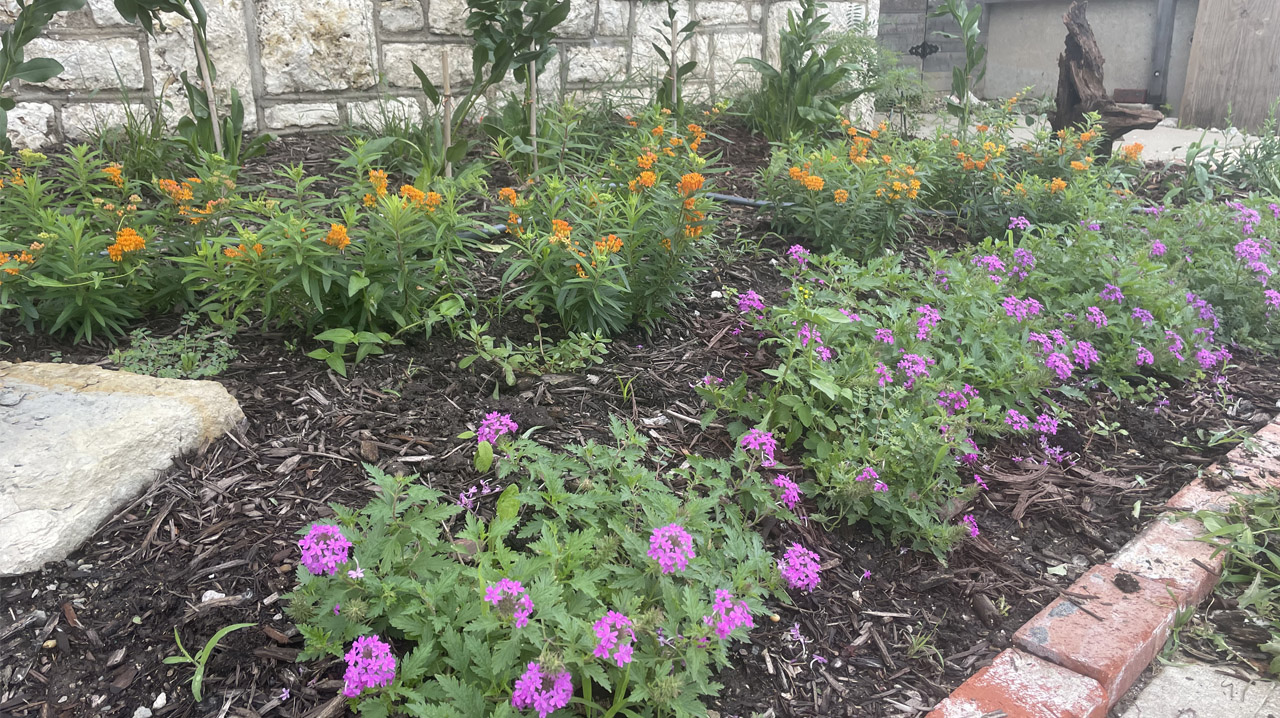
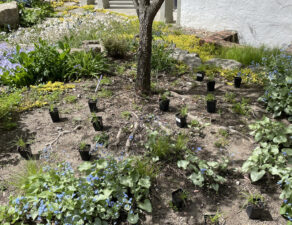
Pictured above: Residential planting photographed by Cydney Ross
Hello readers, and welcome to a resurrected series called “Ask the Experts.” We get a lot of questions throughout the year about every which topic pertaining to native gardening. More often than not, these are questions your neighbors and peers are pondering as well! We will be answering submitted questions quarterly in The Pollinator and at the start of every episode of Curious By Nature. If you have any burning gardening questions, send them to hello@deeprootskc.org or send a direct message to our Facebook or Instagram account.
So, let’s get to it and answer a few questions we received recently from readers like you! These first two questions were sent to us by Carrie M. after attending our recent workshop, Built to Bloom: KC Native Landscape Training.
Q1: If a person didn’t know better and didn’t plant natives in their landscape, can you scatter in natives?
Absolutely you can! Having a “hybrid” garden of conventional plants and native plants is a great way to get introduced to the benefits of native plants. My recommendation would be to make sure you understand the sociability of plants. Do they spread prolifically, or do they stay put? How do they spread? Is it by rhizomes and/or seed? You want to pair plants that have a similar sociability. Overly gregarious species can outcompete the less social plants.
Overall, no one is expecting you to go from 0 to 100. Any additional natives to a landscape will both improve environmental conditions and support our native wildlife. But I should warn you: You will quickly fall in love with the charm and wonder of our native species!
Answer from: Cydney Ross, Outdoor Education Manager
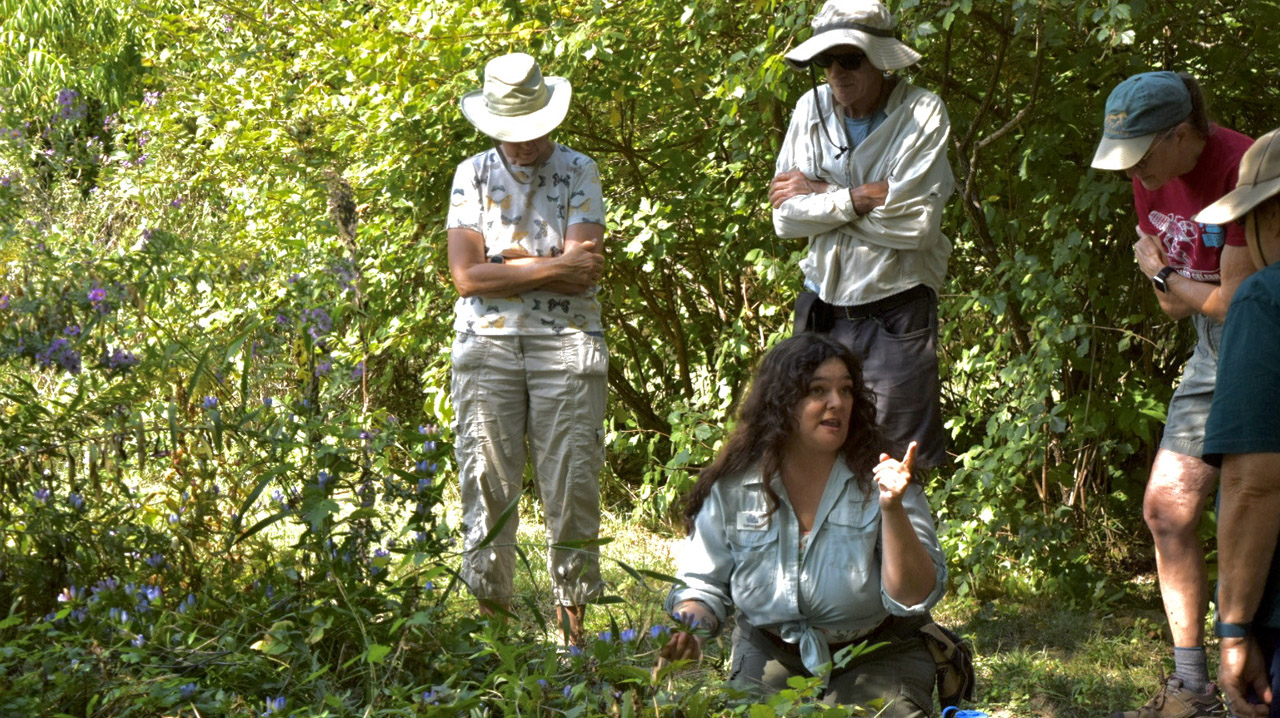
Above: Cydney Ross leading a Native Landscape Chat at the Anita B. Gorman Conservation Discovery Center. Photo by Maddie Ball
Q2: Was working in the garden how you became such an expert in natives? For those of us that want to learn but cannot make it a full-time job (yet), what do you recommend we do?
This is a great question! I learned everything I know from experience, but there are plenty of ways to get your foot in the door without spending 40 hours a week in the garden. In 2017 I started by reading and attending as many native plant programs as possible. From 2020-2023 I worked for the Missouri Department of Conservation as their native landscape specialist, managing the native landscapes at the Anita B. Gorman Conservation Discovery Center. My recommendation is to take advantage of as many local native plant education programs as possible. Books, webinars, workshops, lectures: There are so many opportunities for learning that give you flexibility to work toward this goal at your own pace! Keep up with the programs offered by Deep Roots by visiting our Events Page.
Answer from: Cydney Ross, Outdoor Education Manager
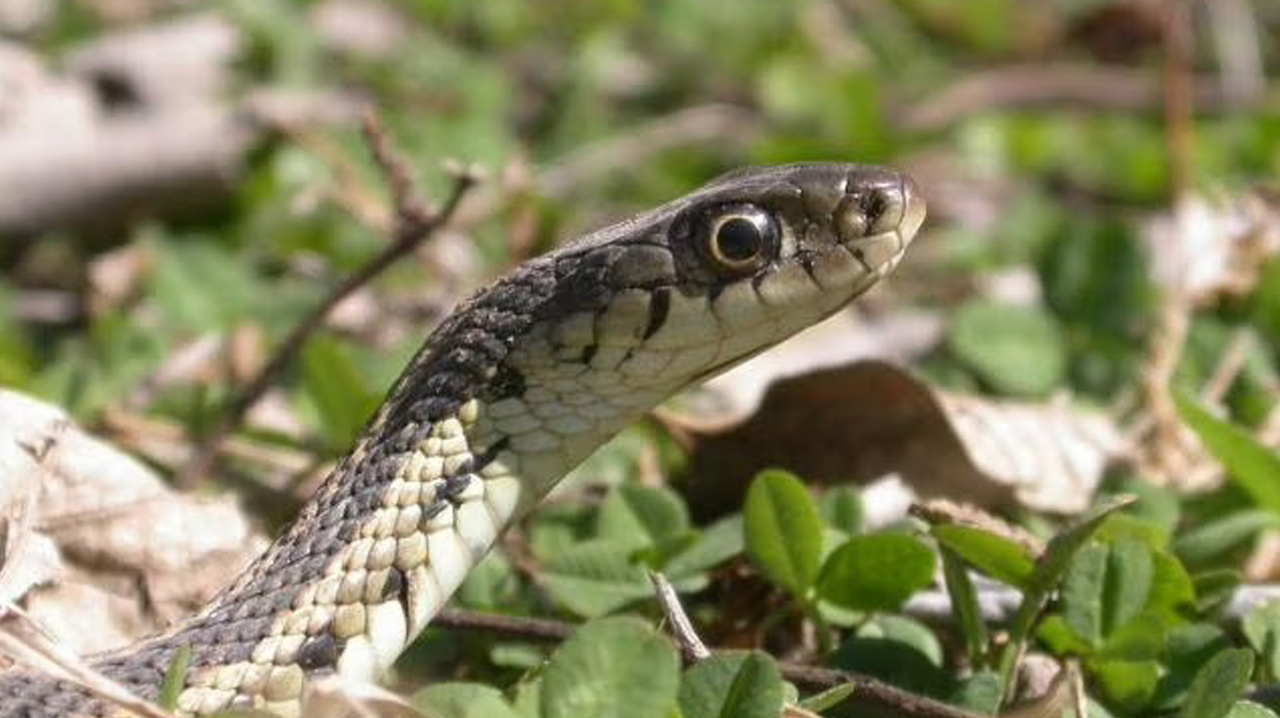
Pictured above: Eastern Gartersnake (Thamnophis sirtalis sirtalis); Photo By: Julianna Schroeder courtesy of the Missouri Department of Conservation
Q3: Hi there! I was at the native plant lecture yesterday and one of the points Cydney made was to think about your goals. If my goals were to attract more lizards and snakes, what type of native plants should I go for? The bugs and birds are easy. —Ammy
Great question and not one we get too often! Let’s start by thinking of what makes a garden an ideal habitat for lizards and snakes. They both use plants in a garden as cover from predators; Think tall grasses and perennials. Prairie Dropseed (Sporobolus heterolepis) and Sideoats Grama (Bouteloua curtipendula) are two excellent garden grass options. I have personally found snakes in these plants at the Anita B. Gorman Conservation Discovery Center gardens.
Our reptile friends will also need a food source and in this case, it’s bugs! Planting to increase your bug diversity and density in your garden will attract more bug eaters. You can learn more about planting for bug variety in our Curious By Nature webinar episode titled “Integrated Pest Management” and learn more about the role insects play in our most recent episode “Why Insects Are the Most Interesting Neighbors You Have.”Generally, you will want to provide a variety of nectar and pollen sources and attempt to plant a garden that will ABB (Always Be Blooming). Having blooms throughout the growing season provides a consistent food source for your bugs which are then the consistent food source for your reptiles.
A source of water is important to include and will also help attract more insects. There are plenty of options: could be a bird bath, fountain, pond, or simply a thrifted dish filled with water.
Finally, ROCKS! Slimy and slithery guys love a rock for basking, hunting, overwintering, and even mating. Rock piles or brush piles will serve as additional shelter and provide more hiding places. I hope this helps!
Answer from:
Maddie Ball, Outreach and Education Program Coordinator
Write a comment: